Question
Distinguish between : Communicable and non-communicable diseases.
| Communicable diseases | Non-communicable diseases |
| 1. Diseases transmitted from infected person to healthy person are called communicable or infectious diseases. | 1. Diseases that are not passed from one person to other are non-communicable or non-infectious diseases. |
| 2. Communicable diseases spread through pathogens. | 2. Non-communicable diseases do not spread through pathogens. |
| 3. Communicable diseases are not inherited from parental generation to offspring. | 3. Non-communicable diseases like cancer can be from parental generation to offspring. |
| 4. Vectors play the major role in spreading disease from one person to another. | 4. Caused due to allergy, illness, malnutrition or abnormalities in cell proliferation, changes in lifestyle, environment play a significant role. |
| 5. Treated by conventional methods using antibiotics and other drugs. | 5. Treated conservatively for a long time or surgically. |
| 6. Diseases are acute which develop suddenly due to infections. E.g. Pneumonia, Tuberculosis, AIDS, Typhoid, Cholera, Malaria. | 6. Diseases are chronic which develop and persist for a long time. E.g. Cancer, Rickets, Allergies, Kwashiorkor, Diabetes, Heart disease, etc. |
Generate a complete, print-ready paper with questions like this in minutes — across 16+ boards, with answer keys.
|
|
Wetland
|
Location
|
|
(a)
|
Harike
|
Punjab
|
|
(b)
|
Chandra Tai
|
H.P.
|
|
(c)
|
Bhoj
|
M.P.
|
|
(d)
|
Ashtamudi
|
Odisha
|
|
|
Hormone
|
Source
|
Function
|
|
(A)
|
Oxytocin
|
W
|
Ejection of milk
|
|
(B)
|
X
|
Anterior lobe of pituitary gland
|
Stimulates secretion of ABP from Sertoli cells
|
|
(C)
|
Y
|
Placenta
|
Maintains corpus luteum to secrete progesterone
|
|
(D)
|
Relaxin
|
Ovary
|
Z
|
| Column A | Column B |
| (1) Rooted floating angiosperm | (a) Cyperus |
| (2) Free-floating plant | (b) Typha |
| (3) Reed swamp | (c) Pistia |
| (4) Marsh-meadow | (d) Lotus |
| Column I [Contraceptive method] | Column II [Mode of action] |
| (1) Pill | (a) Prevents sperms reaching cervix |
| (2) Condom | (b) Prevents implantation |
| (3) Vasectomy | (c) Prevents ovulation |
| (4) Copper T | (d) Semen contains no sperms |
|
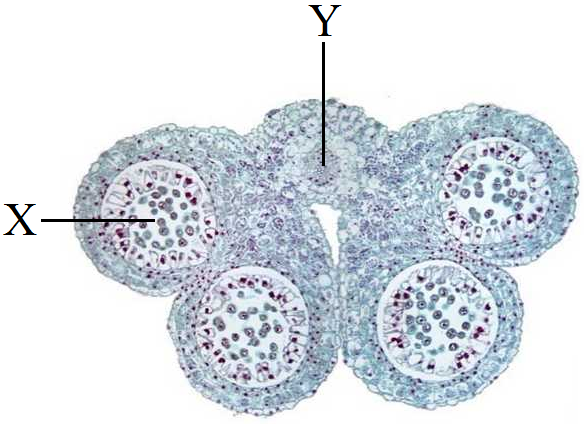
S. No
|
Structure of X
|
Stamens
|
|
(a)
|
Abundant and light
|
Pendulous
|
|
(b)
|
Rough surfaces
|
Non-pendulous
|
|
(c)
|
Light and sticky
|
Pendulous
|
|
(d)
|
Coarse and sticky
|
Protrude outside the flower
|
| Blood vessel | Functions |
| (1) Pulmonary aorta | (a) Carries oxygenated blood to left atrium |
| (2) Superior vena cava | (b) Carries oxygenated blood to all body parts |
| (3) Pulmonary vein | (c) Carries deoxygenated blood from upper parts of body to right atrium |
| (4) Aorta | (d) Carries deoxygenated blood to lungs |