Question
Distinguish between: Eurythermal and stenothermal.

Answer

EurythermalStenothermal
1. Animals which can tolerate wide range of temperatures are called eurythermal.1. Animals which can tolerate only narrow range of temperature fluctuations are called stenothermal.
2. Eurythermal animals show reduced temperature sensitivity.2. Stenothermal animals show high temperature sensitivity.
3. Body functions of eurythermal animals can occur at wide range of temperature range. E.g. Goat, man, cat, dog, tiger, cow, sheep, monkey, crab, etc.3. Body functions of stenothermal animals can occur at only narrow range of temperature range. E.g. Insects, fishes, reptiles, snakes, etc.

Need a full question paper?

Generate a complete, print-ready paper with questions like this in minutes — across 16+ boards, with answer keys.
Start Generating Free

Similar questions

Draw the following crosses to show inheritance of haemophilia : Normal female with haemophilic male. Show their progeny. If one of their carrier daughters marries a normal male what would be possible genotypes of this generation.
More than 25% of human population is suffering from hunger and malnutrition. Scientists have developed techniques where microbes are grown on industrial scale as a source of good protein which can be grown from waste water, animal manure and even sewage.
Based on the above information answer the following questions.
  1. In what ways would it be helpful to humans?
  2. What can be the response to such new ventures?
  3. What values have been manifested in the above case?
  1. Comment on the pattern in which all communities undergo a change in composition and structure with changing environmental conditions.
  2. Explain 'Climax community' and 'Sere'.
  3. Differentiate between primary and secondary succession with examples.
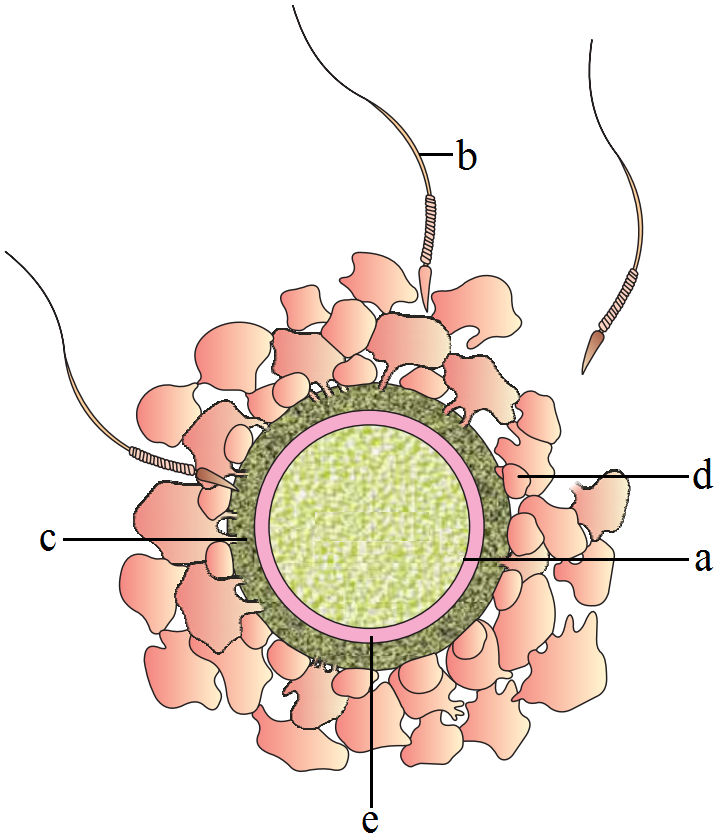
Study the illustration given and answer the questions that follow:
Identify ‘d’.
What are gibberellins? Give the applications of gibberellins.
Comment on deforestation status of the world and its major effects.
Human female is not fertile after menopause whereas males can produce gametes at any age after puberty. Analyse the statement and schematically represent a comparison between gametogenesis in males and females.
Describe the different methods of treatment of cancer.

Describe the development of female gametophyte in angiosperms.
OR
What is megasporogenesis ? Give an account of development of the female gametophyte.
OR
With a neat diagram explain the 7-celled, 8-nucleate nature of the female gametophyte.

What is the significance of epididymis in male fertility?