Question
Distinguish between longitudinal and transverse waves.

Answer

Longitudinal wave: A wave in which the particles of the medium vibrate back and forth in the ‘same direction’, in which the wave is moving, is called a longitudinal wave.
These waves can be produced in all the three media: solids, liquids and gases.
Transverse wave: A wave in which the particles of the medium vibrate up and down, ‘at right angles’ to the direction in which the wave is moving, is called a transverse wave.
It can be produced in solids and liquids but not in gases.
Need a full question paper?

Generate a complete, print-ready paper with questions like this in minutes — across 16+ boards, with answer keys.

Start Generating Free

Similar questions

Describe a simple experiment to show that the prongs of a sound producing tuning fork are vibrating.
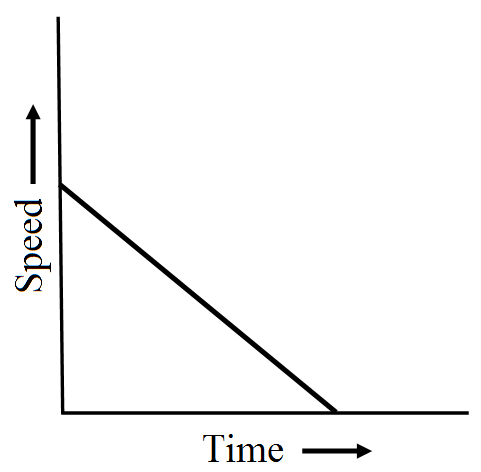
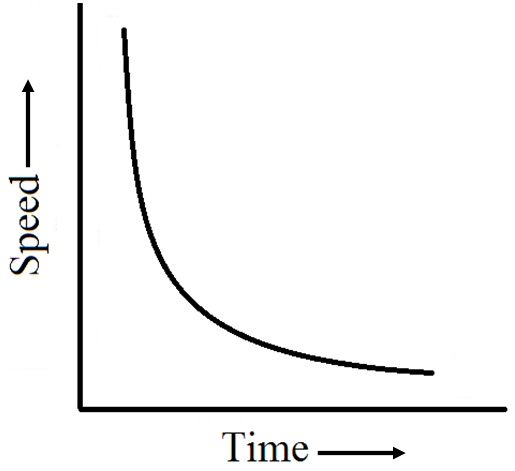
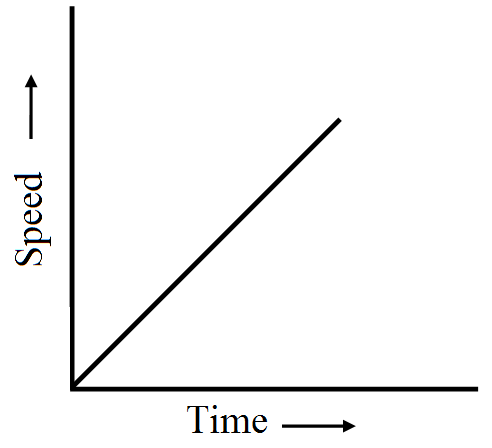
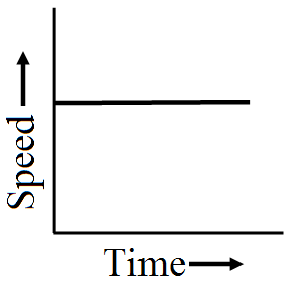
What type of motion is represented by each one of the following graphs?


Explain what will happen if in a cultivated field only manures are supplied and in another field only fertilizers are supplied, keeping all other conditions similar.
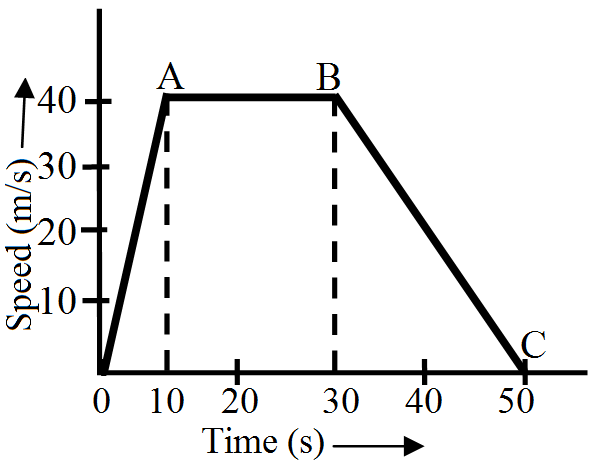
Study the speed-time graph of a car given alongside and answer the following questions:
  1. What type of motion is represented by OA?
  2. What type of motion is represented by AB?
  3. What type of motion is represented by BC?
  4. What is the acceleration of car from O to A?
  5. What is the acceleration of car from A to B?
  6. What is the retardation of car from B to C?
How will you find the valency of chlorine, sulphur and magnesium?
What are the features and drawbacks of Rutherford’s nuclear model of an atom?
$A, B$ and $C$ are all liquids. Liquid A has a comparatively low boiling point. On heating, liquid a vaporizes completely without leaving behind any residue. Liquid $A$ is being used increasingly as a fuel in motor vehicles either alone or by mixing with petrol. Liquid $B$ has a very high boiling point. It also vaporizes completely on heating, without leaving any residue. Liquid $B$ is a conductor of electricity and used in making thermometers. Liquid $c$ has a moderate boiling point. On heating, liquid $C$ vaporises leaving behind a white solid $D$ which is used in cooking vegetables. The condensation of vapours from $C$ give a liquid $E$ which turns anhydrous $CuSO_4$ to blue.
  1. Which liquid could be an element? Name this element.
  2. Which liquid could be a mixture? Name this mixture.
  3. Which liquid could be a compound? Name this compound.
  4. What could the solid $D$ be?
  5. What do you think is liquid $E$?
Describe an activity of determine the boiling point of water and melting point of ice.
What mass of nitrogen $N_2,$ will contain the same number of molecules as $1.8g$ of water, $H_2O?$
$($Atomic masses: $N = 14u; H = 1u; O = 16u)$
Write an activity of show that the rate of diffusion of liquids decreases with increase in density of the liquids.