Question
Donor type impurity is found in
|
(a) Trivalent elements |
(b) Pentavalent elements |
|
(c) In both the above |
(d) None of these |
Donor type impurity is found in
|
(a) Trivalent elements |
(b) Pentavalent elements |
|
(c) In both the above |
(d) None of these |
(b) Pentavalent elements
Generate a complete, print-ready paper with questions like this in minutes — across 16+ boards, with answer keys.
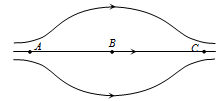
The figure shows some of the electric field lines corresponding to an electric field. The figure suggests
|
(a) |
(b) |
(c) |
(d) |
A polariser is used to
|
(a) Reduce intensity of light |
(b) Produce polarised light |
|
(c) Increase intensity of light |
(d) Produce unpolarised light |
The mass of a substance liberated when a charge ‘q’ flows through an electrolyte is proportional to
|
(a) q |
(b) 1/q |
(c) |
(d) 1/ |
When a positive q charge is taken from lower potential to a higher potential point, then its potential energy will
|
(a) Decrease |
(b) Increases |
(c) Remain unchanged |
(d) Become zero |
Metallic solids are always opaque because
|
(a) Solids effect the incident light |
|
(b) Incident light is readily absorbed by the free electron in a metal |
|
(c) Incident light is scattered by solid molecules |
|
(d) Energy band traps the incident light |
In a PNP transistor working as a common-base amplifier, current gain is 0.96 and emitter current is 7.2 mA. The base current is
|
(a) 0.4 mA |
(b) 0.2 mA |
(c) 0.29 mA |
(d) 0.35 mA |


