Question
Draw a neat labelled $P - V$ diagram for a typical heat engine.

Answer

Get the step-by-step solution for this question inside the Vidyadip app.

Get the answer in the app

Need a full question paper?

Generate a complete, print-ready paper with questions like this in minutes — across 16+ boards, with answer keys.
Start Generating Free

Similar questions

What are the steps through which a refrigerant goes in one complete cycle of refrigeration?
A hollow metal ball $10 cm$ in diameter is given a charge of $1 \times 10^{-2} C$. What is the magnitude of the electric fiald intensity at a point $20 cm$ from the centre of the ball ?
An alternating emf is given by $e=220 \sin 314.2 t$ (in volt). Find its
(i) peak value
(ii) rms value
(iii) average value over half cycle
(iv) frequency
(iv) period
(vi) value at $\frac{T}{4}$.
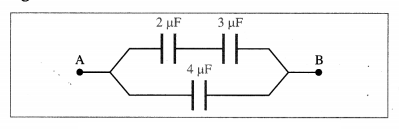
Three capacitors are connected as shown in the figure below. Calculate the effective capacitance between $A$ and $B.$​​​​​​​
Image
Explain with a neat diagram, how a p-n junction diode is used as a half wave rectifier.
How much force is exerted on one side of an $8.50 \mathrm{~cm}$ by $11.0 \mathrm{~cm}$ sheet of paper by the atmosphere? How can the paper withstand such a force?
A cell of e.m.f $1.5\ V$ and negligible internal resistance is connected in series with a potential meter of length $10\ m$ and the total resistance of $20 \Omega.$ What resistance should be introduced in the resistance box such that the potential drop across the potentiometer is one microvolt per cm of the wire?
State the MI of a thin rectangular plate-of mass M, length l and breadth b about its transverse axis passing through its centre. Hence find its MI about a parallel axis through the midpoint of edge of length b.
A straight current-carrying conductor $30 \ cm$ long carries a current of $5 A$. It is placed in a uniform magnetic field of induction $0.2 T$, with its length making an angle of $60^{\circ}$ with the direction of the field. Find the force acting on the conductor.
Why should a Carnot cycle have two isothermal two adiabatic processes?