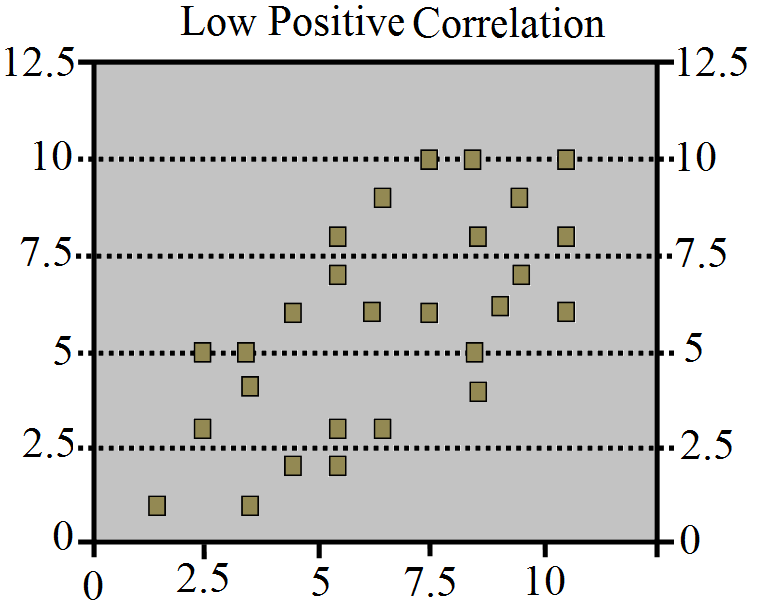
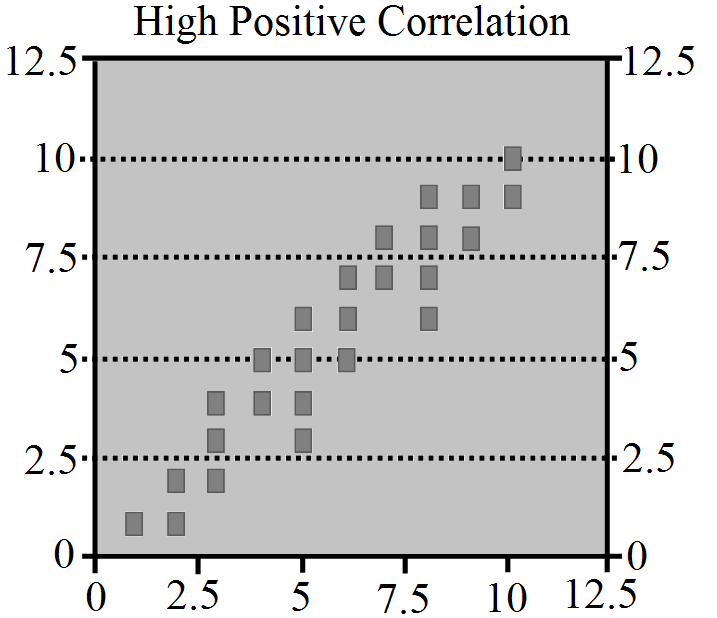
Question
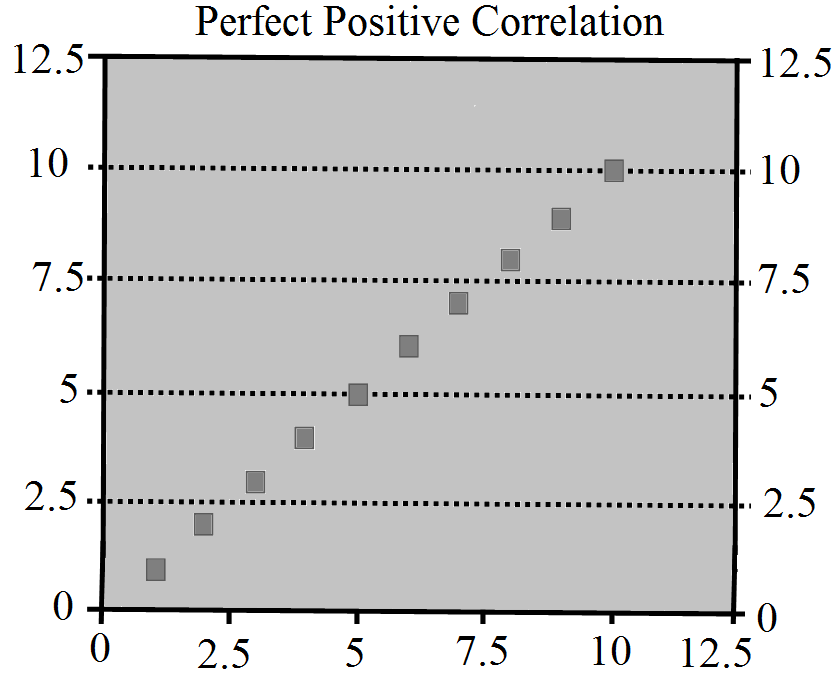
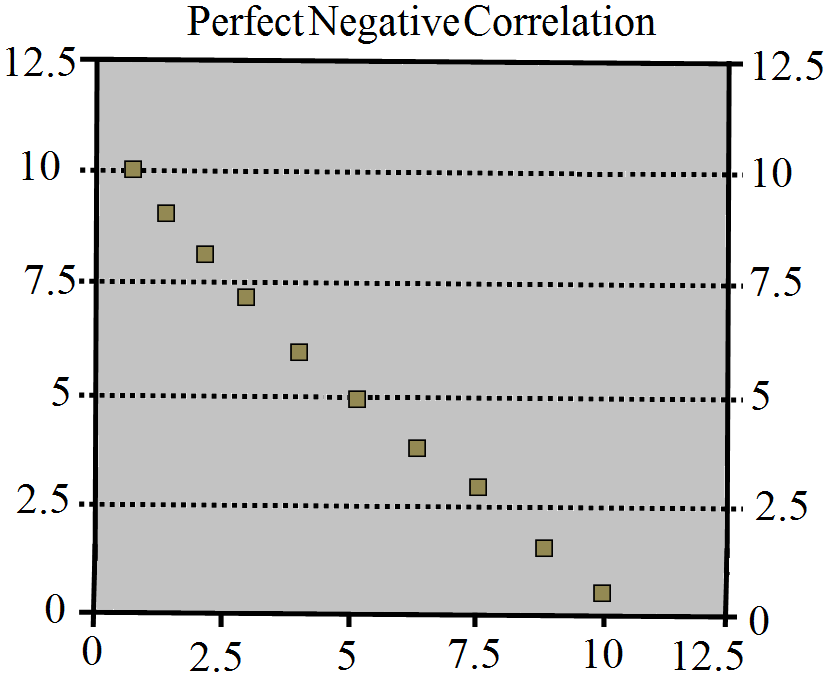
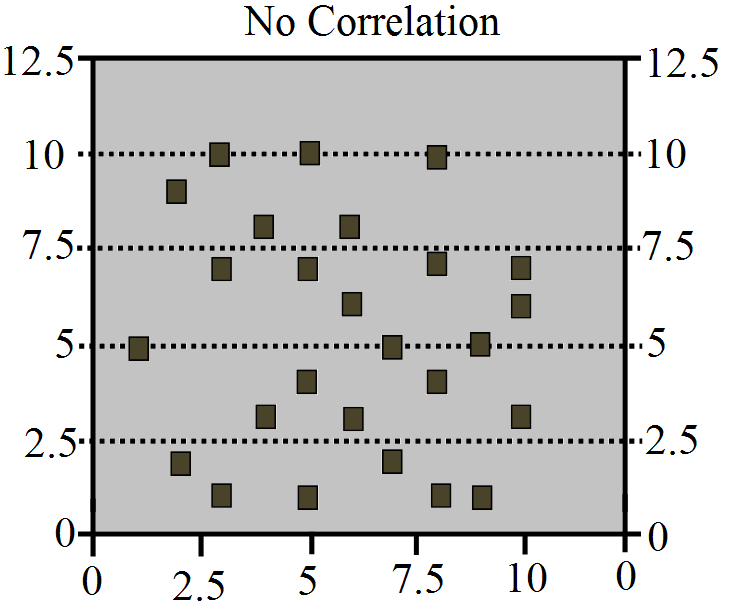
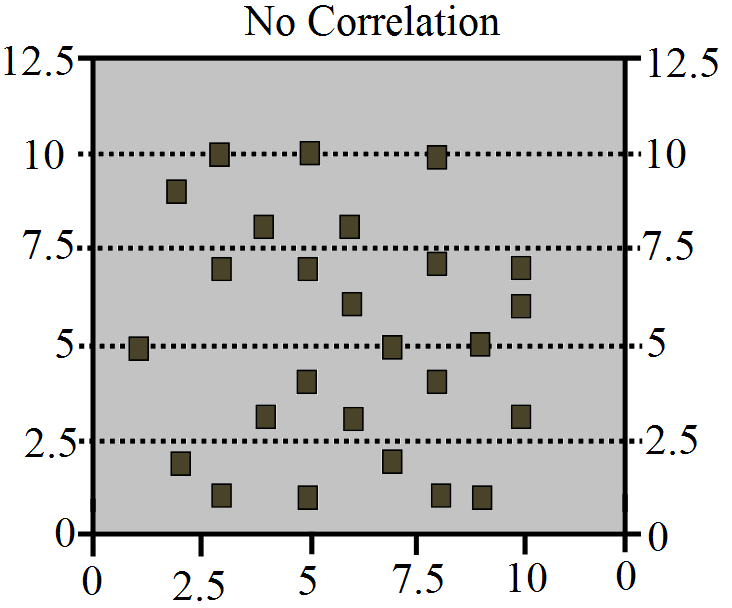
Draw a scatter diagram for:
  1. Perfect positive correlation.
  2. Perfect negative correlation.
  3. Zero correlation.
  4. Low positive correlation.
  5. low negative correlation.
  6. High positive correlation.

Answer

  1.  
  1.  
  1.  
  1.  

Need a full question paper?

Generate a complete, print-ready paper with questions like this in minutes — across 16+ boards, with answer keys.

Start Generating Free

Similar questions

Read the following case study carefully and answer the questions 1-2 on the basis of the same:
Firms must weigh the opportunity costs of producing one good versus another. As the production possibilities frontier showed, productive resources are limited and choices among outputs must be made. Such choices depend on relative prices. A farmer with farmland suited for both corn and soybeans must decide how much of each crop to plant. As the price of soybean falls, more land will be planted in corn. Oil refiners will be guided by the relative prices of fuel oil, gasoline, and kerosene in deciding how much of each to refine. Higher price of fuel oil tends to lower the supply of other refined oil products. Firms must also compare today's prices with those expected in the future.
$\quad$$\quad$$\quad$$\quad$$\quad$$\quad$-Paul R. Gregory, Essentials of Economics, 4th Edition, University of Houston

1. How does the rise in the price of fuel oil affect the supply of other refined oil products?
2. How is withdrawal of subsidy on the inputs used (like fuel oil prices, gasoline, and kerosene in the above case) in the production of refined oil products likely to affect the supply and demand for refined oil products in India? Also, explain its implications in the Indian economy.
Describe how to tell whether a set of data points shows a positive correlation, a negative correlation, or approximately no correlation.
Calculate Karl Pearson’s coefficient of correlation:
X
20
18
16
15
14
12
12
10
8
5
Y
12
16
10
14
12
10
9
8
7
2
Describe the features of statistics in plural sense.
What is meant by production possibility curve? Illustrate with the help of a table and diagram.
Read the following hypothetical information carefully and answer the questions 1-6 on the basis of the same:
Price (₹)Demand (Units)
5100
675
850
1. When price changes from ₹ 5 to ₹ 6, price elasticity of demand will be  ____________.    (Fill up the blank with correct alternative)
(a) 0.8
(b) 1
(c) 1.25
(d) 1.5

2. On the basis of your answer of the above question, express your opinion regarding the nature of elasticity of demand.
(Choose the correct alternative)
(a) It is a situation of perfectly elastic demand
(b) It is a situation of perfectly inelastic demand
(c) It is a situation of elastic demand
(d) It is a situation of inelastic demand

3. When price changes from ₹ 6 to ₹ 8, price elasticity of demand will be ____________.     (Fill up the blank with correct alternative)
(a) 0.6
(b) 0.8
(c) 1
(d) 1.25

4. On the basis of your answer of the above elasticity of demand. question, express your opinion regarding the nature of
(Choose the correct alternative)
(a) It is a situation of unitary elastic demand
(b) It is a situation of elastic demand
(c) It is a situation of inelastic demand
(d) None of these

5. Read the following statements carefully and choose the correct alternative among those given below:
Statement 1 : Slope of demand curve and elasticity of demand are different concepts.
Statement 2 : Slope of demand curve =  $\frac{\Delta P}{\Delta Q}$
Alternatives:
(a) Both the statements are true
(b) Both the statements are false
(c) Statement 1 is true and Statement 2 is false
(d) Statement 2 is true and Statement 1 is false

6. Identify the correct formula to calculate Price Elasticity of Demand. (Choose the correct alternative)
(a) $(-) \frac{P}{Q} \times \frac{\Delta P}{\Delta Q}$
(b) (-) $\frac{P}{Q} \times \frac{\Delta Q}{\Delta P}$
(c) $(-) \frac{1}{\text { Slope of demand curve }} \times \frac{P}{Q}$
(d) Both (b) and (c)
Explain with the help of diagrams, the effect of the following changes on the demand for a commodity:
(i) Fall in the price of substitute good.
(ii) Fall in the price of complementary good.
What is a statistical enquiry? What are the steps in collection of data?
Calculate the weighted average of price relative index for 2016 on the basis of 2012 from the following data:
Commodity W $P_0$ $P_1$
2012 2016
A
10
15
20
B
8
10
12
C
6
5
8
D
6
10
13
E
4
4
5
Equation of Demand Curve of Commodity$-X$ $Q_d = 400 - 2p$
Equation of Supply Curve of Commodity$-X$ $Q_s = 100 + 4p$
New Equation of Supply Curve of Commodity$-X$ after the change in input price $Q_s = 160 + 4p$
$1.$ On the basis of the data given above, the equilibrium price is
$(a) \ 2$
$(b) \ 4$
$(c) \ 50$
$(d) \ 100$
$2.$ On the basis of the data given above, the equilibrium quantity is:
$(a) \ 100$ units
$(b) \ 200$ units
$(c) \ 300$ units
$(d) \ 400$ units
$3.$ After the change in input price, new equilibrium price is
$(a) \ 20$
$(b) \ 40$
$(c) \ 50$
$(d) \ 60$
$4.$ After the change in input price, new equilibrium quantity is:
$(a) \ 200$ units
$(b) \ 240$ units
$(c) \ 300$ units
$(d) \ 320$ units
$5.$ Read the following statements carefully and choose the correct alternative among those given below:
Statement $1:$ In a situation of excess demand, market price tends to fall.
Statement $2:$ In a situation of excess supply, market price tends to rise.
$(a)$ Both the statements are true
$(b)$ Both the statements are false
$(c)$ Statement $1$ is true and Statement $2$ is false
$(d)$ Statement $2$ is true and Statement $1$ is false
$6.$ Equilibrium price is the price where market demand is equal to market supply. $($ True or False $)$