Schematic diagram of common domestic circuits is shown below:
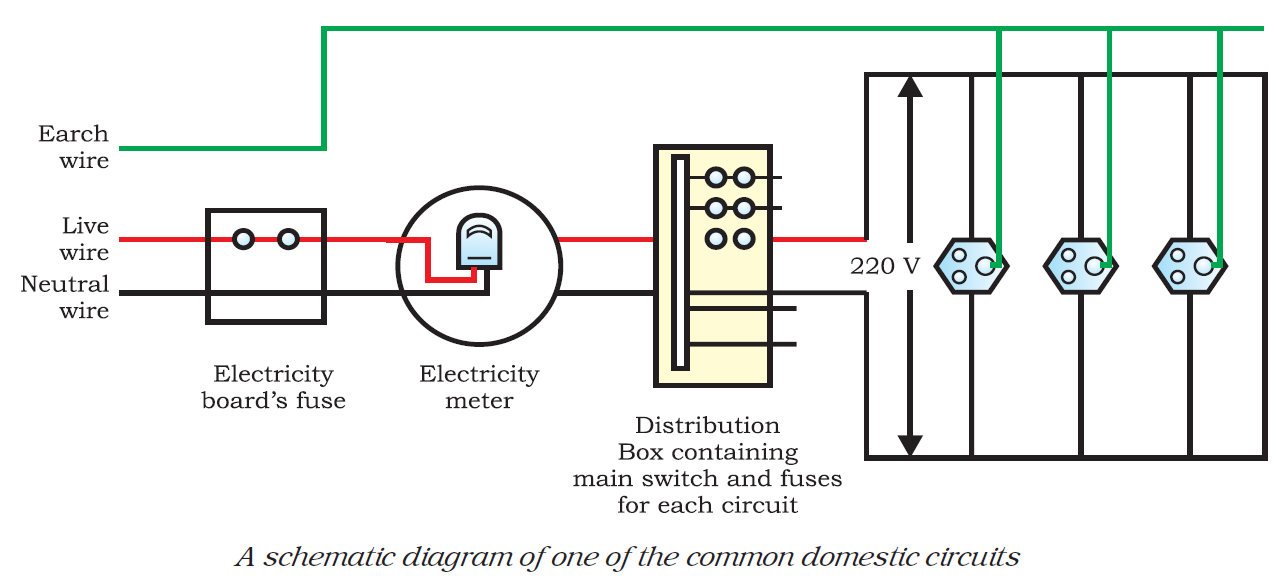
Fuse is safety device in a circuit prevents damage to the appliances and the circuit due to overloading. A fuse works on Joule heating effect and is connected is series with the electric devices. Every fuse has a specific rating, it means that a specific fuse will allow only specific amount of current through itself. When current exceeds the limit, then the fuse will heat up and melt.
Overloading occurs when the live wire and the neutral wire come into direct contact. In such a situation, the current in the circuit abruptly increases. This is called short-circuiting. The use of an electric fuse prevents the electric circuit and the appliance from a possible damage by stopping the flow of unduly high electric current. The Joule heating that takes place in the fuse melts it to break the electric circuit. Overloading can also occur due to an accidental hike in the supply voltage. Sometimes overloading is caused by connecting too many appliances to a single socket.
The burnt out fuse should be replaced by another fuse of identical rating because if a fuse of less rating is used then it will blow and electric appliances will not work. If the fuse of higher rating is used then in case of short circuit and overloading the fuse will not blow up and excess amount of current may harm the appliances.