MCQ
Electric potential can be calculated in a:
- AStatic electric field.
- BDynamic electric field.
- CBoth static and dynamic electric field.
- DNeither static nor dynamic electric field.
Explanation:
An electric potential can be calculated in either a static (or time invariant) or a dynamic (varying with time) electric field at a specific time in units of Joules per Coulomb or Volts.
Generate a complete, print-ready paper with questions like this in minutes — across 16+ boards, with answer keys.
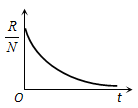
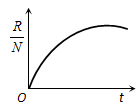
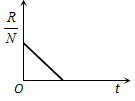
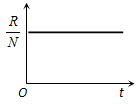
A radioactive sample has  active atoms at t = 0. If the rate of disintegration at any time is R and the number of atoms is N, then the ratio R/N varies with time as
|
(a)
|
(b)
|
(c)
|
(d)
|
What is the equivalent resistance between the points A and B of the network

|
(a) |
(b) 8 W |
(c) 6 W |
(d) |
The minimum distance between an object and its real image formed by a convex lens is
|
(a) 1.5 f |
(b) 2 f |
(c) 2.5 f |
(d) 4 f |
For a medium, refractive indices for violet, red and yellow are 1.62, 1.52 and 1.55 respectively, then dispersive power of medium will be
|
(a) 0.65 |
(b) 0.22 |
(c) 0.18 |
(d) 0.02 |
Length of a hollow tube is 5m, it’s outer diameter is 10 cm and thickness of it’s wall is 5 mm. If resistivity of the material of the tube is 1.7 ×  W × m then resistance of tube will be
|
(a) 5.6 × 10⁻⁵ W |
(b) 2 × 10⁻⁵ W |
(c) 4 × 10⁻⁵ W |
(d) None of these |
Which of the following shown particle nature of light
|
(a) Refraction |
(b) Interference |
(c) Polarization |
(d) Photoelectric effect |
A capacitor of capacity C is connected with a battery of potential V in parallel. The distance between its plates is reduced to half at once, assuming that the charge remains the same. Then to charge the capacitance upto the potential V again, the energy given by the battery will be
|
(a) |
(b) |
(c) |
(d) |