MCQ
Electronic configuration of deuterium atom is
- ✓$1{s^1}$
- B$2{s^2}$
- C$2{s^1}$
- D$1{s^2}$
Generate a complete, print-ready paper with questions like this in minutes — across 16+ boards, with answer keys.
$\begin{array}{*{20}{c}}
{C{H_3}\,\,\,\,\,\,\,\,\,\,\,\,\,\,\,\,\,\,\,\,\,\,C{H_3}\,\,\,\,\,\,\,\,\,\,}\\
{|\,\,\,\,\,\,\,\,\,\,\,\,\,\,\,\,\,\,\,\,\,\,\,\,\,\,\,\,\,\,|\,\,\,\,\,\,\,\,\,\,\,\,\,\,\,}\\
{C{H_3} - C{H_2} - C = C - CH - C - C{H_2} - C{H_2} - C{H_3}}\\
{|\,\,\,\,\,\,\,\,\,}\\
{{C_2}{H_5}}
\end{array}$
Statement $(I)$ : Both metal and non-metal exist in $\mathrm{p}$ and $d$-block elements.
Statement $(II)$ : Non-metals have higher ionisation enthalpy and higher electronegativity than the metals.
In the light of the above statements, choose the most appropriate answer from the option given below:
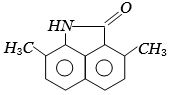
$(I)$ $\phi -CH_3$
$(II)$ $\phi -CH_2-CH_3$
$(III)$ $\phi -CH(CH_3)_2$
$(IV)$ $\phi-C(CH_3)_3$
towards electrophilic substitution will be - [where $\phi =C_6H_5$]
| List$-I$ Test/Reagents/Observation(s) | List$-II$ Species detected |
| $(a)$ Lassaigne's Test | $(i)$ Carbon |
| $(b)\;Cu ( II )$ oxide | $(ii)$ Sulphur |
| $(c)$ Silver nitrate | $(iii)\;N , S , P ,$ and halogen |
| $(d)$ The sodium fusion extract gives black precipitate with acetic acid and lead acetate | $(iv)$ Halogen Specifically |
The correct match is