Question
Electronic configuration of some of the elements are given :
Type of elementElementAtomic numberNumber of electrons in shell
MetalsSodium (Na)Magnesium (Mg)Aluminium (Al)1112132828283
Non-metalsOxygen (O)Sulphur (S)Chlorine (Cl)8161726286287

(i) State one physical property to distinguish between metals and non-metals.
(ii) What is the nature of the bond formed when magnesium reacts with chlorine? Write the formula of the compound.
or
(ii) What is common between oxygen and sulphur? Draw the electron dot structure of $O _2$ molecule.
Answer

(i) Metals are malleable and ductile while non-metals are brittle.
(ii) Ionic bond formed transfer of electrons from magnesium to chloride.
or
(ii) Both have same number of valence electron. Both belongs to the same group (Group 16) of the periodic table.

Need a full question paper?

Generate a complete, print-ready paper with questions like this in minutes — across 16+ boards, with answer keys.

Start Generating Free

Similar questions

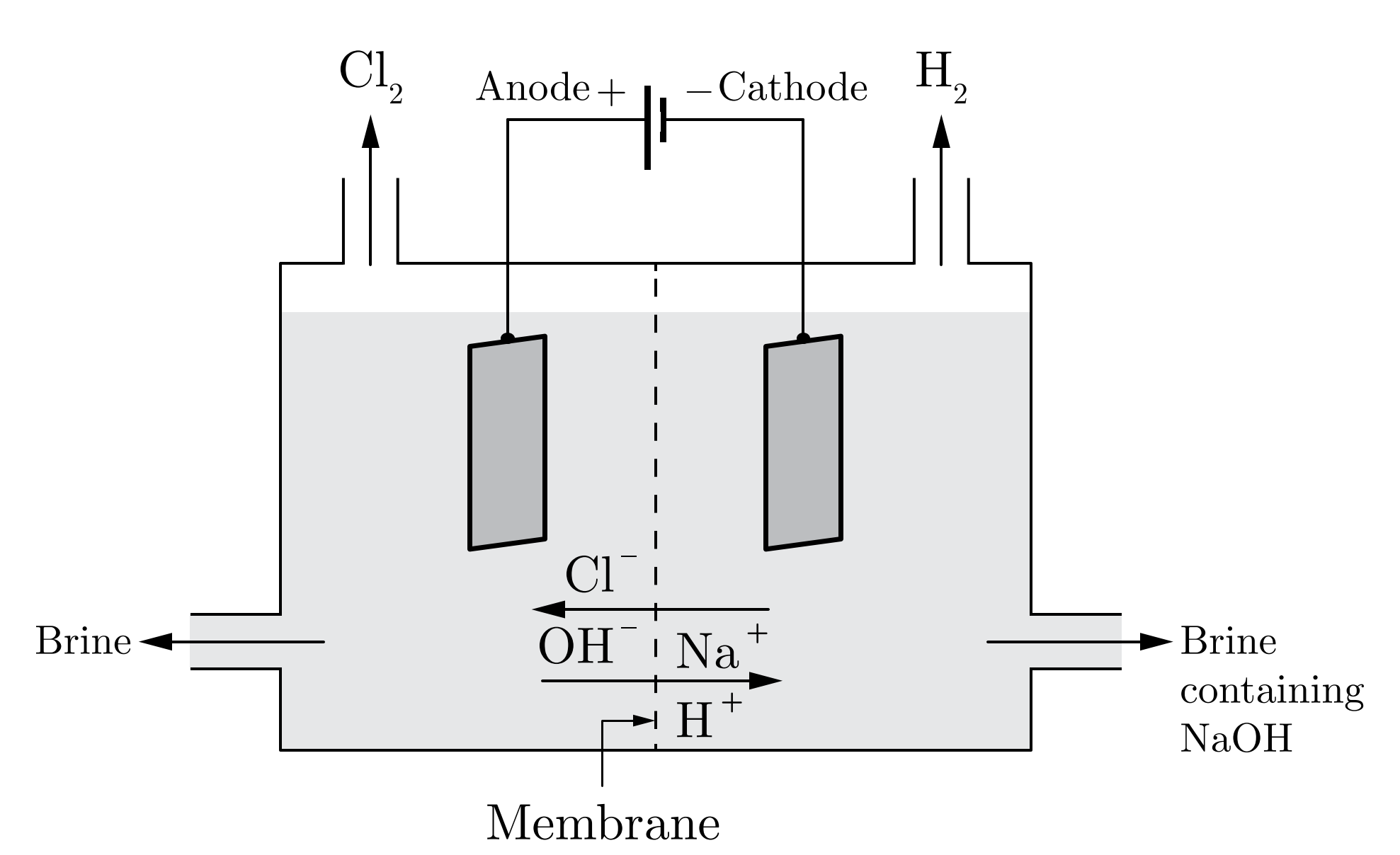
Refining is the process of purification of metals. One of the important method of refining is electrolysis. In electrolysis, electrical energy is used to bring about a non-spontaneous redox reaction. This is done by passing an electric current through a liquid containing ions, known as an electrolyte. In contrast to metals, the current in electrolytes is carried by the movement of ions rather than the movement of electrons. The solid conductors inserted into the liquid are called electrodes, the one with a positive charge is called the anode (because it attracts anions) and the one with the negative charge is called the cathode.
A diagrammatic representation of electrolysis of copper is shown below :


(i) Name the electrolyte used in refining of copper.
(ii) a. $Cu \longrightarrow Cu ^{2+}+2 e ^{-}$
b. $Cu ^{2+}+2 e ^{-} \longrightarrow Cu$
Which of these two reactions occur at cathode and anode?
or
(iii) What is anode mud? Name two metals which can be refined by electrolytic method.

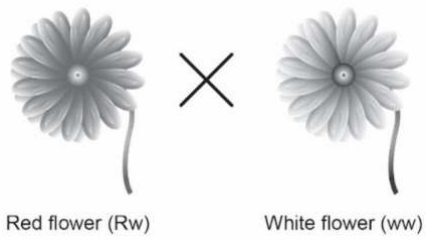
A plant with red lower (Rw) is cross bred with a plant with white lower (ww).
There are two variations of the gene controlling the colour of the lower.
The gene for red lower (R) is dominant over that for white lower (w).

Image

The Punnett square shows the result of the cross.

w

w

R

Rw

Rw

w

ww

ww

1. What percentage of the plants is likely to produce white lowers?
A. 25%
B. 50%
C. 75%
D. 100%
2. A red lower plant (RR) was cross bred with a white lower plant (ww).
What will be the colour of the lower of the next generation plants?
3. What would have caused the variation in the gene for lower colour?
A. Mutation
B. Pollination
C. Speciation
D. Adaption


Reproduction in human beings is by sexual reproduction where both the male and female gametes fertilise to give rise to an embryo. The fertilization of the human embryo occurs inside the body of the female.

(i) Name the part of the male reproductive system where the formation of sperms takes place.
(ii) What is the placenta?
(iii) What is the other name of the oviduct?
(iv) Define the term implantation.
Read the following and answer any three questions from: (i) to (iv).An ecosystem may be defined as a structural and functional unit of the biosphere comprising living organisms and their non-living environment which interact by means of food chains and biogeochemical cycles resulting in energy-flow, biotic diversity and material cycling to form a stable, self-supporting system.
  1. The two basic processes involved in an ecosystem are?
     
  2. Give two examples of not an artificial ecosystem?
     
  3. What is the role of fungi and bacteria in an ecosystem?
     
  4. What would one of the likely result if all decomposers in a particular ecosystem were wiped out?
Read the following and answer any three questions from (i) to (iv).The heating effect of current is obtained by transformation of electrical energy in heat energy. Just as mechanical energy used to overcome friction is covered into heat, in the same way, electrical energy is converted into heat energy when an electric current flows through a resistance wire. The heat produced in a conductor, when a current flows through it is found to depend directly on (a) strength of current (b) resistance of the conductor (c) time for which the current flows. The mathematical expression is given by $\text{H} = \text{I}^2\text{Rt}.$
The electrical fuse, electrical heater, electric iron, electric geyser etc. all are based on the heating effect of current.
  1. What are the properties of heating element?
     
  2. What are the properties of electric fuse?
     
  3. When the current is doubled in a heating device and time is halved, the heat energy produced will be?
    OR
  4. A) A fuse wire melts at 5 A. It is is desired that the fuse wire of same material melt at 10 A. The new radius of the wire will be.

    B) When a current of 0.5A passes through a conductor for 5 min and the resistance of conductor is $10\Omega$ the amount of heat produced will be.
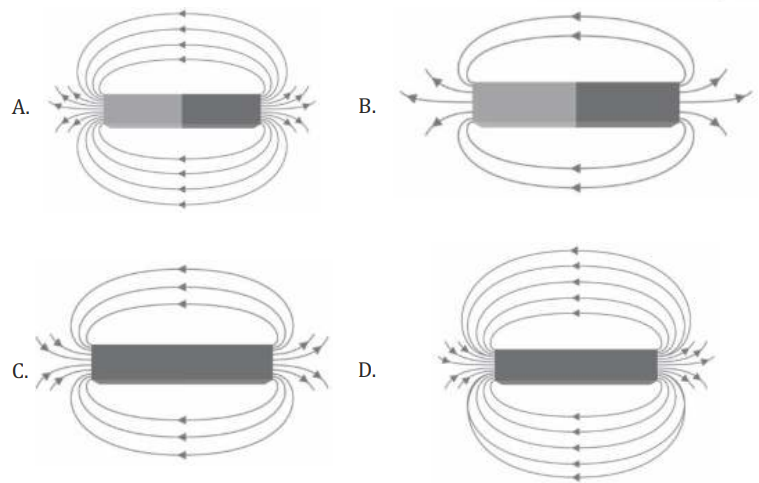
Which of these magnets has the strongest magnetic field?

Image


Reproduction in human beings is by sexual reproduction where both the male and female gametes fertilise to give rise to an embryo. The fertilization of the human embryo occurs inside the body of the female.

(i) Name the part of the male reproductive system where the formation of sperms takes place.
(ii) What is the placenta?
(iii) What is the other name of the oviduct?
or
(iv) Define the term implantation.
Read the following and answer any three questions from (i) to (iv).Bleaching powder is also known as chloride of lime. It is a solid and yellowish white in colour. Bleaching powder can be easily identified by the strong smell of chlorine. When calcium hydroxide (slaked lime) reacts with chlorine, it gives calcium oxychloride (bleaching powder) and water is formed. Aqueous solution of bleaching powder is basic in nature. The material to be bleached is first passed through solution of Na OH to remove greasy matter. Then it is passed through aqueous solution of bleaching powder and very dil. HCl solution. HCl reacts with bleaching powder to liberate nascent oxygen which bleaches material.
  1. Write two uses of Bleaching powder?
     
  2. Bleaching powder is also known as?
     
  3. A) Why does Bleaching powder gives smell of chlorine?
    B) What happens when calcium hydroxide reacts with chlorine?

    OR
    What happens when HCl reacts with bleaching powder?
Corrosion is the phenomenon of deterioration of surface of metal in presence of air and moisture. It is a natural process and in the presence of a moist atmosphere, chemically active metals get corroded. This is oxidation reaction. Rusting is the process where iron corrodes due to exposure to the atmosphere. The main circumstance of corrosion occurs with iron because it is a structural material in construction, bridges, buildings, rail transport, ships, etc. Aluminium is also an important structural metal, but even aluminium undergoes oxidation reactions. However, aluminium doesn't corrode or oxidize as rapidly as its reactivity suggests. An alloy of aluminium or any other metal like magnesium can make aluminium stronger and harder.
Copper $( Cu )$ corrodes and forms a basic green carbonate and lead corrodes to form a white lead oxide or carbonate.
(i) What is rusting?
(ii) Which two metals do not corrode easily?
(iii) List two properties of alloys.
or
(iv) What is the effect of corrosion on electrical conductivity?
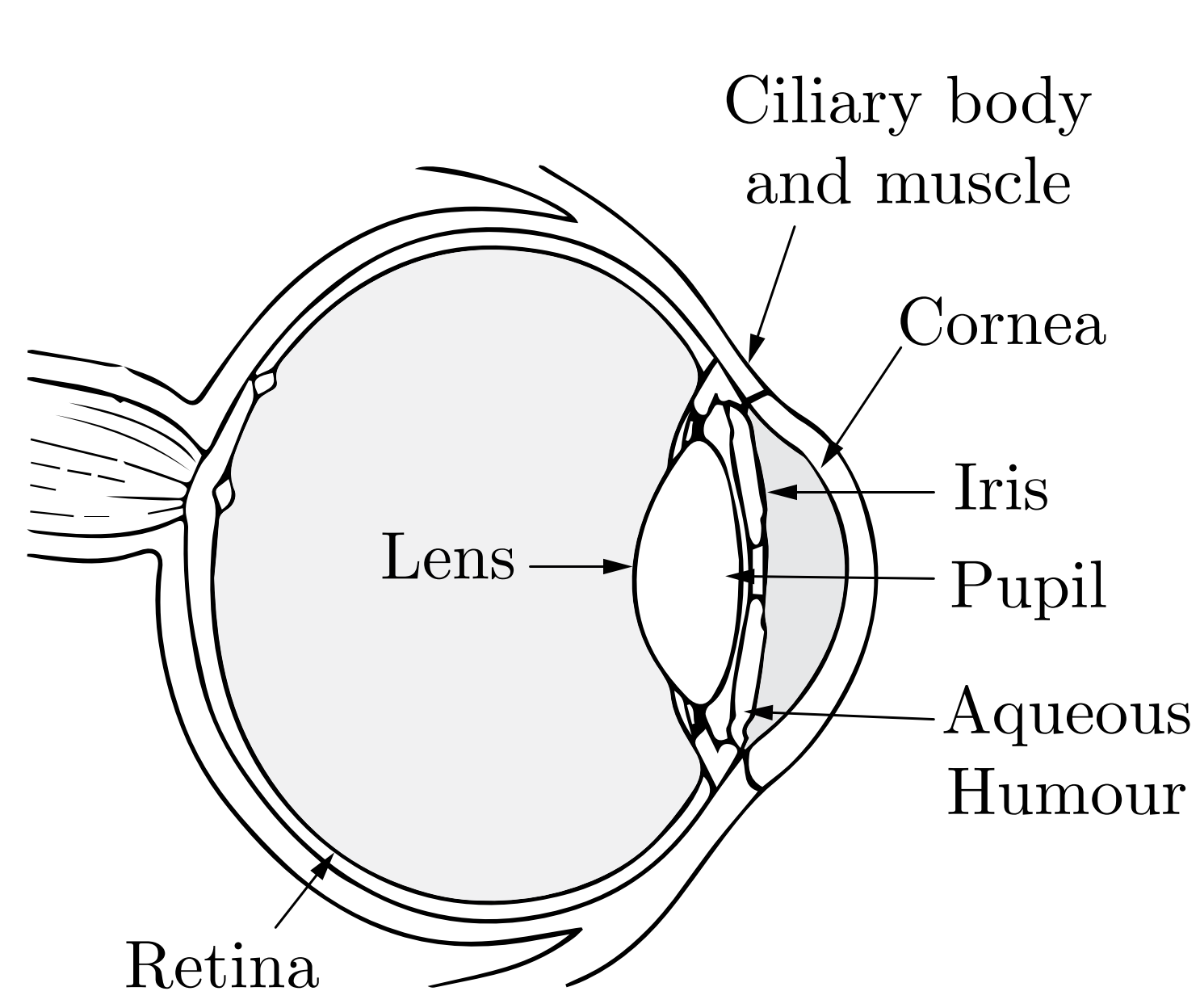
The ciliary muscle muscles of eye control the curvature of the lens in the eye and hence can alter the effective focal length of the system. When the muscles are fully relaxed, the focal length is maximum. When the muscles are strained the curvature of lens increases (that means radius of curvature decreases) and focal length decreases. For a clear vision the image must be on retina. The image distance is therefore fixed for clear vision and it equals the distance of retina from eye-lens. It is about $2.5 cm$ for a grown-up person. A person can theoretically have clear vision of objects situated at any large distance from the eye. The smallest distance at which a person can clearly see is related to minimum possible focal length, The ciliary muscles are most strained in this position. For an average grown-up person minimum distance of object should be around 25 cm. A person suffering for eye defects uses spectacles (Eye glass). The function of lens of spectacles is to form the image of the objects within the range in which person can see clearly. The image of the spectacle-lens becomes object for eye-lens and whose image is formed on retina. The number of spectacle-lens used for the remedy of eye defect is decided by the power of the lens required and the number of spectacle-lens is equal to the numerical value of the power of lens with sign. For example power of lens required is $+3 D$ (converging lens of focal length $100 / 3 cm$ ) then number of lens will be $+3$.

For all the calculations required you can use the lens formula and lens maker's formula. Assume that the eye lens is equiconvex lens. Neglect the distance between eye lens and the spectacle lens.
(i) What do you mean by the ciliary muscles?
(ii) What is the minimum focal length of eye lens of a normal person ?
(iii) What is the maximum focal length of eye lens of normal person ?
or
(iv) A near-sighted man can clearly see object only up-to a distance of $100 cm$ and not beyond this. What is the number of the spectacles lens necessary for the remedy of this defect ?