Question
Elucidate the following statement:
Cash Book is both Journal and Ledger'.

Answer

It is a journal since the transactions are recorded in it for the first time from the source documents and from there these are posted to the respective accounts in the ledger. The Cash book is also a ledger in the sense that it serves the purpose of a Cash account also. When a Cash book is prepared, no separate Cash account is opened in the ledger. As such, the Cash book is a journal as well as a ledger and hence it may be called “journalised ledger”.

Need a full question paper?

Generate a complete, print-ready paper with questions like this in minutes — across 16+ boards, with answer keys.
Start Generating Free

Similar questions

What are Provisions?
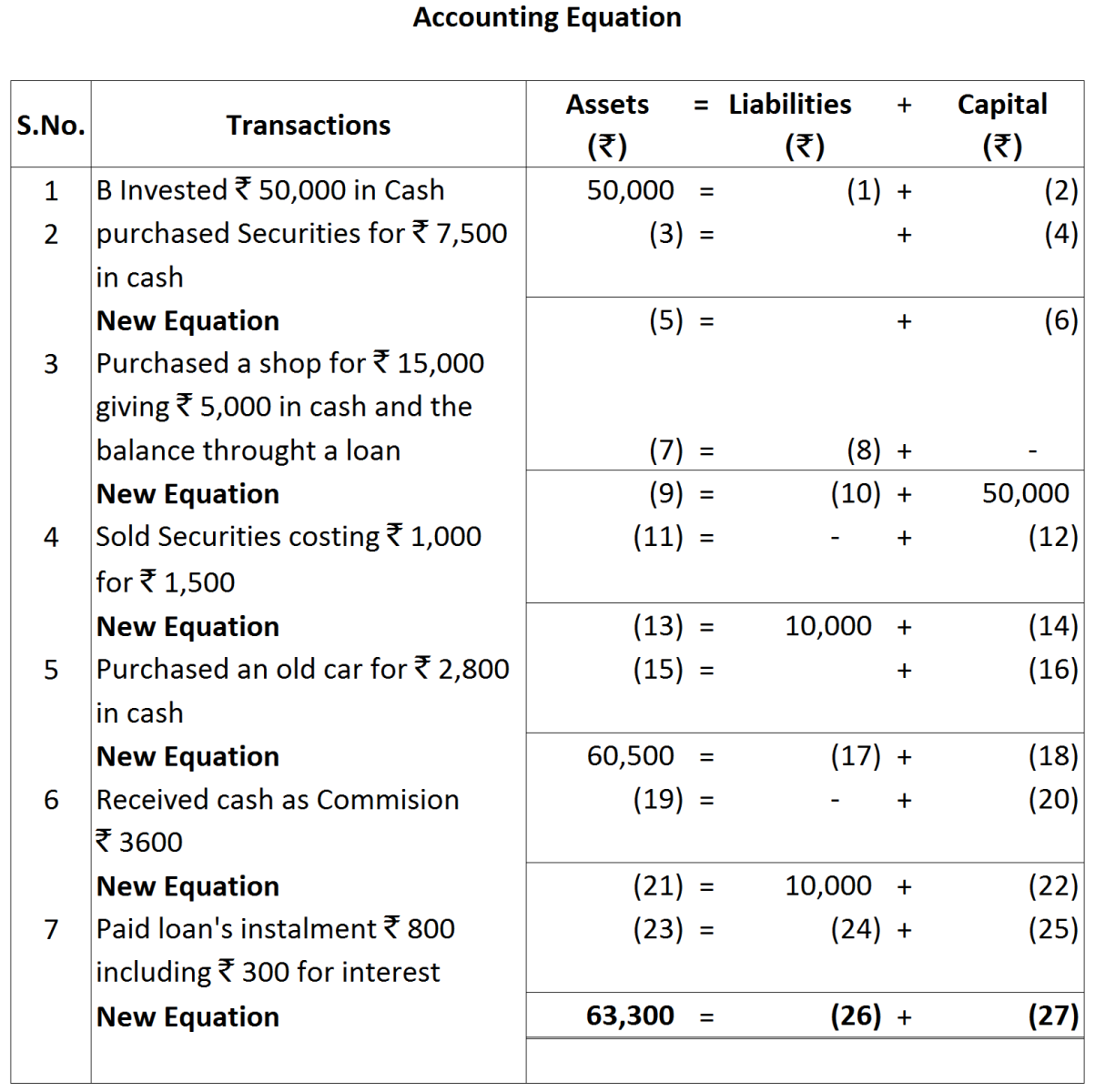
Complete the following Accounting Equation by filling the missing amounts:
Original Cost of a Machinery ₹ 5,00,000; Salvage value ₹ 20,000; Expected useful life 10 years. What will be the amount of depreciation for the fourth year according to original cost method? Also specify the rate of depreciation.
Prepare an Accounting Equation on the basis of the following transaction:
  1. Started business with cash ₹ 70,000.
  2. Credit purchase of goods ₹ 18,000.
  3. Payment made to creditors in full settlement ₹ 17,500.
  4. Purchase of machinery for cash ₹ 20,000.
  5. Depreciation on machinery ₹ 2,000.
Journalise the following transactions:
  1. Sold goods to Brijesh of the list price of ₹ 10,000 at trade discount of 5%. Received full payment in cash.
  2. Goods given away as charity ₹ 1,000.
  3. Charge interest on capital of ₹ 5,00,000 @ 7% p.a.
  4. Outstanding wages ₹ 3,000.
  5. ₹ 5,000 due from Sunny are now bad debts.
  6. ₹ 50,000 cash sales (of goods costing ₹ 40,000).
Enter the following transactions in a Double Column Cash Book and Journal Proper and post them into Ledger∶
May 1
Balance of Cash in Hand ₹ 12,400; Bank Overdraft ₹ 36,000
May 3
Direct deposit by Mr. Ganesh in our bank account ₹ 10,000. Discount allowed ₹ 200
May 5
Issued a cheque of ₹ 7,700 to Mr. Suresh in full settlement of his account of ₹ 8,000
May 6
Received a cheque from X for ₹ 12,000. Discount allowed ₹ 500. This cheque was deposited into bank on 7th May
May 8
Received Cash ₹ 22,000 and cheque of ₹ 8,000 for cash sale
May 12
Cash sale ₹ 70,000 of which ₹ 55,000 banked
May 15
Cheque received on 8th May endorsed to Mr. Sunil. Discount received ₹ 150
May 20
Discounted a B/R of ₹ 10,000 at 1% through bank
May 24
Cheque received from X dishonoured, Bank debits ₹ 20 in respect of bank charges
May 25
Purchased goods for ₹ 50,000 at a trade discount of 10%. Payment was made in cash
May 26
Withdrew from bank ₹ 10,000 for office use and ₹ 2,000 for personal use
May 31
Interest debited by Bank ₹ 4,500
Journalise the following transactions:
2017
 
Jan. 1
Paid into bank for opening a Current Account
10,000
Jan. 3
Goods sold for ₹ 50,000 and the amount was deposited into the bank
 
Jan. 7
Amount withdrawn from bank
20,000
Jan. 10
Goods sold for Cash
15,000
Jan. 12
Amount deposited into bank
12,000
Jan. 14
Goods purchased and payment made by cheque.
25,000
Explain any three points highlighting the utility of accounting standards.
How is Trade Discount recorded in the books of account?
What is an Account?