Question
Establish the formula for work in isothermal process.

Answer

SELF

Need a full question paper?

Generate a complete, print-ready paper with questions like this in minutes — across 16+ boards, with answer keys.
Start Generating Free

Similar questions

A small block of mass $200g$ is kept at the top of a frictionless incline which is $10m$ long and $3.2m$ high. How much work was required.
  1. To lift the block from the ground and put it at the top.
  2. To slide the block up the incline? What will be the speed of the block when it reaches the ground.
  3. It falls off the incline and drops vertically on the ground.
  4. It slides down the incline? Take $g = 10m/s^2$.
Estimate the average thermal energy of a helium atom at:
  1. Room temperature $(27°C)$
  2. The temperature on the surface of the Sun(6000K)
  3. The temperature of 10 million kelvin (the typical core temperature in the case of a star).
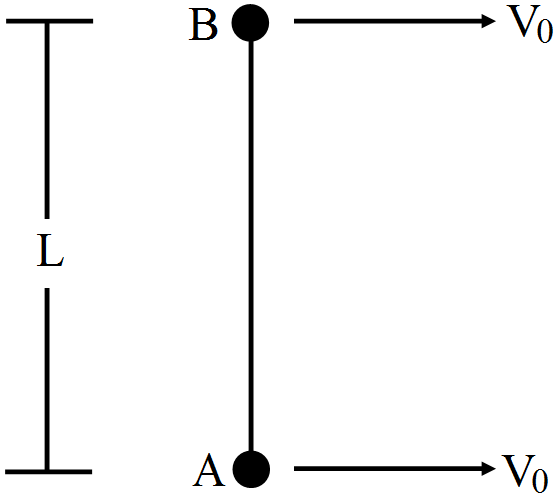
Two small balls A and B, each of mass m, are joined rigidly to the ends of a light rod of lengh L (figure). The system translates on a frictionless horizontal surface with a velocity vo in a direction perpendicular to the rod. A particle P of mass m kept at rest on the surface sticks to the ball A as the ball collides with it. Find:
  1. The linear speeds of the balls A and B after the collision.
  2. The velocity of the centre of mass C of the system A + B + P.
  3. The angular speed of the system about C after the collision.

[Hint: The light rod will exert a force on the ball B only along its length.]
A cord of negligible mass is wound round the rim of a fly wheel of mass $20 \ kg$ and radius $20 \ cm$. A steady pull of $25 N$ is applied on the cord as shown in Fig. $6.31$. The flywheel is mounted on a horizontal axle with frictionless bearings.
$(a)$ Compute the angular acceleration of the wheel.
$(b)$ Find the work done by the pull, when $2m$ of the cord is unwound.
$(c)$ Find also the kinetic energy of the wheel at this point. Assume that the wheel starts from rest.
$(d)$ Compare answers to parts $(b)$ and $(c).$
A person is standing on a truck moving with a constant velocity of 14.7m/s on a horizontal road. The man throws a ball in such a way that it returns to the truck after the truck has moved 58.8m. Find the speed and the angle of projection:
  1. As seen from the truck.
  2. As seen from the road.
What is adiabatic process? Establish the equation of state for this.
A sample of an ideal gas $(\gamma=1.5)$ is compressed adiabatically from a volume of $150cm^3$ to $50cm^3$. The initial pressure and the initial temperature are $150kPa$ and $300K$. Find,
  1. The number of moles of the gas in the sample.
  2. The molar heat capacity at constant volume.
  3. The final pressure and temperature.
  4. The work done by the gas in the process.
  5. The change in internal energy of the gas.
How much energy is radiated per minute from the filament of incandescent lamp at 3000K if the surface area is $10^{-4}m^2$ and its emissivity is $0.4?$ Stefan's constant $= 5.67 \times 10^{-8} Wm^{-2}K^{-4}.$
A person normally weighing $50kg$ stands on a massless platform which oscillates up and down harmonically at a frequency of $2.0s^{–1}$ and an amplitude $5.0cm$. A weighing machine on the platform gives the persons weight against time.
  1. Will there be any change in weight of the body, during the oscillation?
  2. If answer to part (a) is yes, what will be the maximum and minimum reading in the machine and at which position?
Two linear simple harmonic motions of equal amplitudes and frequencies $\omega$ and $2\omega$ are impressed on a particle along the axes of X and Y respectively. If the initial phase difference between them $\frac{\pi}{2}$ is find the resultant path followed by the particle.