MCQ
Ethylene oxide when treated with Grignard reagent yields
  • primary alcohol
  • B
    secondary alcohol
  • C
    tertiary alcohol
  • D
    cyclopropyl alcohol.

Answer

Correct option: A.
primary alcohol
a
Ethylene oxide on treatment with Grignard reagent give additive product which undergo hydrolysis to give primary alcohol as final product

Need a full question paper?

Generate a complete, print-ready paper with questions like this in minutes — across 16+ boards, with answer keys.
Start Generating Free

Similar questions

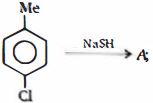
Product $(A)$ of the reaction is
The de Broglie wavelength $\left( \lambda  \right)$ associated with a photoelectron varies with the frequency $(v)$ of the incident radiation as, [$v_0$ is threshold frequency]:
Write the $IUPAC$ name of  $\begin{array}{*{20}{c}}
  {\,\,\,\,H\,\,\,\,\,\,\,\,\,\,\,\,\,\,\,\,\,\,\,\,\,\,\,\,\,\,\,\,\,\,\,\,\,\,\,\,\,\,\,\,\,\,\,\,\,\,\,\,\,\,\,\,\,\,\,\,\,\,\,Br} \\ 
  {\,|\,\,\,\,\,\,\,\,\,\,\,\,\,\,\,\,\,\,\,\,\,\,\,\,\,\,\,\,\,\,\,\,\,\,\,\,\,\,\,\,\,\,\,\,\,\,\,\,\,\,\,\,\,\,\,\,\,\,\,\,\,\,\,\,\,|} \\ 
  {C{H_3} - C - C{H_2} - C{H_2} - C{H_2} - C - C{H_3}} \\ 
  {\,|\,\,\,\,\,\,\,\,\,\,\,\,\,\,\,\,\,\,\,\,\,\,\,\,\,\,\,\,\,\,\,\,\,\,\,\,\,\,\,\,\,\,\,\,\,\,\,\,\,\,\,\,\,\,\,\,\,\,\,\,\,\,\,\,\,\,|} \\ 
  {\,\,OH\,\,\,\,\,\,\,\,\,\,\,\,\,\,\,\,\,\,\,\,\,\,\,\,\,\,\,\,\,\,\,\,\,\,\,\,\,\,\,\,\,\,\,\,\,\,\,\,\,\,\,\,\,\,\,\,\,\,\,Br} 
\end{array}$
The $\left(\frac{\partial E }{\partial T }\right)_{ P }$ of different types of half cells are as follows :

$\text { A } \quad\quad\quad\quad\quad \text { B } \quad\quad\quad\text { C } \quad\quad\quad\quad\text { D }$

$1 \times 10^{-4} \quad 2 \times 10^{-4} \quad 0.1 \times 10^{-4} \quad 0.2 \times 10^{-4}$

(Where $E$ is the electromotive force)

Which of the above half cells would be preferred to be used as reference electrode?

Number of compounds/species from the following with non-zero dipole moment is. . . . . .  $\mathrm{BeCl}_2, \mathrm{BCl}_3, \mathrm{NF}_3, \mathrm{XeF}_4, \mathrm{CCl}_4, \mathrm{H}_2 \mathrm{O} \mathrm{H}_2 \mathrm{~S}, \mathrm{HBr}$, $\mathrm{CO}_2, \mathrm{H}_2, \mathrm{HCl}$
The structure of the noble gas compound $XeF_4$ is
The compound formed on heating chlorobenzene with chloral in the presence of  concentrated sulphuric acid, is
The total number of reagents from those given below, that can convert nitrobenzene into aniline is ..... . (Integer answer)

$I.$ ${Sn}-{HCl}$       $II.$ ${Sn}-{NH}_{4} {OH}$         $III.$ ${Fe}-{HCl}$        ${IV} . {Zn}-{HCl}$               $V.$ ${H}_{2}-{Pd}$               $VI.$ ${H}_{2}-$ રેની નિકલ

Which among the following is the strongest Bronsted base ?
A sample of phosphorus trichloride $(PC{l_3})$ contains $1.4$ moles of the substance. How many atoms are there in the sample