Question
Evaluate the following integrals:
$\int\frac{1}{(1+\text{x}^2)\sqrt{1-\text{x}^2}}\text{ dx}$

Answer

We have
$\text{I}=\int\frac{1}{(1+\text{x}^2)\sqrt{1-\text{x}^2}}\text{ dx}$
Putting $\text{x}=\frac{1}{\text{t}}$
$\text{dx}=-\frac{1}{\text{t}^2}\text{ dt}$
$\therefore\ \text{I}=\int\frac{-\frac{1}{\text{t}^2}\text{dt}}{\big(1+\frac{1}{\text{t}^2}\big)\sqrt{1-\frac{1}{\text{t}^2}}}$
$=\int\frac{-\frac{1}{\text{t}^2}\text{ dt}}{\frac{(\text{t}^2+1)}{\text{t}^2}\frac{\sqrt{\text{t}^2-1}}{\text{t}}}$
$=-\int\frac{\text{t dt}}{(\text{t}^2+1)\sqrt{\text{t}^2-1}}$
Again Putting $\text{t}^2-1=\text{u}^2$
$2\text{tdt}=2\text{udu}$
$\text{tdt}=\text{udu}$
$\therefore\ \text{I}=-\int\frac{\text{u du}}{(\text{u}^2+2)\text{u}}$
$=-\int\frac{\text{du}}{\text{u}^2+(\sqrt{2})^2}$
$=-\frac{1}{\sqrt{2}}\tan^{-1}\Big(\frac{\text{u}}{\sqrt{2}}\Big)+\text{C}$
$=-\frac{1}{\sqrt{2}}\tan^{-1}\bigg(\frac{\sqrt{\text{t}^2-1}}{\sqrt{2}}\bigg)+\text{C}$
$=-\frac{1}{\sqrt{2}}\tan^{-1}\Bigg(\sqrt{\frac{\frac{1}{\text{x}^2}-1}{2}}\Bigg)+\text{C}$
$=-\frac{1}{\sqrt{2}}\tan^{-1}\bigg(\sqrt{\frac{1-\text{x}^2}{2\text{x}^2}}\bigg)+\text{C}$

Need a full question paper?

Generate a complete, print-ready paper with questions like this in minutes — across 16+ boards, with answer keys.
Start Generating Free

Similar questions

Show that the following system of linear equations is consistent and also find solution:
$2x + 3y = 5$
$6x + 9y = 15$
Evaluate the following integrals:
$\int\frac{\text{x}^2-1}{\text{x}^4+1}\ \text{dx}$
Using definite intergeals, find the area of the circle $x^2+ y^2 = a^2.$
Evalute the following integrals:
$\int\frac{1}{\text{e}^\text{x}+1}\text{dx}$
Solve the following differential equation:
$\frac{\text{dy}}{\text{dx}}=\frac{(\text{x}-\text{y})+3}{2(\text{x}-\text{y})+5}$
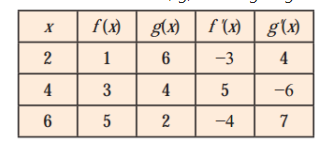
A table of values of f, g, f ‘ and g’ is given

Image

If r(x) = f [g(x)] find r’ (2).

(ii)If R(x) = g[3 + f(x)] find R’ (4).

(iii)If s(x) = f[9− f(x)] find s’ (4).

(iv)If S(x) = g[g(x)] find S’ (6)

Evaluate the following integrals as limit of sum:$\int\limits^{\frac{\pi}{2}}_{0}\sin\text{x dx}$
A toy company manufactures two types of dolls, A and B. Market tests and available resources have indicated that the combined production level should not exceed 1200 dolls per week and the demand for dolls type B is at most half of that for dolls of types A. Further, the production level of dolls of type A can exceed three times the production of dolls of other type by at most 600 units. If the company makes profit of Rs. 12 and Rs. 16 per doll respectively on dolls A and B, how many of each should be produced weekly in order to maximize the profit ?
Solve the following differential equation:
$(\text{x}+\text{y})^2\frac{\text{dy}}{\text{dx}} = 1$
Find the intervals in which the following functions are increasing or decreasing.
$\text{f}(\text{x})=\frac{3}{2}\text{x}^4-4\text{x}^3-45\text{x}^2+51$