Question
Evaluate the following integrals:$\int\limits^{1}_0\frac{\log(1+\text{x})}{1+\text{x}^2}\text{ dx}$

Answer

We have,$\text{I}=\int\limits^{1}_0\frac{\log(1+\text{x})}{1+\text{x}^2}\text{ dx}$
Putting $\text{x}=\tan\theta$$\text{dx}=\sec^2\theta\text{ d}\theta$
When $\text{x}\rightarrow0;\theta\rightarrow0$ And $\text{x}\rightarrow1;\theta\rightarrow\frac{\pi}{4}$ Now, integral becomes,$\text{I}=\int\limits^{\frac{\pi}{4}}_0\frac{\log(1+\tan\theta)}{\sec^2\theta}\sec^2\theta\text{ d}\theta$
$\Rightarrow\text{I}=\int\limits^{\frac{\pi}{4}}_0\big[\log(\tan\theta)\big]\text{d}\theta\ ...(\text{i})$
$\Rightarrow\text{I}=\int\limits^{\frac{\pi}{4}}_0\bigg[\log\Big\{1+\tan\Big(\frac{\pi}{4}-\theta\Big)\Big\}\bigg]\text{d}\theta$ $\Bigg[\because\ \int\limits^{\text{a}}_{0}\text{f(x)}\text{dx}=\int\limits^{\text{a}}_{\text{0}}\text{f}(\text{a}-\text{x})\text{dx}\Bigg]$
$\Rightarrow\text{I}=\int\limits^{\frac{\pi}{4}}_0\Bigg[\log\bigg\{1+\frac{\tan\frac{\pi}{4}-\tan\theta}{1+\tan\frac{\pi}{4}\tan\theta}\bigg\}\Bigg]\text{d}\theta$
$\Rightarrow\text{I}=\int\limits^{\frac{\pi}{4}}_0\bigg[\log\Big\{1+\frac{1-\tan\theta}{1+\tan\theta}\Big\}\bigg]\text{d}\theta$
$\Rightarrow\text{I}=\int\limits^{\frac{\pi}{4}}_0\bigg[\log\Big\{\frac{2}{1+\tan\theta}\Big\}\bigg]\text{d}\theta$
$\Rightarrow\text{I}=\int\limits^{\frac{\pi}{4}}_0\big[\log2-\log(1+\tan\theta)\big]\text{d}\theta\ ...(\text{ii})$
Adding (i) and (ii) we get$2\text{I}=\int\limits^{\frac{\pi}{4}}_0\big(\log2\big)\text{d}\theta$
$\Rightarrow2\text{I}=\big(\log2\big)\Big[\theta\Big]^{\frac{\pi}{4}}_0$
$\Rightarrow2\text{I}=\frac{\pi}{4}\log2$
$\Rightarrow\text{I}=\frac{\pi}{8}\log2$
$\therefore\ \int\limits^{1}_0\frac{\log(1+\text{x})}{1+\text{x}^2}\text{ dx}=\frac{\pi}{8}\log2$

Need a full question paper?

Generate a complete, print-ready paper with questions like this in minutes — across 16+ boards, with answer keys.
Start Generating Free

Similar questions

Find the shortest distance between the following pairs of lines whose cartesian equation are:
$\frac{\text{x}-1}{-1}=\frac{\text{y}+2}{1}=\frac{\text{z}-3}{-2}$ and $\frac{\text{x}-1}{1}=\frac{\text{y}+1}{2}=\frac{\text{z}+1}{-2}$
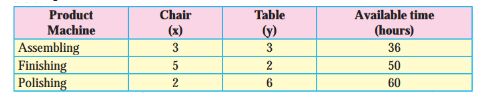
We first draw the lines processed on three machines : Assembling, Finishing and Polishing. The time required for each product in hours and availability of each machine is given by following table:

Image

Formulate the above problem as L.P.P. Solve it graphically to get maximum profit.

A rectangle is inscribed in a semi-circle of radius r with one of its sides on diameter of semi-circle. Find the dimension of the rectangle so that its area is maximum. Find also the area.
Form the differential equation of the family of curves represented by the equation (a being the perimeter):$(2\text{x}+\text{a})^2+\text{y}^2=\text{a}^2$
If $\sqrt{y+x}+\sqrt{y-x}=c_i$ show that $\frac{d y}{d x}=\frac{y}{x}-\sqrt{\frac{y^2}{x^2}-1}$
$\int\frac{\text{x}-1}{\sqrt{\text{x}+4}}\ \text{dx}$
Solve the following differential equation:
$(\text{x}+\text{y})^2\frac{\text{dy}}{\text{dx}} = 1$
Find the equations of tangents and normals to the curve at the point on it.

$x=\sin \theta$ and $y=\cos 2 \theta$ at $\theta=\frac{\pi}{6}$

Differentiate $\sin^{-1}\Big(\frac{2\text{x}}{1+\text{x}^2}\Big)$ with respect to $\tan^{-1}\Big(\frac{2\text{x}}{1-\text{x}^2}\Big),$ if -1 < x < 1.
Discuss the continuity and differentiability of the f(x) = |x| + |x - 1| in the interval (-1, 2).