Question
Explain co–dominance taking an example of human blood groups in the population.

Answer

Co–dominance:
  • The alleles which are able to express themselves independently, even when present together are called co–dominant alleles and this biological phenomenon is called co–dominance. For example, ABO blood grouping in humans.
  • ABO blood groups are controlled by gene I. Gene I has three alleles IA, IB and IO/i.
  • IA and IB produce RBC surface antigens sugar polymer A and B, respectively, whereas i does not produce any antigen.
  • IA and IB are dominant over i hence IA and IB are dominant alleles and i is recessive allele as in IAiand IBi.
  • When IA and IB are present together, both express equally and produce the surface antigens A and B, hence show co–dominance.
  • Since humans are diploid, each person possesses any two of the three ‘I’ gene alleles, resulting into six different genotypic combinations and four phenotypic expressions.
Table showing the genetic basis of blood groups in human population.
Allele fromParent 1 Allele fromParent 2 Genotype of offspring Blood groups of offspring
IA IA IAIA A
IA IB IAIB AB
IA i IAi A
IB IB IBIB B
IB i IBi B
i i ii O

Need a full question paper?

Generate a complete, print-ready paper with questions like this in minutes — across 16+ boards, with answer keys.
Start Generating Free

Similar questions


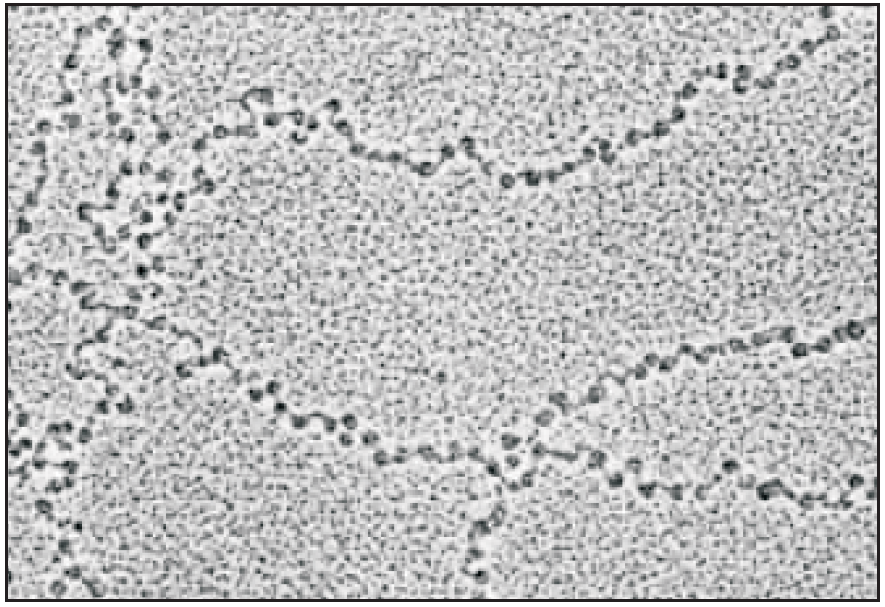
Shown above is the electron micrograph (EM) picture of 'beads-on-string'.
  1. Identify and explain the detailed structure of a bead with the help of a labelled diagram.
  2. Describe the packaging of 'beads-on-string'in a eukaryotic cell.
How does a chromosomal disorder differ from a Mendelian disorder?
Samya visited a zoo with her mother, on watching the cheetah, she wondered how he uses his forelimbs for running. While the same forelimbs in bats are used for flying. She wanted to know more about it and so asked her mother (a biology teacher) about it. Her mother explained her how forelimbs are modified in different animal groups for different functions.
  1. What are such organs called?
  2. Give an example of such organs from the plant world.
  3. What led to the origin of such organs?
  4. What are the values shown by Samya?
  1. Draw the pyramids of biomass in a pond and in a forest. Explain giving reasons why the two pyramids are different.
  2. Pyramid of energy is always upright. Explain.
What evidence for biological evolution is obtained from, comparative anatomy? Describe in detail
Draw a diagram and describe the immune system found in humans.
Find out from newspapers and popular science articles any new fossil discoveries or controversies about evolution.
  1. Work out a cross upto F, generation between two pure-bred pea plants, one bearing violet flowers and the other white flowers.
  2.  
  1. Name this type of cross.
  2. State the different laws of Mendel that can be derived from such a cross.
  1. Explain the process of microsporogenesis in angiosperms.
  2. Draw a labelled diagram of a mature pollen grain.
Explain the difference between apes and human.