Question
Explain co-evolution with reference to parasites and their hosts. Mention any four special adaptive features evolved in parasites for their parasitic mode of life.
OR
Explain parasitism and co-evolution with the help of one example of each.
Answer

Co-evolution is a phenomenon where many parasites have evolved to be host-specific in such a way that both the host and parasite tend to co-evolve, i.e. if the host develops/evolves special mechanism for rejecting or resisting the parasite the parasite has to evolve mechanism to counteract and neutralise them to succeed with the same host species. Parasites have special adaptations according to their lifestyles such as; loss of unnecessary sense organs, presence of adhesive organs or suckers, loss of digestive system, and high reproductive system.

Need a full question paper?

Generate a complete, print-ready paper with questions like this in minutes — across 16+ boards, with answer keys.

Start Generating Free

Similar questions

  1. Write the importance of measuring the size of a population in a habitat or an ecosystem.
  2. Explain with the help of an example how the percentage cover is a more meaningful measure of population size than more numbers.
Differentiate between a template strand and coding strand of DNA.
Explain productivity about sustainable ecosystem.Describe productivity as a unit of ecosystem.
List any two types of IUDs that are available for human females and state their mode of action.
What are Methanogens? Name the animals they are present in and the role they play there.
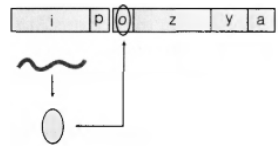
Given below is a schematic representation of a lac operon. Answer the following questions:

i. Identify i and p.
ii. Name the inducer for this operon.
iii. Explain the function of inducer for this operon.
Express your opinion on removal of tribal people out of forest due to developmental activities in the forest.
Differentiate between vaccination and immunization. Describe the two types of vaccines with suitable examples?
Match the DDT concentration in Column I with the organisms in an aquatic food chain in Coulmn II.
S. No. Column I S. No. Column II
A. 0.04ppm i. Large fish
B. 2.0ppm ii. Zooplanktons
C. 0.5ppm iii. Fish-eating birds
D. 25ppm iv. Small fish
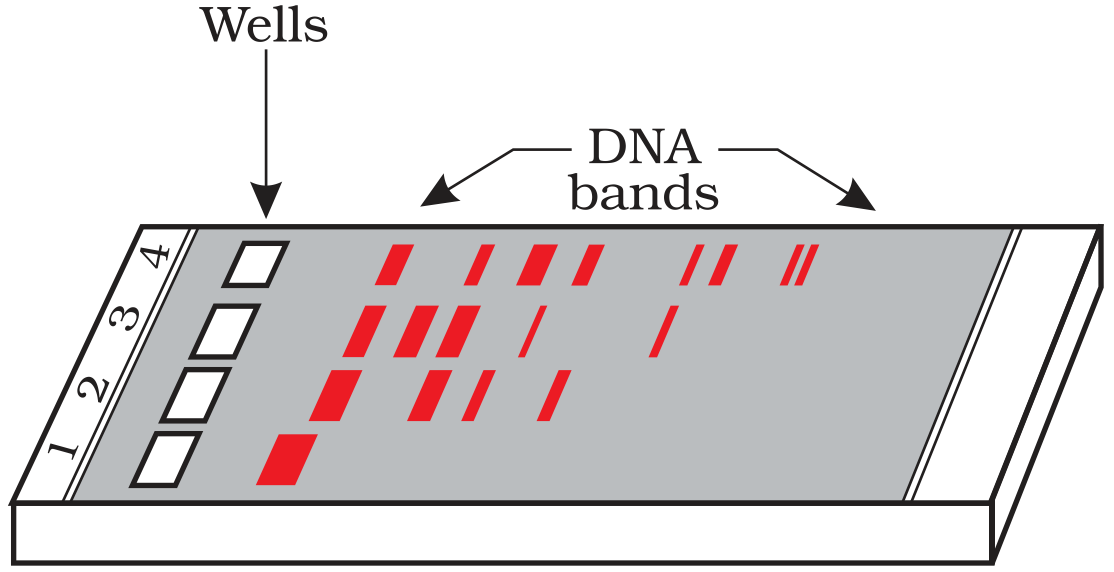
Rajesh was doing gel electrophoresis to purify DNA fragments. Given below is the sketch of the observations of the experiment performed by him.
  1. At which end he would have loaded the samples and where?
  2. Analyse the reason for different positions taken up by the DNA bands.
  3. Elaborate the step he would have followed to visualise DNA bands.