Question
Explain geometric growth in plants.

Answer

In most systems, the initial growth is slow (lag phase), and it increases rapidly thereafter-at an exponential rate (log or exponential phase). Here, both the progeny cells following mitotic cell division retain the ability to divide and continue to do so. However, with limited nutrient supply, the growth slows down leading to a stationary phase. If we plot the parameter of growth against time, we get a typical sigmoid or S-curve. A sigmoid curve is a characteristic of living organism growing in a natural environment. It is typical for all cells, tissues and organs of a plant.
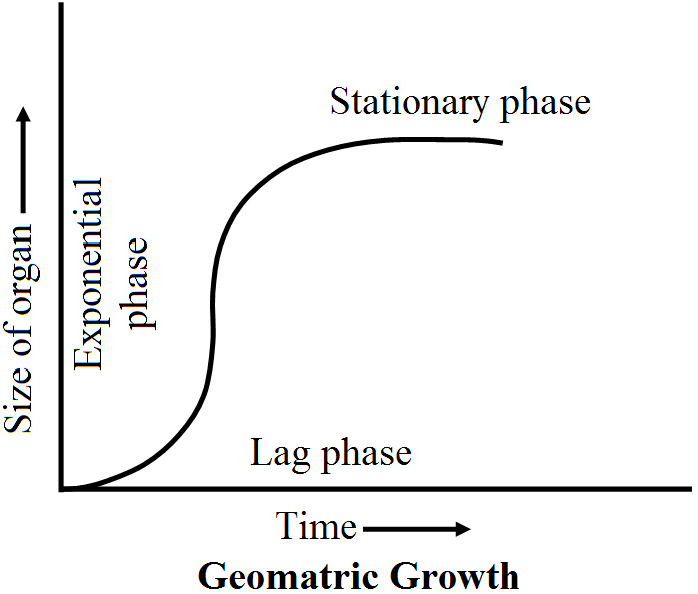
The exponential growth can be expressed as:
W1 = W0 ert
W1 = final size (weight, height, number etc.)
W0 = initial size at the beginning of the period
r = growth rate
t = time of growth
e = base of natural logarithms
Here, r is the relative growth rate and is also the measure of the ability of the plant to produce new plant material, referred to as efficiency index. Hence, the final size of W1 depends on the initial size, W0.

Need a full question paper?

Generate a complete, print-ready paper with questions like this in minutes — across 16+ boards, with answer keys.

Start Generating Free

Similar questions

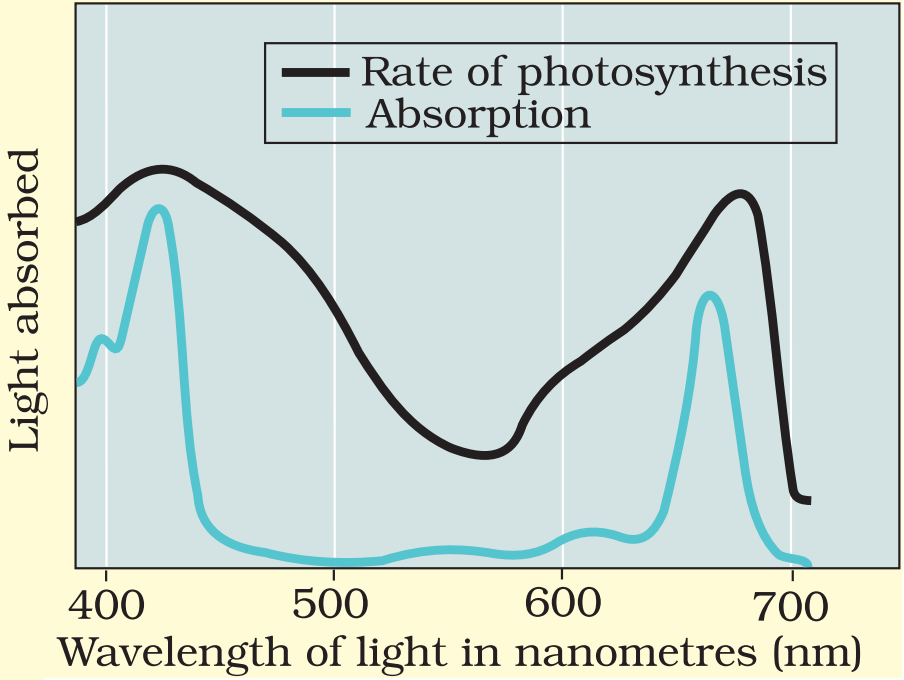
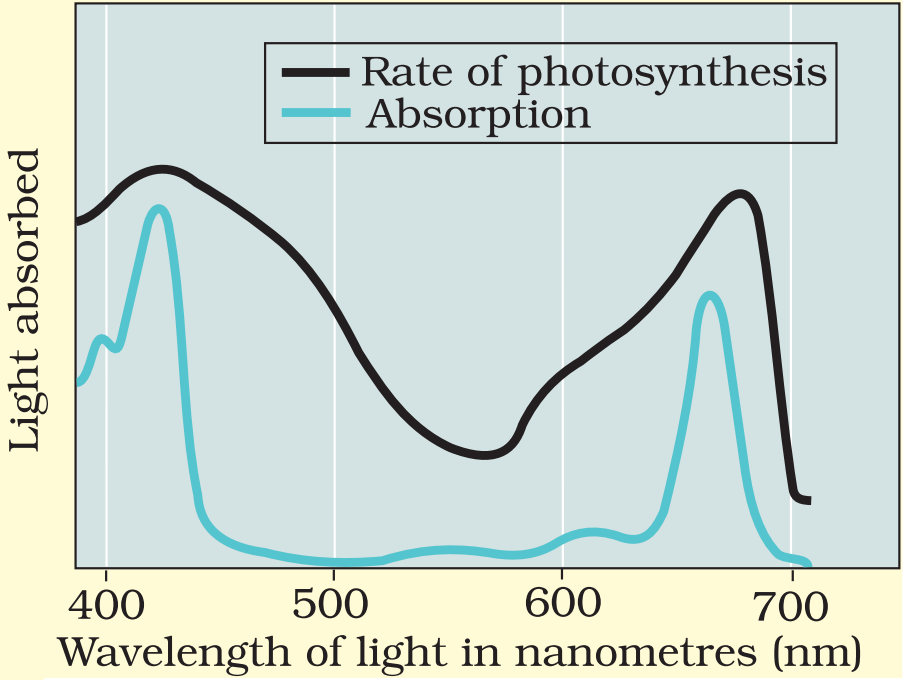
In the figure given below, the black line (upper) indicates action spectrum for photosynthesis and the lighter line (lower) indicates the absorption spectrum of chlorophyll a, answer the following:

  1. What does the action spectrum indicate? How can we plot an action spectrum? Explain with an example.
  2. How can we derive an absorption spectrum for any substance?
  3. If chlorophyll a is responsible for light reaction of photosynthesis, why do the action spectrum and absorption spectrum not overlap?
Write short notes on the following: (a)Neural coordination (b) forebrain (c) Midbrain (d)Hindbrain (e) Synapse
What are ribozymes? Describe in detail the nomenclature and classification of enzymes.
What is Golgi apparatus? Describe it pictorially and describe its functions.
Give a comparative account of:
  1. The nature of cell wall,
  2. The characteristics of flagella among the three classes of algae.
What is a centromere? How does the position of centromere form the basis of classification of chromosomes. Support your answer with a diagram showing the position of centromere on different types of chromosomes.
During the biology class, teacher taught that water should be conserved in the body of animals because it is precious and non-renewable in some cases. He asked the student that how the nature conserves water even through the excretory system are present in different organisms.
  1. Name three major excretory products of animals.
  2. Does loop of Henle play any role in water conservation in humans?
  3. Explain excretory organs in different animal groups.
  4. What values does the teacher possess?
Describe the important steps in muscle contraction.
Akshita who is a biology tutor was teaching photosystems to the students at her place. While explaining the topic light reaction said that, "Two of the three products of light reaction, ATP and NADPH are used to drive the reactions in the biosynthetic/dark phase." It has been verified by the fact that immediately after light becomes unavailable, the biosynthetic phase continues for some time and then stops; if light becomes available again, the process continues.
Her brother, student of class XI was also listening the same and was remembering that he had listened the same from his biology teacher also. He interupped her sister and asked her to re-explain the whole process for the better understanding.
  1. What are the products of light reaction?
  2. Can we say that calling the biosynthetic phase, dark reaction is a misnomer? Justify.
  3. Name the first stable product of photosynthesis.
  4. What value you learn from this phenomenon if applied in daily life?
Define sliding filament theory of muscle contraction.