Question
Explain how, nitrogen, oxygen and argon gases are separated form air.

Answer

Air is mixture of gases like nitrogen, oxygen, argon, carbon dioxide, helium, neon, krypton, xeon etc. The various gases of air are separated from one another by fractional distillation of liquid air. This separation is based on the fact that different gases of air have different boiling points(in liquid form). The air is first filtered to remove dust, then water vapour and carbon dioxide are removed. Air is compressed to a high pressure and then cooled. The cooled air is then allowed to expand quickly into a chamber through a jet. This cools the air even more. This process of compression, cooling and rapid expansion of air is repeated again and again to make the air more and more cool so that it becomes liquid air. Now, the liquid air is fed into a tall fractionating column and warmed up slowly. Liquid nitrogen has lowest boiling point of $-196^\circ C.$ So, on warming, it boils off first to form nitrogen gas and is collected at the upper part of the fractional distillation column. Liquid argon has a slightly higher boiling point of $-186^\circ C.$ So, it boils off next and collected as argon gas in the middle part of fractional distillation column. Liquid oxygen has a still higher boiling point of $-183^\circ C.$ So, liquid oxygen boils off last and collected as oxygen gas at the bottom of fractional distillation column.

Need a full question paper?

Generate a complete, print-ready paper with questions like this in minutes — across 16+ boards, with answer keys.

Start Generating Free

Similar questions

Fill in the missing data in the following table.
Species Property $H_2O$ $CO_2$ Na atom $MgCl_2$
No. of moles $2$ $0.5$
No. of particles $3.011 \times 10^{23}$
Mass $36g$ $115g$
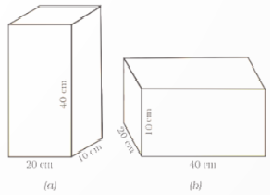
A block of wood is kept on a tabletop. The mass of the wooden block is $5 \ kg$ and its dimensions are $40 \ cm \times 20 \ cm\times 10 \ cm$. Find the pressure exerted by the wooden block on the table top if it is made to lie on the table top with its sides of dimensions
Image
$i. 20 \ cm \times 10 \ cm$ and
$ii. 40 \ cm \times 20 \ cm$.
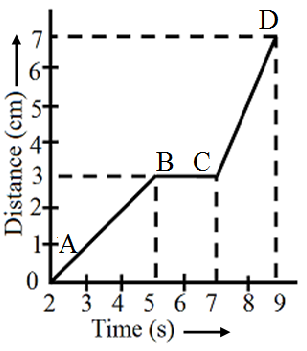
The graph given alogside shows the positions of a body at different times. Calculate the speed of the body as it moves from:
  1. $A$ to $B.$
  2. $B$ to $C.$
  3. $C$ to $D.$
The following data was obtained for a body of mass $1\ kg$ dropped from a height of $5$ metres:
 
Distance above ground
Velocity
$i.$
$5m$
$0m/s$
$ii.$
$3.2m$
$6m/s$
$iii.$
$0m$
$10m/s$
Show by calculations that the above data verifies the law of conservation of energy (Neglect air resistance). $(g = 10m/s^2)$.
Describe the process to show that the dye used in blue/black ink is a mixture of two or more components with diagram.
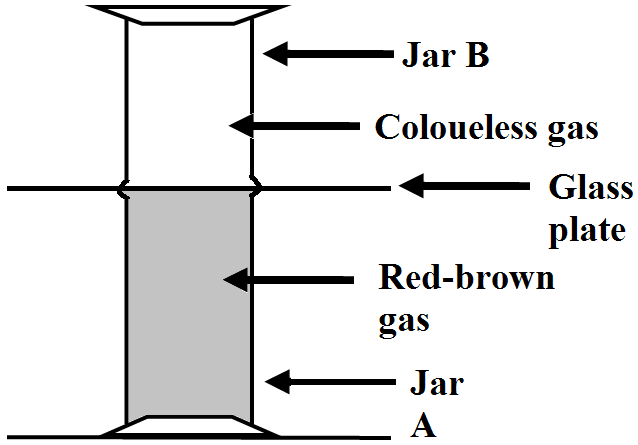
Look at the diagram on the right side. Jar $A$ contains are d-brown gas whereas Jar $B$ contains a colourless gas. The two gas jars are separated by a glass plate placed between them:
  1. What will happen when the glass plate between the two jars is pulled away?
  2. What name is given to the phenomenon which takes place?
  3. Name the brown gas which could be in jar $A$.
  4. Which is the colorless gas most likely to be present in jar $B$?
  5. Name one coloured solid and one colourless liquid which can show the same phenomenon.

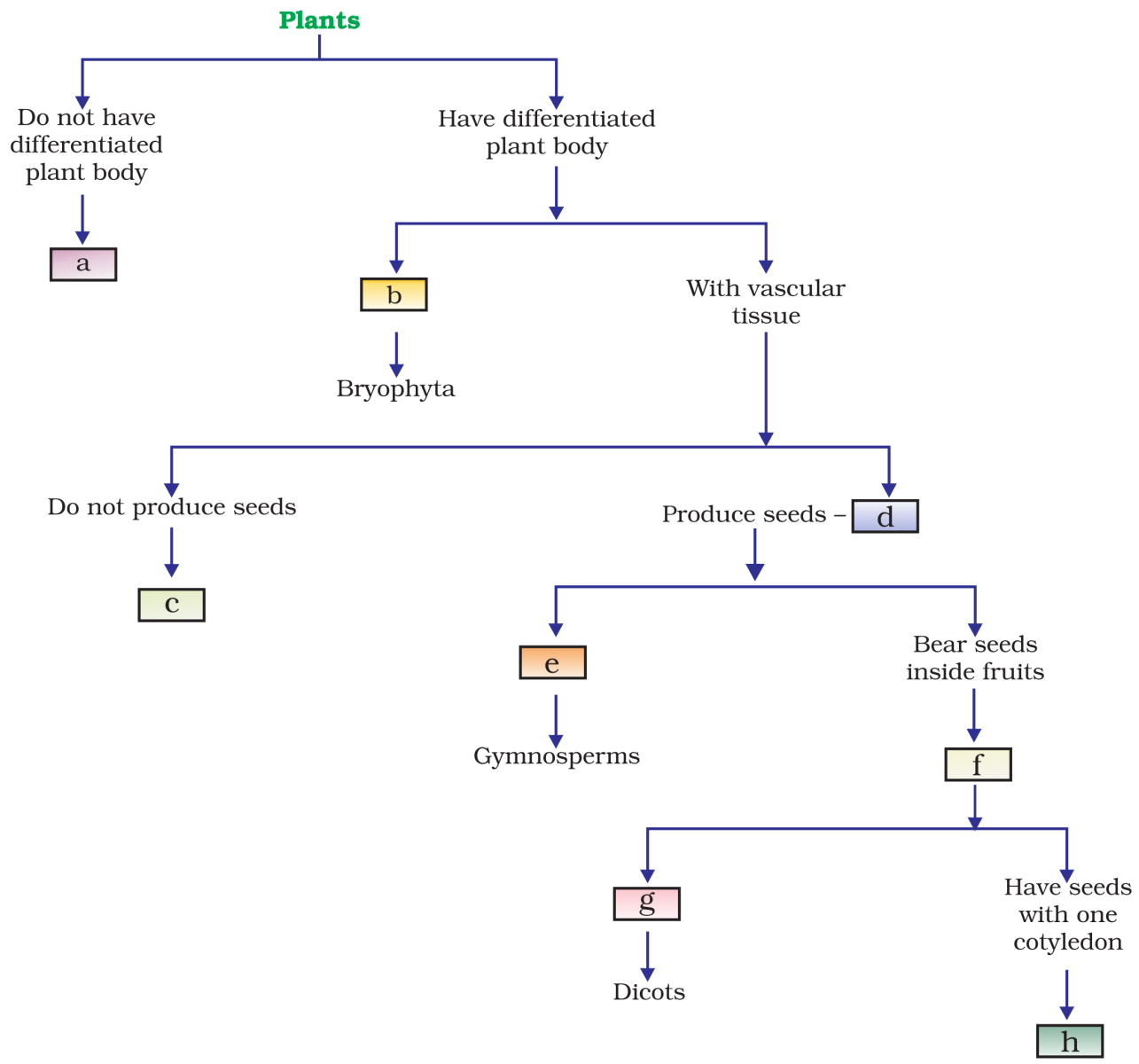
Fill in the boxes given in with appropriate characteristics/ plant group (s).
In a reaction, $5.3g$ of sodium carbonate reacted with $6g$ of acetic acid. The products were $2.2g$ of carbon dioxide, $0.9g$ water and $8.2g$ of sodium $Q$ acetate. Show that these observations are in agreement with the law of conservation of mass. sodium carbonate + acetic acid $\rightarrow $ sodium acetate + carbon dioxide + water.
A liquid compound $X$ of molecular mass $18u$ can be obtained from a number of natural sources. All the animals and plants need liquid $X$ for their survival. When an electric current is passed through $200$ grams of pure liquid $X$ under suitable conditions, then $178$ grams of gas $Y$ and $22$ grams of gas $Z$ are produced. Gas $Y$ is produced at the positive electrode whereas gas $Z$ is obtained at the negative electrode. Moreover, gas $Y$ supports combustion whereas gas $Z$ burns itself causing explosions.
  1. Name $(i)$ liquid $X (ii)$ gas $Y,$ and $(iii)$ gas $Z$
  2. What is the ratio to the mass of element $Z$ to the mass of element $Y$ in the liquid $X?$
  3. Which law of chemical combination is illustrated by this example$?$
  4. Name two sources of liquid $X.$
  5. Gate an important use of $Y$ in our life.
Describe a simple experiment to show that the prongs of a sound producing tuning fork are vibrating.