Question
Explain how the process of a basic idea becoming an opportunity?
OR
Explain the transformation of ideas into opportunity.

Answer

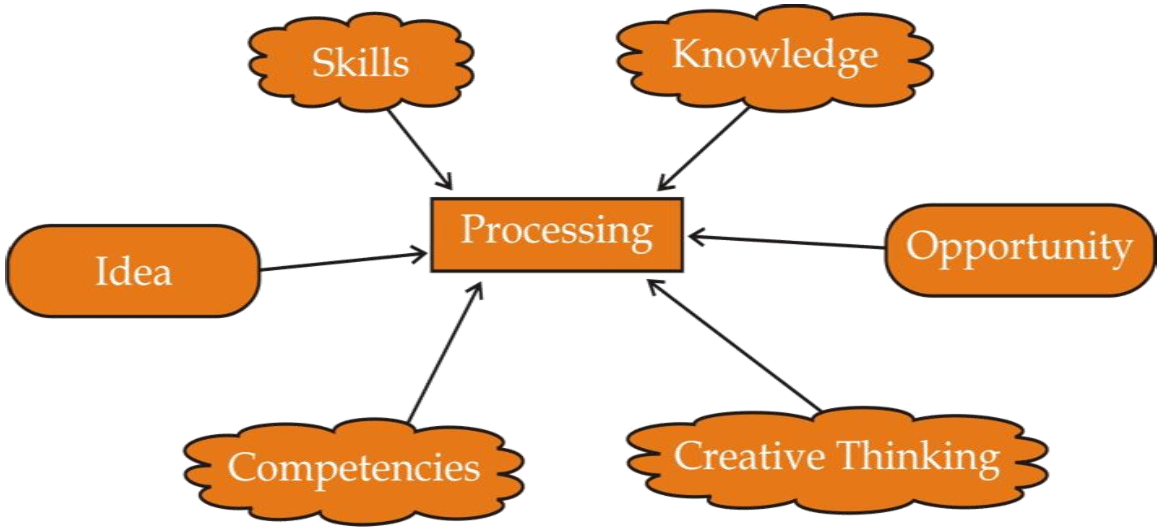
The given diagram shows how the process of a basic idea becoming an opportunity:

The above given diagram explains that it is just a process of conversion of basic idea into opportunity. Business idea arises from an opportunity in the market. It originates from any need or wants of any product or services that an entrepreneur can identify. In this process all basic ideas have to undergo a vigorous process of close examination, evaluation, analysis and synthesis to become viable opportunities. This diagram explains an entrepreneur utilize the skills, knowledge, creative thinking and competency needed to develop an idea which is backed up by various political economical, social, technological, ecological and legal factors in the existing competitive market. By this process an entrepreneur convert ideas into viable business opportunities.

Need a full question paper?

Generate a complete, print-ready paper with questions like this in minutes — across 16+ boards, with answer keys.

Start Generating Free

Similar questions

Distinguish between the cost-plus pricing method, vs. variable pricing method.
Explain 'Ability to perceive and preserve basic ideas' as an important factor involved in the process of sensing opportunities.
According to you, what kind of organisational set up is better – an autocratic form of an organisation where there is absolute centralisation of power and the communication from is from top to bottom.
OR
A democratic form of an organisation where power is decentralised and communication from both the ends. Justify?
Differentiate between primary market and secondary market.
Swati and Divya are professional fashion designers and are friends also. Swati lives in Calcutta whereas Divya lives in a village in Bihar.The young girls of the village used to get their clothes stitched as per the prevailing fashion from the near-by town. This gave Divya an idea to start a boutique in the village. She discussed about it with Swati who was already running a Boutique in Calcutta and earning good profits. Swati guided Divya for setting the boutique. Before starting the boutique, Divya trained young girls of her village who knew stitching. Not only this, she called the women of her village who were sitting idle at their homes to help the young girls in cutting, hamming, putting buttons and other small related activities. All the women of the village were happy as they started earning and were economically helping their families. Divya also started earning good profits. The goodwill of Swati was also increasing because of her good work and customer satisfaction. For earning more profits she opened four new boutiques in the near - by areas. The teams who were managing these boutiques were not efficient. Many customers complained about the quality of stitching and the material used for designing etc. Swati was very busy and could not control the activities of the new boutiques. It also damaged the image of the old boutique and resulted into declining of her profit. After few months her business failed, and she had to shut-down all the boutiques.
Based on the above paragraph, identify and explain any two causes of failure of Swati's boutiques. State, any two values which Divya communicated to the society.
What is a Feasibility Plan?
  1. Objectives of Business.
  2. Operational Plan.
  3. Financial Profiles as the main features of a feasibility plan.
What is a 'feasibility plan'? State any three reasons why the entrepreneurs need a feasibility plan.
The first stage of a business plan is to come up with a business name. Supposing you are an entrepreneur, who is in the stage of deciding a business name for your enterprise, would you:
  1. Keep the name of your enterprise similar to one of the enterprises that are already doing really well in the same line of business?
  2. Select/ create a complete name for your enterprise and create a brand name of your own? Give reasons. (Honestly)
State any four primary activities that are essential for a firm to have a competitive advantage as given by Porter.
Amana entrepreneur is operating his business without PAN and TAN. What would you suggest in this regard?