Question
Explain Methodology of HGP

Answer

→ The methods involved two major approaches. One approach focused on identifying all the genes that are expressed as RNA (referred to as Expressed Sequence Tags (ESTS).
→ The other took the blind approach of simply sequencing the whole set of genome that contained all the coding and non-coding sequence, and later assigning different regions in the sequence with functions (a term referred to as Sequence Annotation).
→ For sequencing, the total DNA from a cell is isolated and converted into random fragments of relatively smaller sizes (recall DNA is a very long polymer, and there are technical limitations in sequencing very long pieces of DNA) and cloned in suitable host using specialised vectors.
→ The cloning resulted into amplification of each piece of DNA fragment so that it subsequently could be sequenced with ease.
→ The commonly used hosts were bacteria and yeast, and the vectors were known as BAC (bacterial artificial chromosomes); and YAC (yeast artificial chromosomes).
→ The fragments were sequenced using automated DNA sequencers that worked on the principle of a method developed by Frederick Sanger. (Remember, Sanger is also credited for developing method for determination of amino acid sequences in proteins).
→ There sequences were then arranged based on some overlapping regions present in them.
→ This required generation of overlapping fragments for sequencing. Alignment of these sequences was humanly not possible.
→ Therefore, specialised computer based programs were developed.
→ These sequences were subsequently annotated and were assigned to each chromosome.
→ The sequence of chromosome 1 was completed only in May 2006 (this was the last of the 24 human chromosomes - 22 autosomes and X and Y - to be sequenced).
→ Another challenging task was assigning the genetic and physical maps on the genome.
→ This was generated using information on polymorphism of restriction endonuclease recognition sites, and some repetitive DNA sequences known as microsatellites (one of the applications of polymorphism in repetitive DNA sequences shall be explained in next section of DNA fingerprinting).

Need a full question paper?

Generate a complete, print-ready paper with questions like this in minutes — across 16+ boards, with answer keys.
Start Generating Free

Similar questions

Read the following and answer any four questions from (i) to (v) given below:

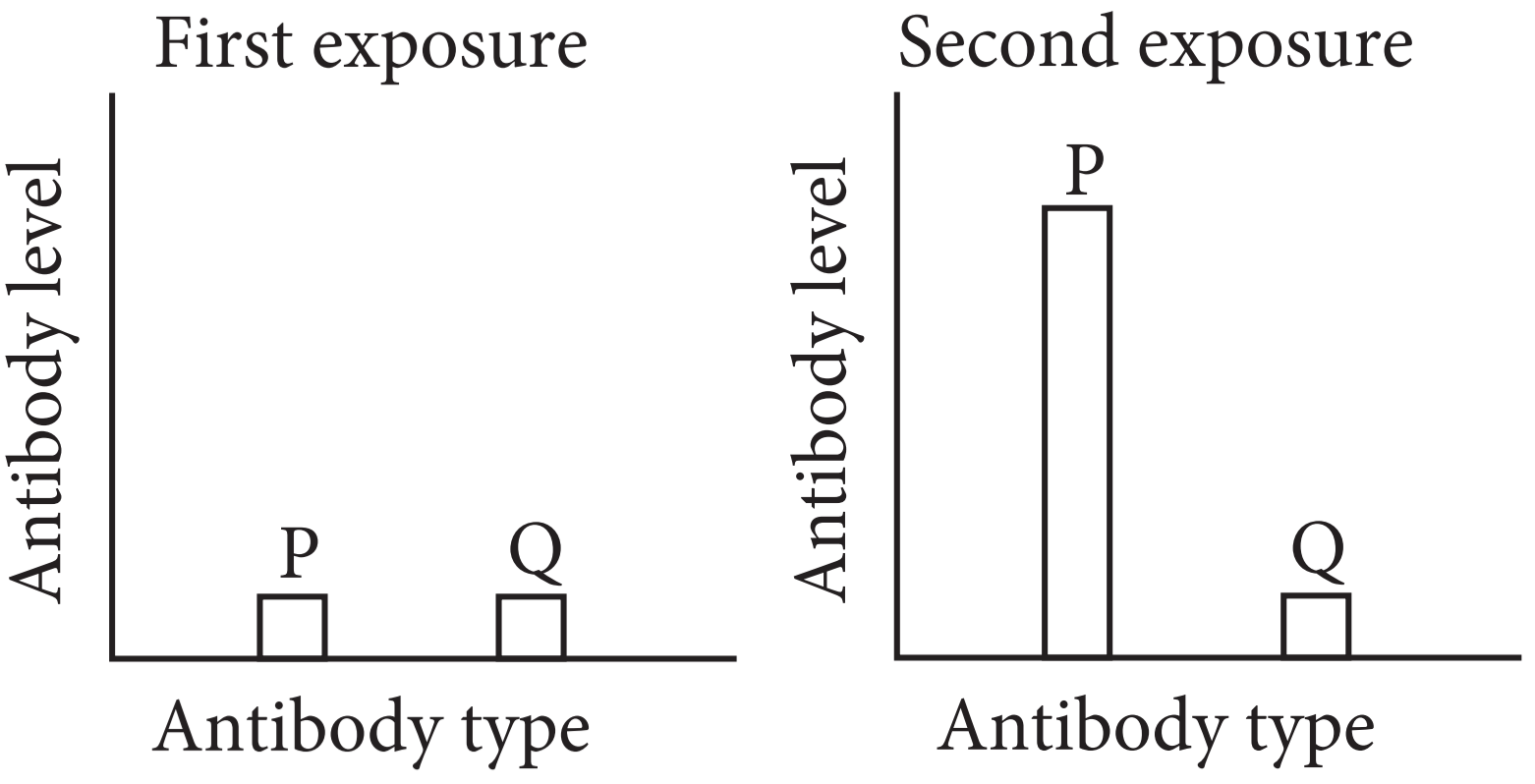
In a study to test a new vaccine against a viral disease, mouse model testing is done. In this process, mice are vaccinated and their blood samples were tested. Mice developed mild disease symptom. After few days those mice were again infected with the virus. This time they do not show any disease symptoms. Their blood samples were tested. Two graphs show antibody concentration for the first and second infection in mice blood.

Based on the above information, answer the following questions.

  1. P and Qin the given graphs indicate.
  1. IgM and IgG respectively.
  2. IgG and IgM respectively
  3. IgG and IgM respectively
  4. IgM and IgA respectively.
  1. Which form of pathogen is used in vaccination?
  1. Activated and strong pathogenic antigen.
  2. Inactivated and weakened pathogenic antigen.
  3. Hyperactive and strong pathogen.
  4. Preformed antibodies.
  1. Which of the following is incorrect for P?
  1. It is the most abundant class of lg.
  2. It is found in blood, lymph, and intestine.
  3. It is unable to cross the placental barrier.
  4. It is a monomer.
  1. How does vaccination work?
  1. The immune system produces antibodies which stay in the blood.
  2. Memory lymphocytes remain in the body to fight off any future infection with the same pathogen.
  3. The dead pathogen stays in the body and constantly stimulates the immune system.
  4. All of these.
  1. Assertion: Mice do not show any disease symptoms during second exposure to the pathogenic virus.

Reason: The antibody production is accelerated and more intense during secondary immune response.
  1. Both assertion and reason are true, and reason is the correct explanation of assertion.
  2. Both assertion and reason are true, but reason is not the correct explanation of assertion.
  3. Assertion is true, but reason is false.
  4. Both assertion and reason are false.
Assuming that within a population of beetles where Hardy Weinberg conditions are met, the colour black (B) is dominant over the colour red (b). 40% of all beetles are red (bb).
Given this information, answer the questions below:
A. What is the frequency of red beetles?
B. Calculate is the percentage of beetles in the population that are heterozygous.
C. What is the frequency of homozygous dominant individuals?
OR
D. Assuming that Hardy Wienberg conditions are met in the beetle population consisting of 1500 beetles. How many beetles would you expect to be black and red in colour respectively?
Read the following text carefully and answer the questions that follow:
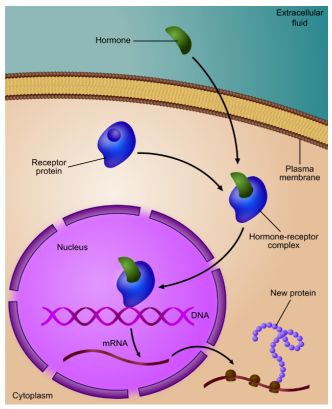
Gene regulation is the mechanism of switching off and switching on of the genes depending upon the requirement of cells and the state of development. Gene regulation is of two types: negative and positive. In negative gene regulation, the genes continue expressing their effect till their activity is suppressed. Positive gene regulation is the one in which the genes remain non-expressed unless and until they are induced to do it. Operon model is a co-ordinated group of genes such as structural gene, operator gene, promoter gene, regulator gene which function together and regulate a metabolic pathway as a unit, e.g., lac operon, trp operon, ara operon, etc.
Image
i. Regulation of gene expression occurs at which the level? (1)
ii. What is complementary to an mRNA molecule transcribed from the lac operon contains nucleotide sequences? (1)
iii. Describes the control of transcription of the genes involved in the breakdown of lactose in Escherichia coli?
(2)
OR
What is the function of catabolic activator protein in lac operon? (2)
Read the following and answer any four questions from (i) to (v) given below:

Kangaroo rat seldom drinks water. It has thick coat to minimise evaporative desiccation. TI1e animal seldom comes out of its comparatively humid and cool burrow during the day time. 90% of its water requirement is met from metabolic water (water produced by respiratory breakdown of fats) while 10% is obtained from its food. Loss of water is minimised by producing nearly solid urine and faeces. As the animal faces acute water scarcity, it develops two types of adaptations : reducing water loss and ability to tolerate desert conditions.

  1. Kangaroo rat is a:
  1. Partial regulators
  2. Partial conformer
  3. Regulator
  4. Conformer
  1. Metabolic water refers to:
  1. Water required for metabolic activities.
  2. Water present in intercellular fluid.
  3. Water produced during oxidation of fat or carbohydrate.
  4. Water taken in, to promote metabolism.
  1. Desert animals minimise water loss by:
  1. Producing highly concentrated urine.
  2. Promoting maximum reabsorption of water in kidney tubules.
  3. Possessing one of the longest loop of Henle in kidney tubules.
  4. All of these.
  1. Assertion: Kangaroo rat can tolerate and thrive in wide temperature range and is known as stenothermal.

Reason: Kangaroo rats go into hibernation during winter to escape cold weather.
  1. Both assertion and reason are true and reason is the correct explanation of assertion.
  2. Both assertion and reason are true but reason is not the correct explanation of assertion.
  3. Assertion is true but reason is false.
  4. Both assertion and reason are false.
  1. The adaptations in an organism are meant for:
  1. Optimum primary production.
  2. Optimum life span.
  3. Optimum mobility.
  4. Optimum survival and reproduction.
Read the following and answer any four questions from (i) to (v) given below:

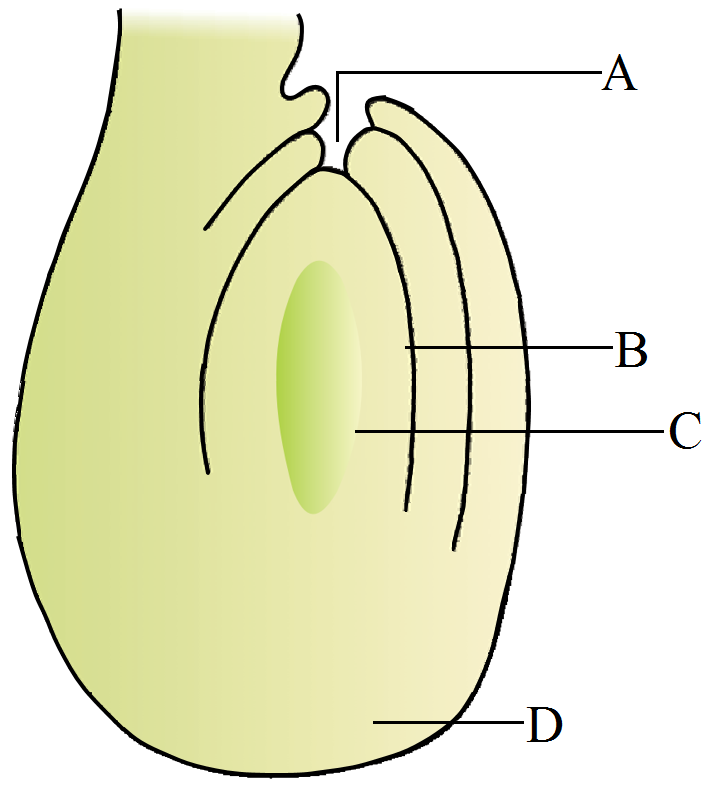
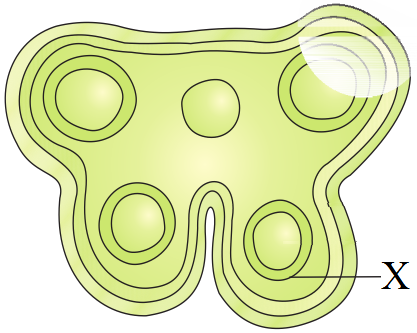
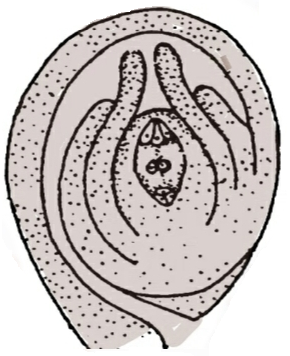
A typical angiospermic ovule is a small structure attached to the placenta by means of a stalk called funicle. The body of the ovule fuses with funicle in the region called hilum. Each ovule has one or two protective envelopes called integuments. Integuments encircle the nucellus except at the tip where a small opening called the micropyle is formed. Mature ovules are classified on the basis of funiculus. It can be orthotropous, anadromous, hernitropous, campylotropous, etc.

  1. The body of the ovule consists of a mass of parenchymatous cells called:
  1. Integuments.
  2. Nucellus.
  3. Hilum.
  4. Funiculus.
  1. Refer to the given figure and select the correct statement regarding it.

  1. This type of ovule is found in cactus.
  2. The micropyle comes to lie close to the funiculus due to unilateral growth of ovule.
  3. It is most common type of ovule found in the members of Chenopodiaceae.
  4. It is half inverted ovule.
  1. Identify the parts labelled as A, B, C and D in the given figure and select the correct option.

S. No A B C D
(a) Chalaza Female gametophyte Embryo sac Micropyle
(b) Chalaza NuceIIus Embryo sac Micropyle
(c) Micropyle Egg Embryo sac Chalaza
(d) Micropyle Nucellus Embryo sac Chalaza
  1. Mature ovules are classified on the basis of funiculus. If micropyle lie close to the funiculus, the ovule is termed as:
  1. Orthotropous.
  2. Anatropous.
  3. Hemitropous.
  4. Campylotropous.
  1. In Asphodel us, ovule is:
  1. Unitegmic.
  2. Tritegmic.
  3. Bitegmic.
  4. Ategmic.
Read the following and answer any four questions from (i) to (v) given below:

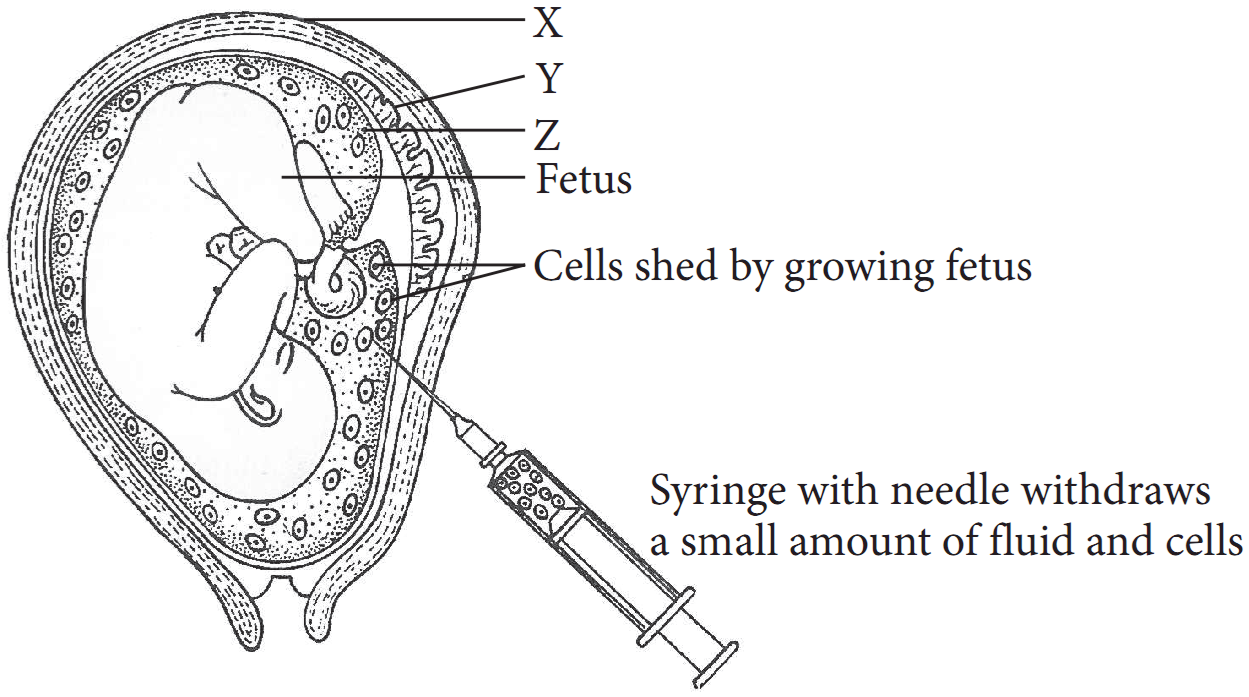
A technique known as amniocentesis is used to determine fetal abnormalities. This test chromosomal pattern in amniotic fluid. However, this technique is legally banned now.

  1. Identify X and Y in the above given figure.
S. No
X
Y
(a)
Amnion
Chorion
(b)
Uterine wall
Placenta
(c)
Placenta
Uterine wall
(d)
Uterine wall
Amnion
  1. What is the function of Z?
  1. Z is an amniotic fluid which prevents dessication of an embryo.
  2. Z is yolk sac which functions as site of early blood cell formation.
  3. Z is amnion, which takes part in placenta formation.
  4. None of these
  1. Which of the following diseases can not be diagnosed by amniocentesis?
  1. Down's syndrome.
  2. Sickle cell disease.
  3. Jaundice.
  4. Cystic fibrosis.
  1. Assertion: Amniocentesis is legally banned for sex determination.

Reason: Amniocentesis was being misused for aborting normal female fetus.
  1. Both assertion and reason are true, and reason is the correct explanation of assertion.
  2. Both assertion and reason are true, but reason is not the correct explanation of assertion.
  3. Assertion is true, but reason is false.
  4. Both assertion and reason are false.
  1. Which of these is a non-invasive technique of detecting fetal disorder?
  1. Fetoscopy.
  2. Chorionic villi sampling.
  3. Amniocentesis.
  4. Ultrasound imaging.
Read the following and answer any four questions from (i) to (v) given below:

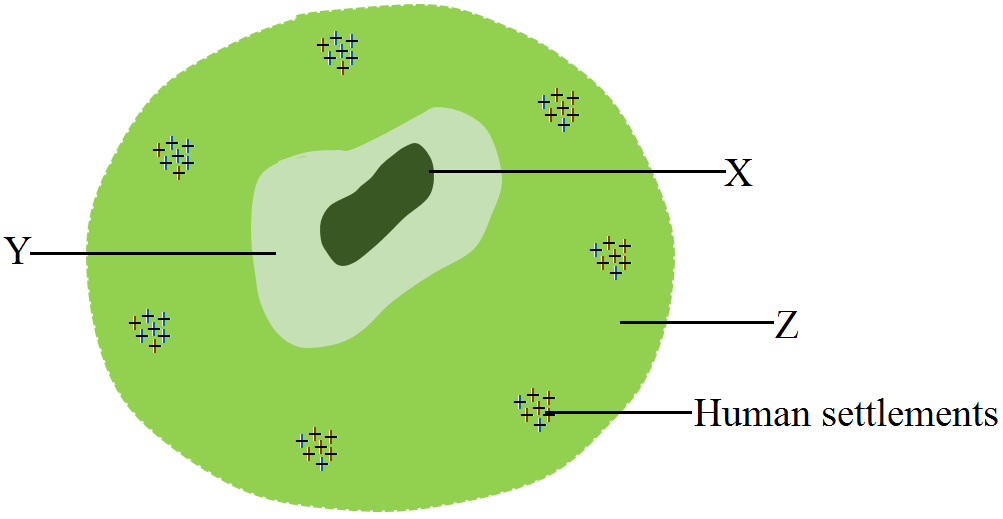
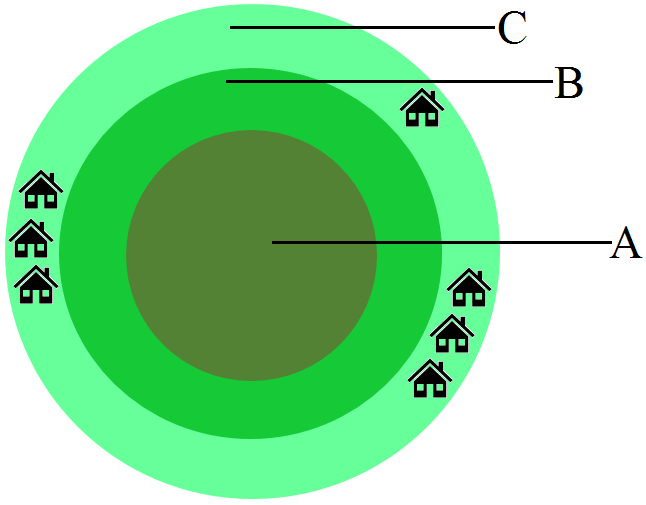
Biosphere reserves are multipurpose protected areas which are meant for preserving genetic diversity in representative ecosystems of various natural biomes and unique biological communities by protecting wild populations, traditional life style of tribals and domesticated plant/animal genetic resources. Each biosphere reserve has three zones-core, buffer and transition zone.

  1. Which of the following is similar to biosphere reserve in terms of conservation?
  1. Gene banks.
  2. Offsite collection.
  3. Orchards.
  4. Hotspots.
  1. Refer to the given figure representing different zones of a biosphere reserve and select the correct option regarding it.

  1. A-Limited human activity is allowed such as for research and education.
  2. B-An active co-operation occurs between reserve management and local people for activities like cropping, settlements, etc.
  3. C-No human activity is allowed.
  4. None of these.
  1. Refer to the given diagrammatic representation of a biosphere reserve.

Select the incorrect statement regarding X, Y and Z.

  1. X is devoted to strict protection of wildlife and no human activity is allowed in this zone.
  2. In Y, only limited human activity (compatible with conservation) is allowed.
  3. In Z, commercial exploitation of natural resources is allowed.
  4. Tourism is allowed in Z zone only.
  5. Zone Y helps to maintain the lifestyle of the tribal people living in the area.
  1. (iii), (iv) and (v) only
  2. (ii), (iii) and (v) only
  3. (i), (iii) and (iv) only
  4. (ii), (iii) and (iv) only
  1. Biosphere reserves differ from national parks and wildlife sanctuaries because in the former.
  1. Human beings are not allowed to enter
  2. People are an integral part of the system
  3. Plants are paid greater attention than the animals
  4. Living organisms are brought from all over the world and preserved for posterity.
  1. MAB Programme means.
  1. Man and biosphere programme.
  2. Man and biodiversity conservation programme.
  3. Manually aided biosphere conservation programme.
  4. None of these.
With labeled diagrams describe the mechanism of Pollen-pistil Interaction.
Read the following and answer any four questions from (i) to (v) given below:

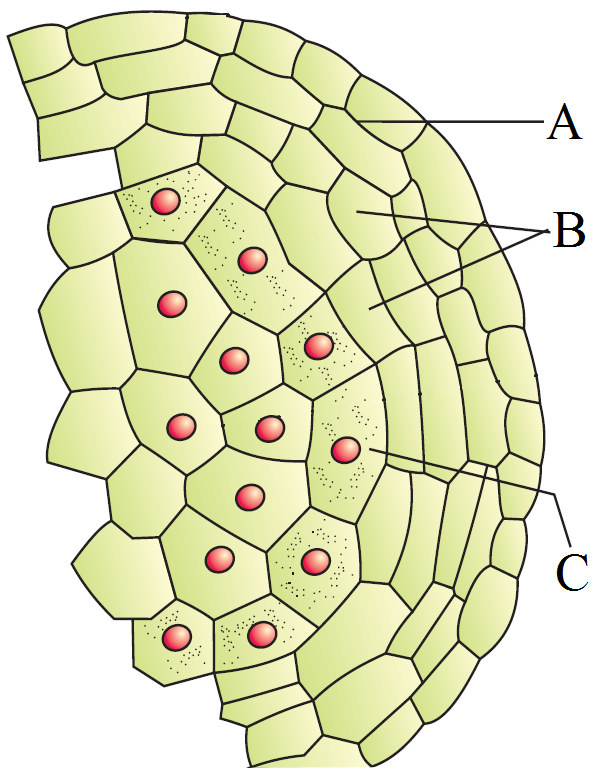
The anther is a four-sided structure consisting of four microsporangia located at the corners, two in each lobe. TI1e microsporangia develop further and become pollen sacs. In a transverse section, a typical microsporangium appears near circular in outline. It is generally surrounded by four wall layers-the epidermis, endothecium, middle layers and the tapetum.

  1. A dithecous another consists of (A) microsporangia, (B) in each lobe.

Select the option that correctly fills the blanks.

S. No
A
B
(a)
Four
Two
(b)
Two
One
(c)
Two
Two
(d)
Four
One
  1. The given diagram shows microsporangium of a mature anther. Identify A, B and C.

(a)
A-Middle layer
B-Endothecium
C-Tapetum
(b)
A-Endothecium
B-Tapetum
C- Middle layer
(c)
A-Endothecium
B-Middle layer
C-Tapetum
(d)
A-Tapetum
B-Middle layer
C-Endothecium
  1. The function of labelled part X is:

  1. Dehiscence.
  2. Mechanical.
  3. Nutrition.
  4. Protection.
  1. Select the incorrect statement.
  1. Microsporangium is generally surrounded by four wall layers-epidermis, endothecium, middle layers and tapetum.
  2. Outer three layers perform functions of protection and dehiscence of anthers.
  3. Cells of tapetum possess dense cytoplasm and generally have more than one nucleus.
  4. Cells of tapetum undergo meiosis and produce microspore tetrads.
  1. Which function oftapetum is correct?
  1. Helps in pollen wall formation.
  2. Transportation of nutrients to inner side of another.
  3. Synthesis of callase enzyme for separation of microspore tetrads.
  4. All of these.
Read the following text carefully and answer the questions that follow:
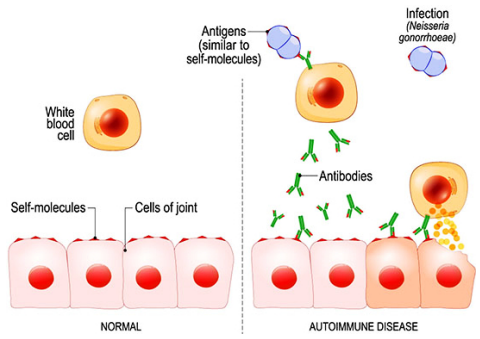
A healthy immune system defends the body against disease and infection. But if the immune system malfunctions, it mistakenly attacks healthy cells, tissues, and organs. Called autoimmune disease, these attacks can affect any part of the body, weakening bodily function and even turning life-threatening.
Image
i. Why are autoimmune diseases called degenerative diseases? (1)
ii. Name the autoimmune disease of body muscles. (1)
iii. Which types of immunity is provided by T-lymphocytes? (2)
OR
Which immune cells form humoral immune system? (2)