Question
Explain - Phenylketonuria.

Answer

→ It is an inborn error of metabolism.  
→ It is an autosomal recessive disease.
→ It is due to mutation of a gene that codes for the enzyme phenyl alanine hydroxylase.
→ This enzyme converts an amino acid phenylalanine into tyrosine.
→ The affected individual lacks this enzyme. As a result, phenylalanine accumulates and converts into phenyl pyruvic acid and other derivatives.
→ They accumulate in brain resulting in mental retardation. These are also excreted through urine because of poor absorption by kidney.

Need a full question paper?

Generate a complete, print-ready paper with questions like this in minutes — across 16+ boards, with answer keys.
Start Generating Free

Similar questions

(i) Write the name of the form of malaria parasite in which it enters (a) the human body and (b) the body of female anopheles respectively.
(ii) Name the hosts within which sexual and asexual reproduction of malaria parasite takes place respectively.
(iii) Write the name of the toxin responsible for causing symptoms of malaria in humans. Why are these disease symptoms recurring?
Enlist the steps of controlled cross pollination. Would emasculation be needed in a cucurbit plant? Give reasons for your answer.
Illustrate schematically the process of initiation, elongation and termination during transcription of a gene in a bacterium.
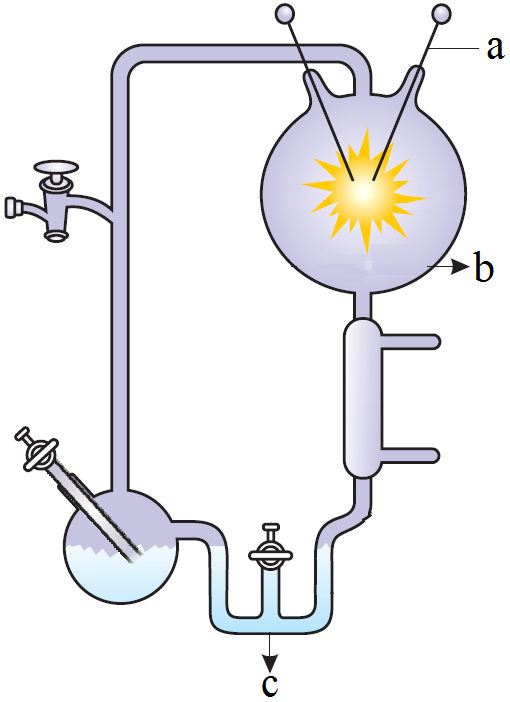
Name the scientist who had used the set-up shown below:

Write the purpose of 'a' in the set-up and the conclusion, the scientist arrived at.
In the pyramid of biomass drawn below, name the two crops:

  1. One which is supported.
  2. The one which supports. In which ecosystem is such a pyramid found?

If a patient is advised Anti Retroviral Therapy, which infection is he suffering from? Name the causative organism.
What do you mean by nucleoid?
With a labeled diagram describe the structure of microsporangium.###Explain the structure of microsporangium.
Name a disorder, give the karyotype and write the symptoms where a human male suffers as a result of an additional X–chromosome.
Write a brief note on following phase of menstrual cycle. (i) Menstrual phase. (ii) Follicular phase / Proliferative phase (iii) Ovulatory phase (iv) Luteal phase / Secretory phase.