Question
Explain Rivet Popper Hypothesis.

Answer

  1. Rivet Popper hypothesis was given by Paul Ehrlich to emphasise significance of diversity.
  2. For explaining the hypothesis, he gave an analogy between aeroplane and ecosystem.
  3. As the rivets keep all parts of the aeroplane together, similarly, all species keep the diversity of an ecosystem in functional.
  4. Just as if one species gets extinct, initially not much of a problem will take place in an ecosystem, just as in case of a single rivet mission cannot cause problem in flight. However, if the same damage is continued, the turbulence will be experienced.
  5. When more rivets are popped out gradually, there will be a serious threat to the safety of the aeroplane.
  6. Also the rivets in key positions can cause serious situation. With same analogy he explained that if loss of species occurs, initially the problem will not be obvious but later if similar damage continues, there will be a threat to the ecosystem.
  7. Thus, there is a relationship between diversity and well-being of ecosystem which is not linear.
  8. Loss of key species causes threat in very short span of time by affecting food chains, food web, energy flow, natural cycles, etc. This will disturb the balance of the ecosystem.

Need a full question paper?

Generate a complete, print-ready paper with questions like this in minutes — across 16+ boards, with answer keys.
Start Generating Free

Similar questions

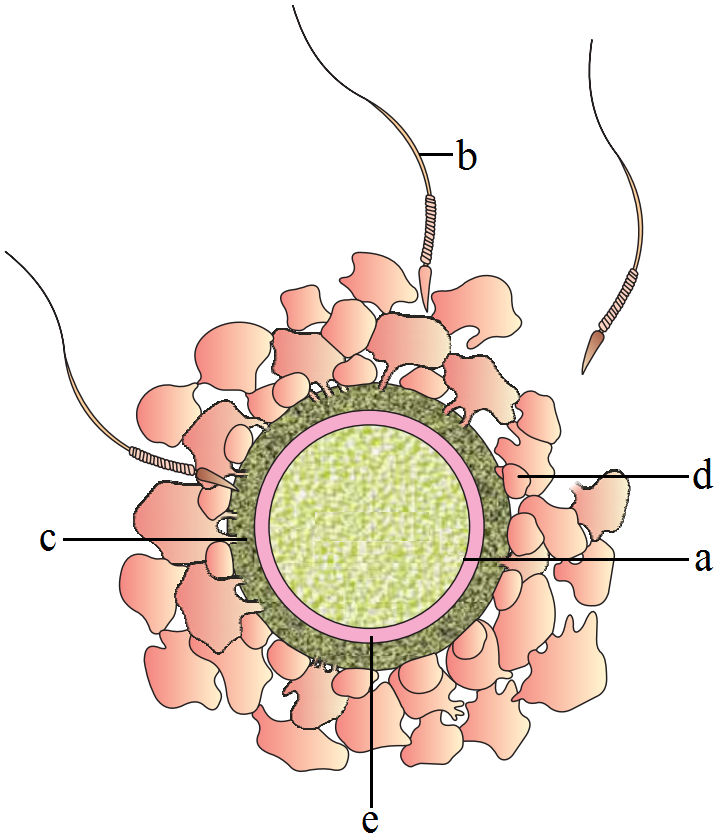
Study the illustration given and answer the questions that follow:
Identify ‘d’.
Explain why a recessive allele is unable to express itself in a heterozygous state.
STDs are a threat to reproductive health. Describe any two such diseases and suggest preventive measures.
What will be the effect of increasing global temperatures on the different habitats and the organisms found in those habitats?
Meiotic division during oogenesis is different from that in spermatogenesis. Explain how and why?
Write a short note on electronic waste. List the various sources of e-wastes and the problems associated with its disposa
Read the following and answer any four questions from (i) to (v) given below:
Plants having foreign genes in their genome through genetic engineering are called transgenic plants. Genes can be incorporated either through a vector or through direct introduction of DNA. Bt cotton is a genetically modified organism which is pest resistant. It contain gene cry I Ac and cry II Ab of Bacillus thuringiensis. It is used to control lepidopterans, coleopterans and dipterans. Bt cotton can resist cotton bollworm and produce higher yields. Cry gene produces cry protein or Bt toxin. It is an endotoxin which remains as protoxin in plants and converted to active toxin after getting ingested by the insects. Alkaline pH of the insect gut solubilises the protein crystals, the activated toxin creates pores to the mid guts wall of the insects which cause them to death.
  1. Bt cotton crops are:
  1. Fungal resistant.
  2. Insect resistant.
  3. Drought resistant.
  4. All of these.
  1. Cotton bollwonns are killed by the protein encoded by the gene:
  1. cry I Ac
  2. cry I Ab
  3. cry I Ab
  4. Both (a) and (c).
  1. Which of the following is not an advantage of GM crops?
  1. GM plants enhance nutritional value of food.
  2. GM plants are more tolerant to abiotic stresses.
  3. GM plants have helped to reduce post harvest losses.
  4. GM plants can cause gene transfer to non-target plant species.
  1. Bacillus thuringiensis is a:
  1. Air borne bacteria.
  2. Soil borne bacteria.
  3. Soil borne fungus.
  4. Food borne bacteria.
  1. Assertion: Cotton bollworms are killed by ingesting the leaves of the transgenic plant.
Reason: Bt toxin binds with the midgut wall of the insect and make pores in them.
  1. Both assertion and reason are true and reason is the correct explanation of assertion.
  2. Both assertion and reason are true but reason is not the correct explanation of assertion.
  3. Assertion is true but reason is false.
  4. Both assertion and reason are false.
Describe various methods of asexual reproduction in animals.
Describe female reproductive system of human
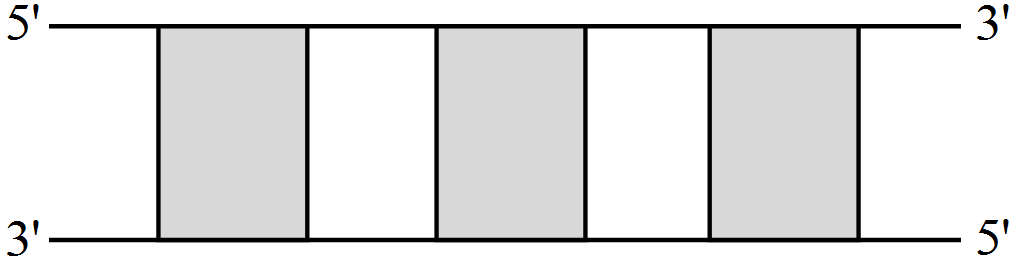
Illustration below is a DNA segment, which constitutes a gene:
  1. Name the shaded and unshaded regions of gene.
  2. Explain how these genes are expressed.
  3. How is this gene different from prokaryotic gene in its expression?