Question
Explain Solid-liquid equilibrium.

Answer

Conversion of ice to water is an example of solid-liquid equilibrium.
$\underset{\text { ice }}{ H _2 O ( s )} \rightleftharpoons \underset{\text { water }}{ H _2 O (l)}$
In a container (thermos flask) at 273 K temperature and on one atmospheric pressure, ice and water are in equilibrium. 273 K , is the melting point of ice and freezing point of water. At equilibrium, with time there is no change in mass of ice and water. Because rate of formation of water from ice is equal to rate of formation of ice from water.

Need a full question paper?

Generate a complete, print-ready paper with questions like this in minutes — across 16+ boards, with answer keys.

Start Generating Free

Similar questions

In Milikan’s experiment, static electric charge on the oil drops has been obtained by shining X-rays. If the static electric charge on the oil drop is –1.282 × 10⁻¹⁸C, calculate the number of electrons present on it.
2 × 10⁸ atoms of carbon are arranged side by side. Calculate the radius of carbon atom if the length of this arrangement is 2.4cm.
A mixture of 1.57 mol of $N _2, 1.92 mol$ of $H _2$ and 8.13 mol of $NH _3$ is introduced into a 20 L reaction vessel at 500 K . At this temperature, the equilibrium constant, $K_c$ for the reaction $N_2(g)+$ $3 H _2(g) \rightleftharpoons 2 NH _3(g)$ is $1.7 \times 10^2$. Is the reaction mixture at equilibrium? If not, what is the direction of the net reaction?
What will be effect on boiling point of liquid if pressure is increased?

How many molecules are pre ent in one mole of oxygen gas at STP? Calculate its mass.

Consider the following gas phase reaction:

$\text{H}_{2}\text{(g)} + \text{Cl}_{2} \text{(g)} \rightleftharpoons\text{2HCl(g)}$

$\Delta\text{H}^{\circ} = -92\text{kJ}, \ \Delta\text{S}^{\circ} = -95\text{JK}^{-1}$

Calculate the equilibrium constant, KP at 298K for this reaction.
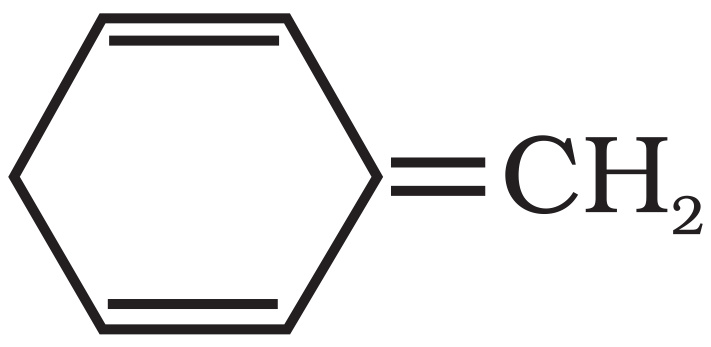
Explain why the following systems are not aromatic?

Assign oxidation number to the underlined elements in the following species:

H4P2O7

Assign the position of elements having outer electronic configuration:
  1. ns2 np4 for n = 3
  2. (n - 1)d2 ns2 for n = 4
Calculate the percentage ionic character of bond in CsF. If electronegativity of Cs and F is 0.7 and 4.0 respectively.