Question
Explain the characteristics oflimng organisms

Answer

There are following characteristics of living organisms
$(i)$ All living organisms require food. The food gives energy for growth and to maintain other life processes.
$(ii)$ All living organisms show growth. Young ones of animals grow into adults. Plants also grow.
$(iii)$ All living organisms respire. In respiration oxygen is used for the oxidftion of food and carbon dioxide is produced.
$(iv)$ All living organisms respond to stimuli. All plants and animal respond to light, heat and the changes around them.
$(v)$ All living organisms show excretion. The process of getting rid of waste product by the living organisms is called excretion. Plants also remove their wastes.
$(vi)$ All living organisms reproduce. The process by which plants and animals produce their own kind is called reproduction.

Need a full question paper?

Generate a complete, print-ready paper with questions like this in minutes — across 16+ boards, with answer keys.
Start Generating Free

Similar questions

You are provided with a mixture of salt, sand, oil and water. Write the steps involved for the separation of salt, sand and oil from the mixture by giving an activity along with the diagram.
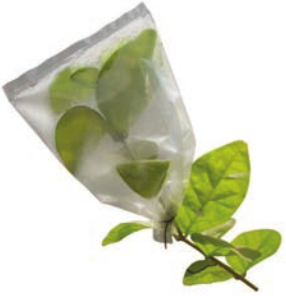
Observe the picture of an activity given as Fig carried out with leaves of plants and polythene bag.

Now answer the following:
  1. Which process is demonstrated in the activity?
  2. When will this activity show better results–on a bright sunny day or a cloudy day?
  3. What will you observe in the polythene bag after a few hours of setting up the activity?
  4. Mention any one precaution you must take while performing this activity.
‘Minerals and vitamins are needed in very small quantities by our body as compared to other components, yet, they are an important part of a balanced diet.’ Explain the statement.
Match the following items given in Column $A$ with that in Column $B$:
S.No.
Column $A$
S.No.
Column $B$
$(a)$
Handpicking
$(i)$
Conversion of water vapours into liquids.
$(b)$
Threshing
$(ii)$
Separating bran from flour.
$(c)$
Winnowing
$(iii)$
Separating larger size impurities.
$(d)$
Sieving
$(iv)$
Separating butter from milk.
$(e)$
Sedimentation
$(v)$
Conversion of water into Us vapours.
$(f)$
Evaporation
$(vi)$
Separating grains from its stalks.
$(g)$
Condensation
$(vii)$
Settling of heavier components at bottom.
$(h)$
Churning
$(viii)$
Separation by wind or by blowing air.
Why we must always breathe in through our nose and not by our mouth?
How will you separate the components of the following?
  1. Tea leaves from tea.
  2. Pebbles from rice.
  3. Butter from milk.
  4. Sand and husk.
  5. Water and kerosene oil.
  6. Mud and water.
List five each opaque and transparent materials.
What can we do to minimise overuse of plastics and deal with garbage?
Given below is a list of different types of movements in animals.
Running, jumping, walking, slithering, crawling, flying, swimming, creeping.
Write the types of movements seen in each animal.
  1. Duck.
  2. Horse.
  3. Kangaroo.
  4. Snail.
  5. Snake.
  6. Fish.
  7. Human beings.
  8. Cockroach.
Design an experiment to check if temperature has an effect on seed germination