Question
Explain the difference between commensalism and mutualism. Give example of each.

Answer

Commensalism : In this interaction only one of two is benefitted but no one suffers any loss. Epiphytes despite being autotrophic, grow on other plants. They absorb water through velamen roots and synthesize their own food by the process of photosynthesis. Examples orchids and benda. Green algae Basicladia grows on the shell of turtles found in freshwater. It is an example of epizoic.
Lianas are woody climbers which grow on the land in soil and climb up with the support of other trees and spread over their tops to get proper sunlight. Examples are tinospora, bignonia, bougainvillea.
Mutualism : In this interaction, both of the species are mutually benefitted and cooperation of both is necessary for their survival. Example—Lichen, symbiotic nitrogen fixing bacteria and mycorrhizal association. There is an association between the roots of higher plants and fungi which is called mycarorhizial association. Example : pinus, oak etc. In this association fungus absorb water and minerals and make them available to the plant and in return roots of plant provide food to fungi. Roots of such plants have lack of root hairs.
Need a full question paper?

Generate a complete, print-ready paper with questions like this in minutes — across 16+ boards, with answer keys.

Start Generating Free

Similar questions

Answer the following questions:
How does cleistogamy ensure autogamy?
For flower colour in pea, the allele for purple flower (P) is dominant to the allele for white flower (p). A purple flowered plant therefore could be of genotype PP or Pp. What genetic cross would you make to determine the genotype of a purple flowered plant? Explain how your cross gives you the correct genotype of the purple flowered plant?
Answer the following questions:
How would the following affect the phenomenon of independent assortment?
  1. Crossing over.
  2. Linkage.
Can you recall meiosis and indicate at what stage a recombinant DNA is made?
Draw a diagram of the microscopic structure of human sperm. Label the following parts in it and write their functions.
  1. Acrosome.
  2. Nucleus.
  3. Middle piece.
List six advantages of "ex-situ" approach to conservation of biodiversity.
Taking the example of white-winged moths and dark-winged moths of England in pre and postindustrialised era, explain evolution by natural selection.

OR

How can evolution by natural selection be explained by melanised moths before and after industrialisation in England?

OR

How did industrialisation play a role in Natural Selection of light and dark-coloured moth in England?

OR

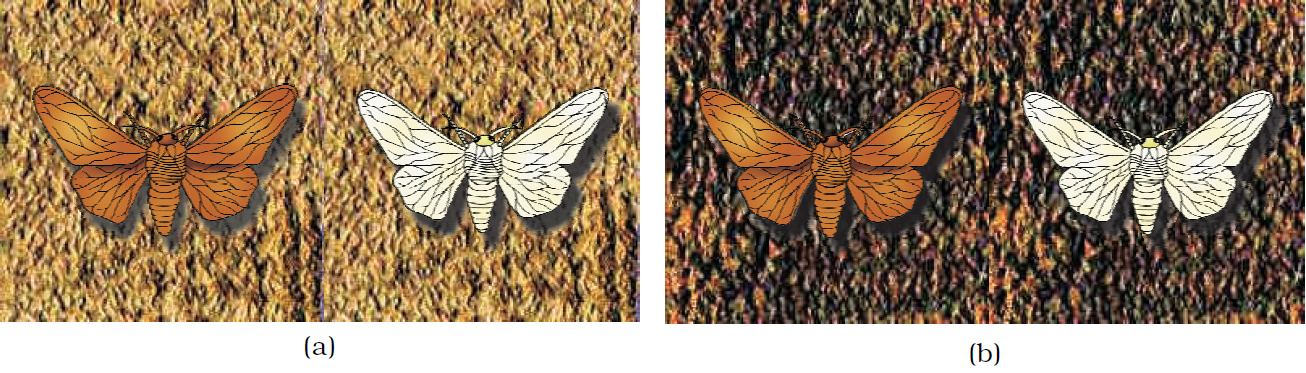
What do these pictures (a) and (b) illustrate with reference to evolution? Explain.

'Sperm donation can help infertile couples'. Justify. In which type of cases, such sperm donation is helpful?
Explain the significance of satellite DNA in DNA fingerprinting technique.
Scutellum is the single cotyledon found in the monocot embryo only. Explain.