Question
Explain the different terms for the issue of debentures with reference to their redemption.
Answer

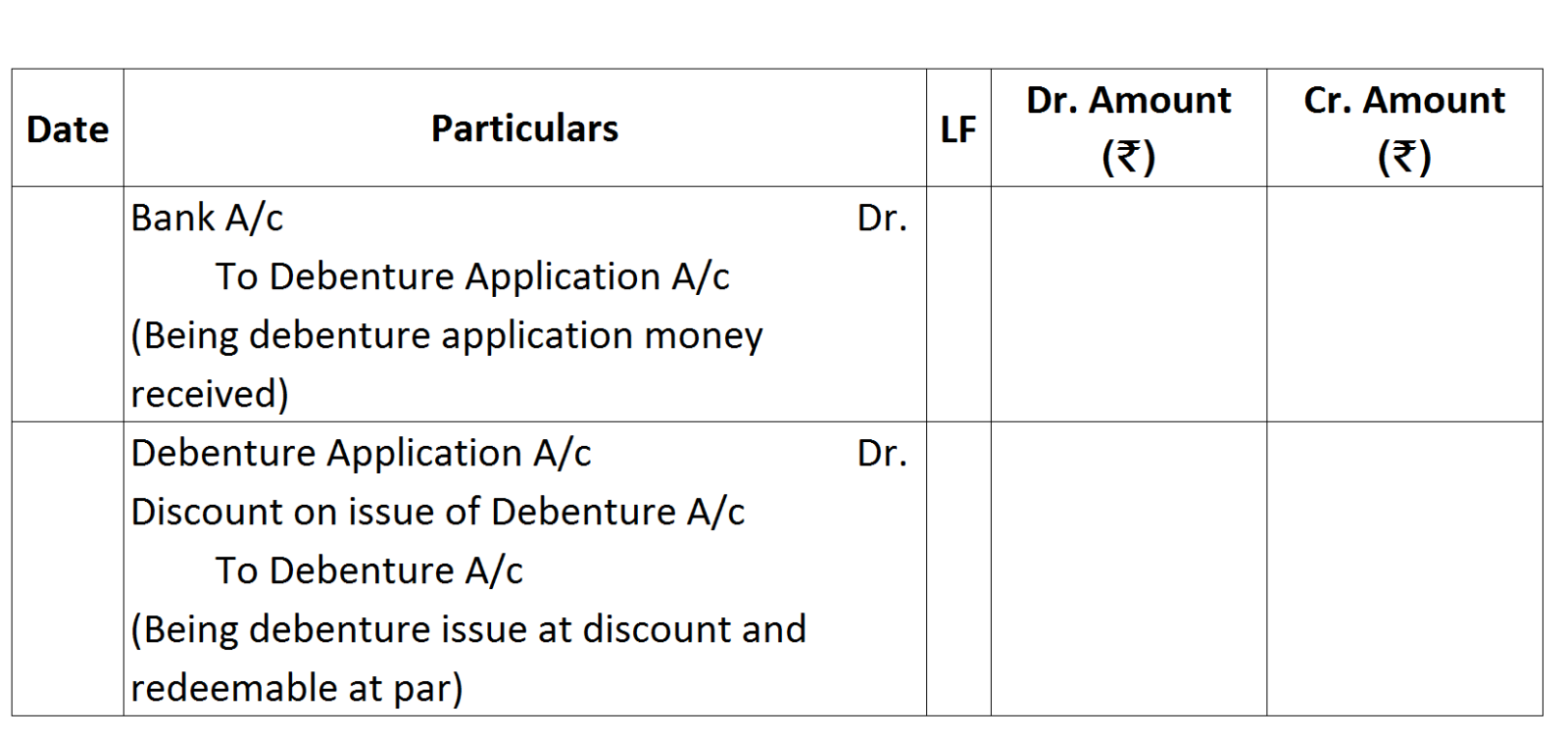
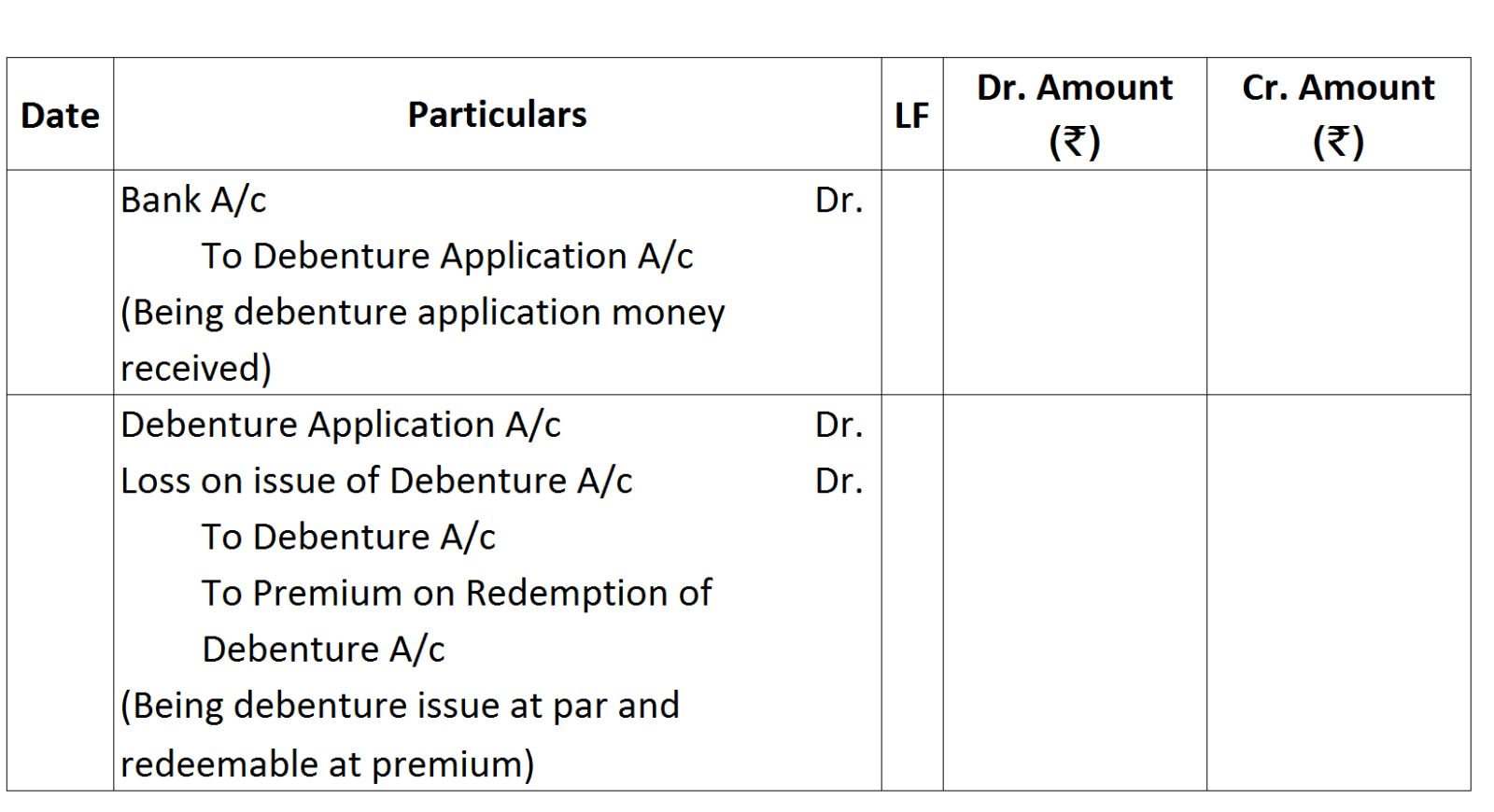
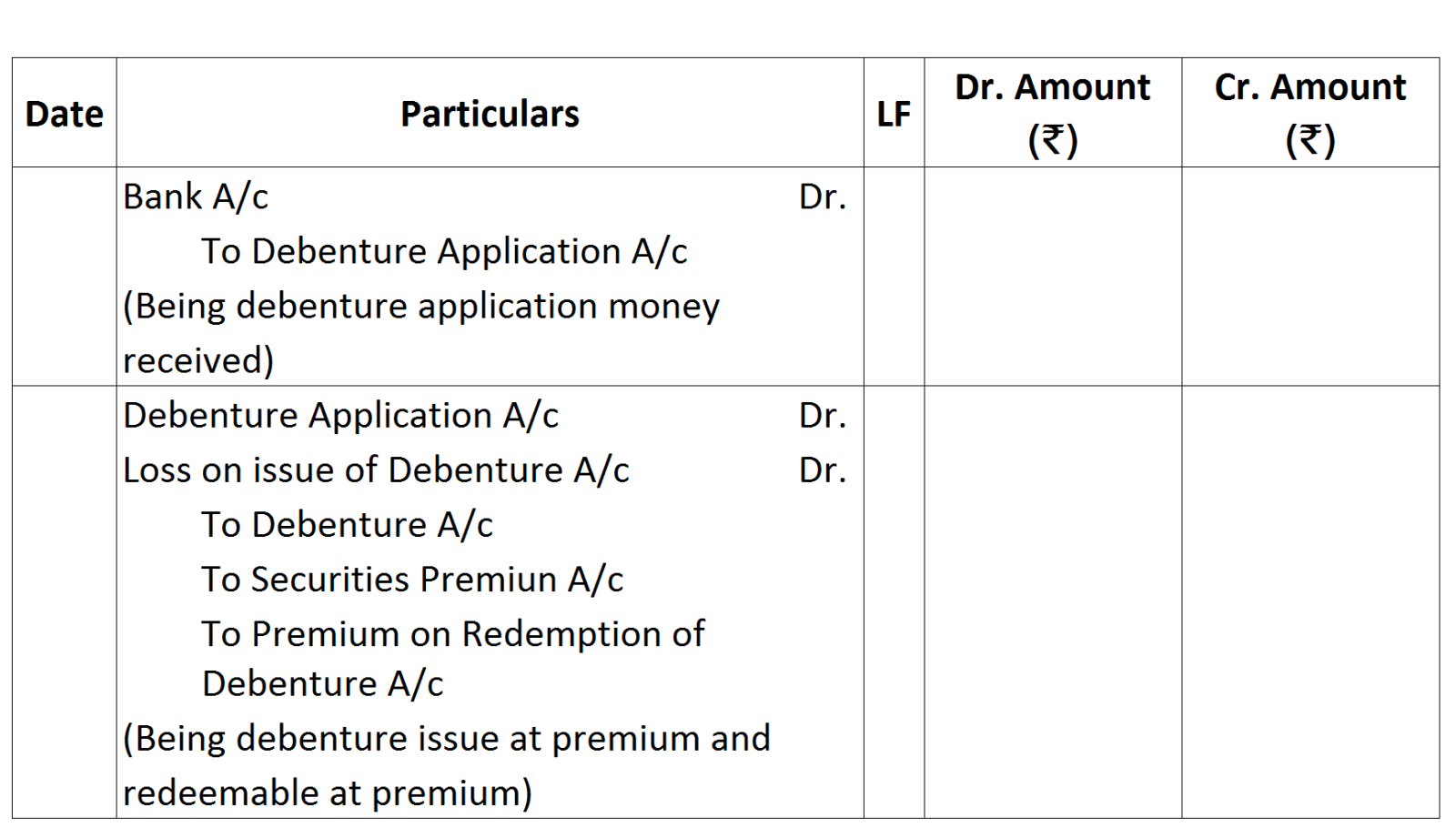
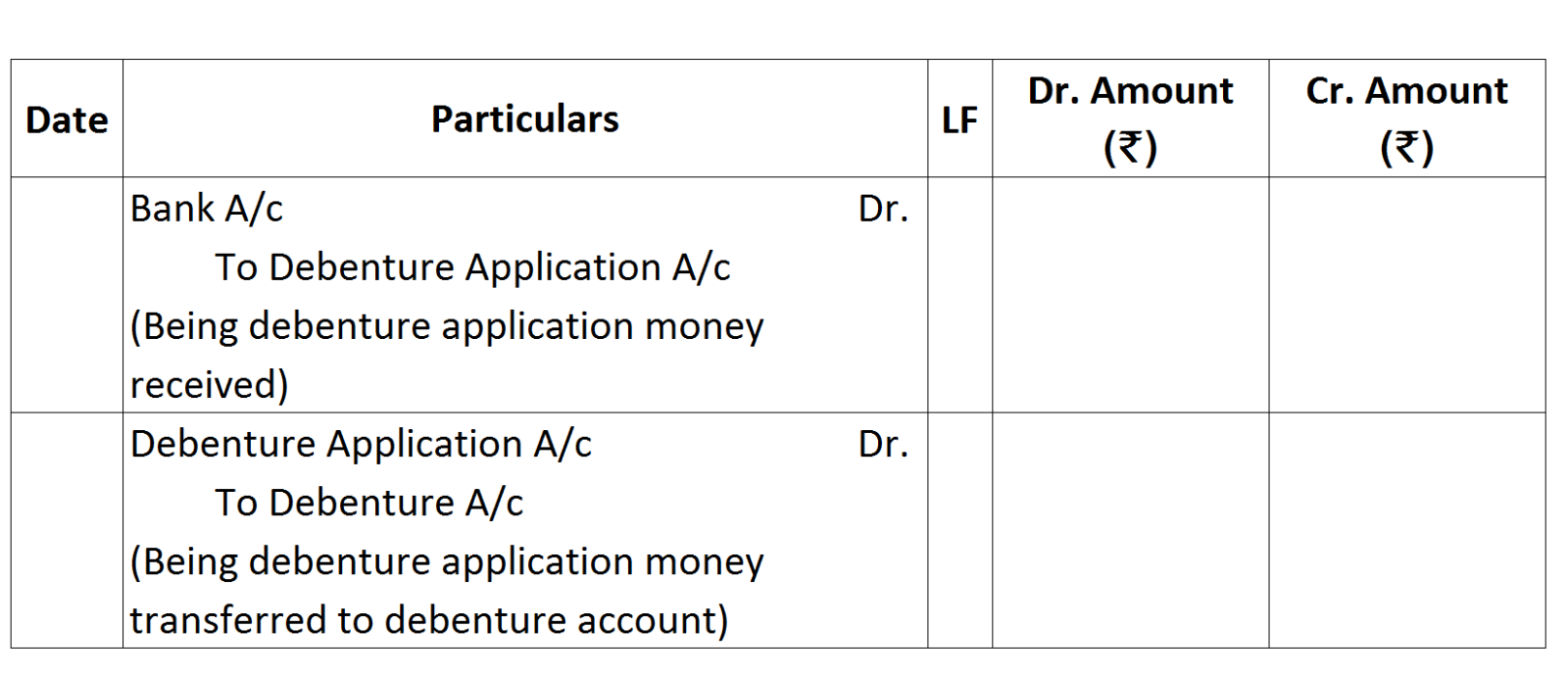
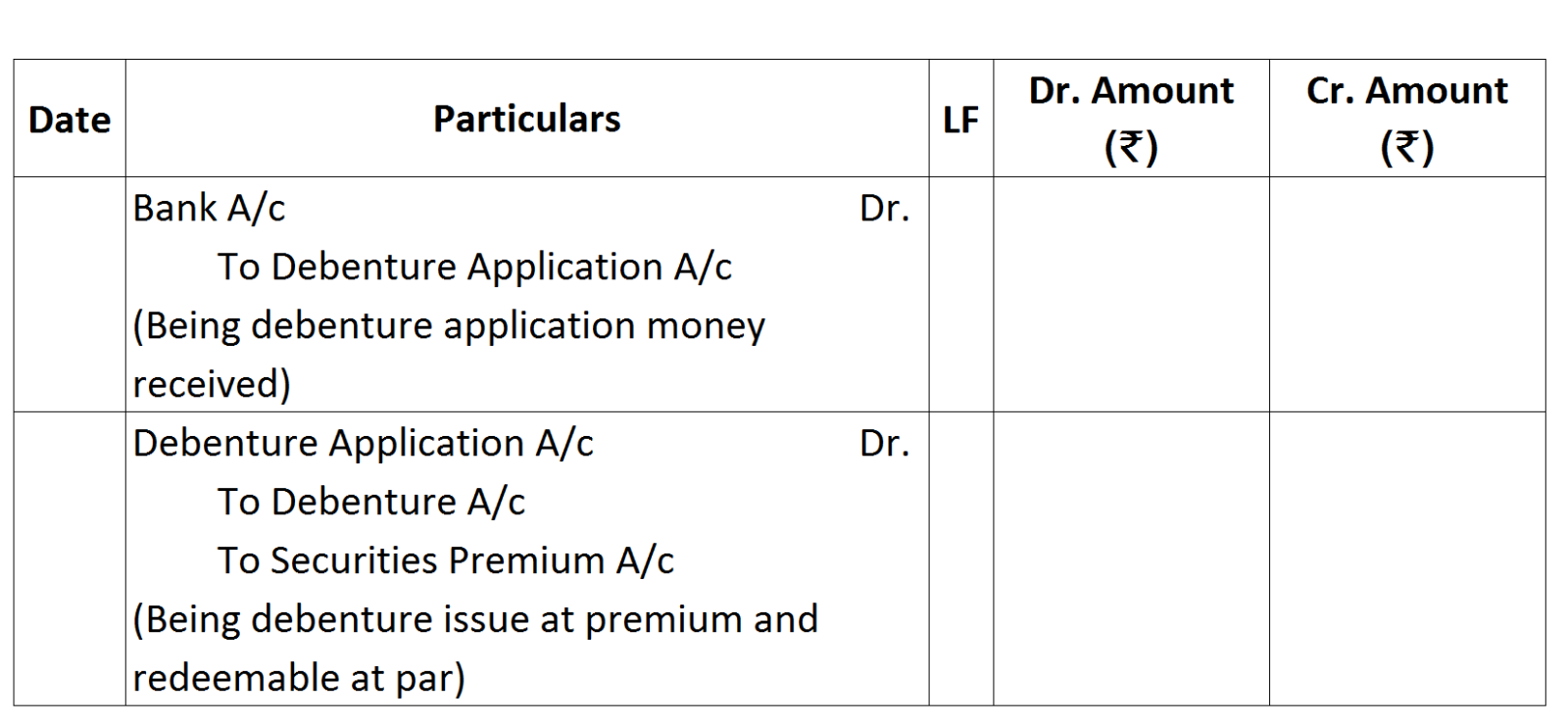
Debentures can be issued at par, at premium and at discount in the same way they can be redeem at par and at premium. Debentures can never be redeemed at discount. The following are the six situation under which debentures can be issued to their redemption.
  1. Issue at Par and Redeemable at Par: When the debentures are issued and are redeemed at their face value, then the following Journal entry is passed.
  1. Issue at Premium and Redeemable at Par: When the debentures are issued at premium and redeemable at par, then the following Journal entry is passed. As premium is a gain for a company so it is credited in the Journal entry.
  1. Issue at Discount and Redeemable at Par When the debentures are issued at discount and redeemable at par, then the following Journal entry is passed. As discount is a loss for a company so it is debited in the Journal entry.
  1. Issue at Premium and Redeemable at Premium When debentures are issued at par and redeemable at premium, then the following Journal entry is passed. In such case, the company did not suffer any loss at the time of issue but there will be loss at the time of redemption.
  1. Issue at Discount and Redemption at Premium: When the debentures are issued at discount and redeemable at premium, then the following Journal entry is passed.

Need a full question paper?

Generate a complete, print-ready paper with questions like this in minutes — across 16+ boards, with answer keys.
Start Generating Free

Similar questions

Average Inventory ₹ 60,000; Inventory Turnover Ratio 5 Times; Selling price 40% above cost. Calculate Gross Profit Ratio.
Complete the missing (?) figures in the following Extract of Balance Sheet:
Compute Cash Flow from Operating Activities from the following information:
Particulars
Net Profit after Provision for Tax nd Payment of Dividend
Provision for Tax
Final Dividend paid during the year
Depreciation
Loss on Sale of Machinery
Patents Amortised
Gain on Sale of Land
Income Tax Refund
2,15,000
45,000
50,000
25,000
10,000
30,000
70,000
30,000
State the features of Computerized Accounting system.
State under which major headings and sub-headings will the following items be presented in the Balance Sheet of a company as per Schedule-III, Part-I of the Companies Act, 2013.
  1. Prepaid Insurance.
  2. Investment in Debentures.
  3. Calls-in-arrears.
  4. Unpaid dividend.
  5. Capital Reserve.
  6. Loose Tools.
  7. Capital work-in-progress.
  8. Patents being developed by the company.
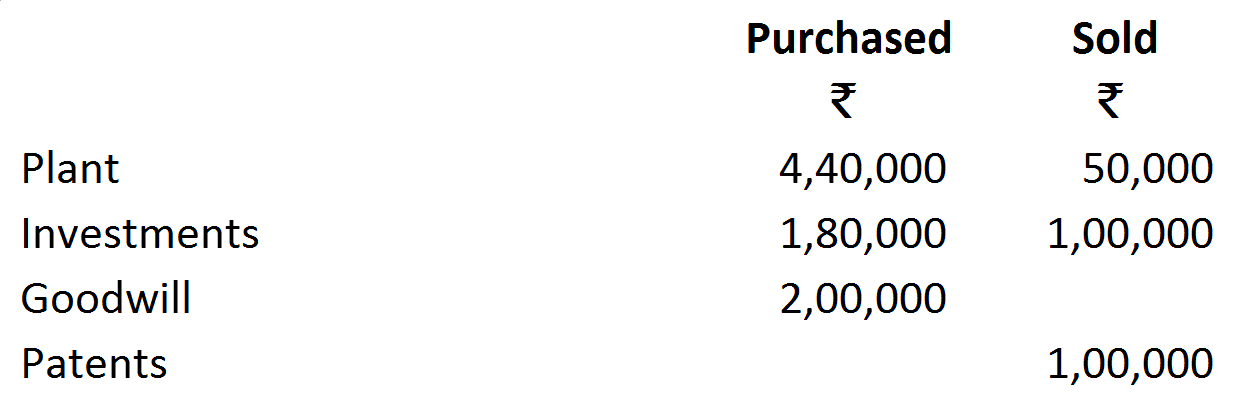
From the following particulars, calculate cash flows form investing activities

Interest received on debentures held as investment ₹ 60,000 Dividend received on shares held as investment ₹ 10,000.
A plot of land had been purchased for investment purposes and was let out for commercial use and rent received ₹ 30,000.
Z Ltd. made a profit of ₹ 20,00,000 after charging Depreciation of ₹ 1,50,000, writing off preliminary expenses off ₹ 10,000 and loss on sale of assets ₹ 30,000. The other information available to you is as follows:
At the end of the year Trade Payables showed an increase of ₹ 45,000; Trade Receivables an increase of ₹ 53,000; Prepaid Expenses decrease of ₹ 2,000; and Outstanding Expenses decrease off ₹ 10,000.
Company decided to distribute ₹ 2,000 school bags free of cost to the students belonging to economically weaker sections of the society.
You are required to:
  1. As certain cash flow from operating activities,
  2. Identify the values involved.
From the following information and Balance Sheet of Double Tree Ltd. as at 31st March, 2018, calculate Operating Profit before Working Capital Changes: Notes to Account:
Additional Information: Depreciation for the year was ₹ 75,000.
From the following information calculate any two of the following ratios:
  1. Net Profit Ratio
  2. Debt-Equity Ratio
  3. Quick Ratio
Information:
 
Paid up Capital
20,00,000
Capital Reserve
2,00,000
9% Debentures
8,00,000
Net Sales
14,00,000
Gross Profit
8,00,000
Indirect Expenses
2,00,000
Current Assets
4,00,000
Current Liabilities
3,00,000
Opening Stock
50,000
Closing Stock ---- 20% more than opening stock
From the following information, calculate the Cash Flow from Investing Activities of X Ltd.

Additional Information:
  1. Half of the Non-Current investments held in the beginning of the year were sold at 15% profit.
  2. Depreciation on Fixed Assets was ₹ 1,60,000 for the year.
  3. Interest received on Non-Current investments: ₹ 50,000.
  4. Dividend received on Non-Current investments: ₹ 20,000
  5. Rent received: ₹ 25,000.