Question
Explain the gene therapy. Give two types of it.

Answer

Gene therapy is the treatment of genetic disorders by replacing, altering or supplementing a gene that is absent or abnormal and whose absence or abnormality is responsible for the disease.
Types of gene therapy:
(a) Germ line gene therapy:

  1. In this germ cells are modified genetically to correct a genetic defect.
  2. Normal gene is introduced into germ cells like sperms, eggs, early embryos.
  3. It allows transmission of the modified genetic information to the next generation.
  4. Although it is highly effective in treatment of the genetic disorders, its use is not preferred in human beings because of various technical and ethical reasons.

(b) Somatic cell gene therapy:

  1. In this somatic cells are modified genetically to correct a genetic defect.
  2. Healthy genes are introduced in somatic cells like bone marrow cells, hepatic cells, fibroblasts endothelium and pulmonary epithelial cells, central nervous system, endocrine cells and smooth muscle cells of blood vessel walls.
  3. Modification of somatic cells only affects the person being treated and the modified chromosomes cannot be passed on the future generations.
  4. Somatic cell gene therapy is the only feasible option and the clinical trials have already employed for the treatment of disorders like cancer, rheumatoid arthritis, SCID, Gaucher’s disease, familial hypercholesterolemia, haemophilia, phenylketonuria, cystic fibrosis, sickle-cell anaemia, Duchenne muscular dystrophy, emphysema, thalassemia, etc.

Need a full question paper?

Generate a complete, print-ready paper with questions like this in minutes — across 16+ boards, with answer keys.

Start Generating Free

Similar questions

Complete the table.
EventPhysical process
1. Soaking of Seeds—————-
2. Water entering guard cells—————-
3. Exchange of gases—————
4. Loss of water in liquid form—————
5. Water coming out through earthen pot—————
6. Loss of water in vapour form—————
7. Absorption of solutes passively by carrier—————
8. Spreading of fragrance of incense stick—————
How is blood glucose level maintained?
Explain how Hershey – Chase experimentally proved that DNA is the genetic material.
Industrial uses of enzymes.
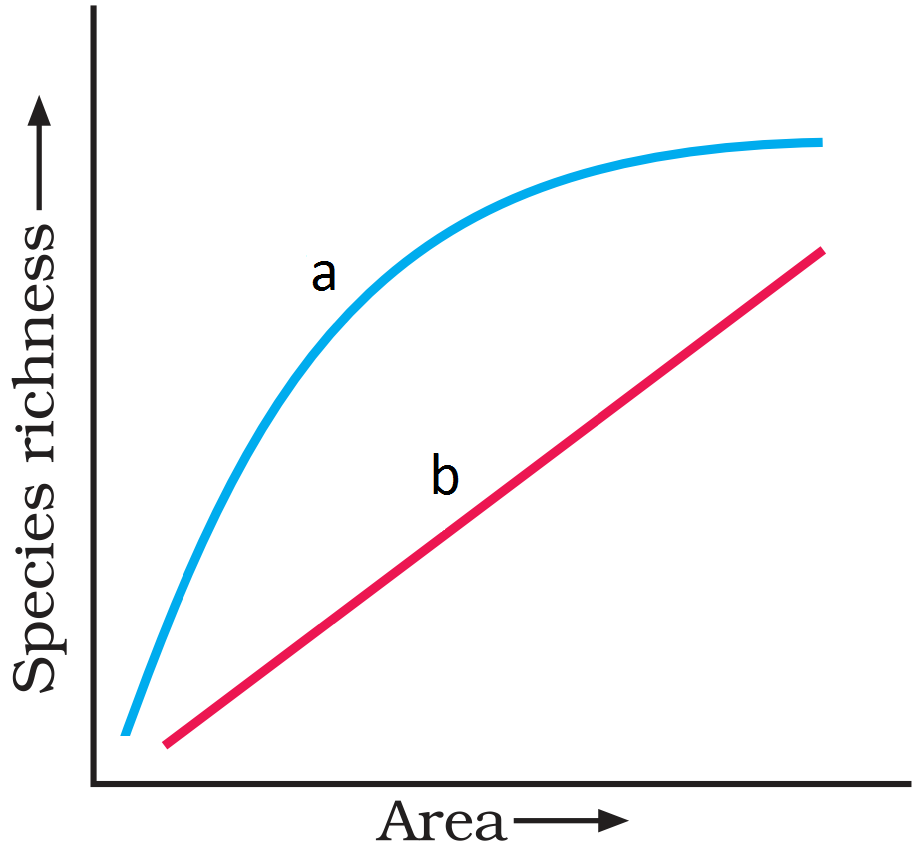
The graph shows species-area relationship:
  1. If b denotes the relationship on log scale-
  1. Describe a and b.
  2. How is slope represented? Give the normal range of slope.
  3. What kind of slope will be observed for frugivorous birds and mammals in a tropical forest?
  1. Species diversity of plants $(22 \%)$ is much less than that of animals $(72 \%)$. Analyze the reasons for greater diversity of animals as compared to plants.
In a biology class, teacher was telling the students that the structures/components and their functions in a watch can be compared with various levels of organisation we find in nature. Radhika was surprised and asked teacher to explain it. Teacher got impressed with Radhika's interest and explained that there is a systematic arrangement of smaller and simpler components into larger one in a hierarchy or pyramid having different levels where each level is formed of components of lower level and itself becomes part of higher level for achieving a common goal.
(i) What are the four levels of biological organisation found in nature?
(ii) What is the basic unit of ecological organisation?
(iii) Define community.
(iv) What values are shown by Radhika?
Ectomycorrhizae and Endomycorrhizae.
  1. Cancer is one of the most dreaded disease. Explain 'contact inhibition' and 'metastasis with respect to the disease.
  2. Name the group of genes that have been identified in normal cells that could lead to cancer. How do these genes cause cancer?
  3. Name any two techniques that are useful in detecting cancers of internal organs.
  4. Why are cancer patients often given a-interferon as part of the treatment?
Glottis is guarded by a flap called epiglottis.
Explain why a recessive allele is unable to express itself in a heterozygous state.