Question
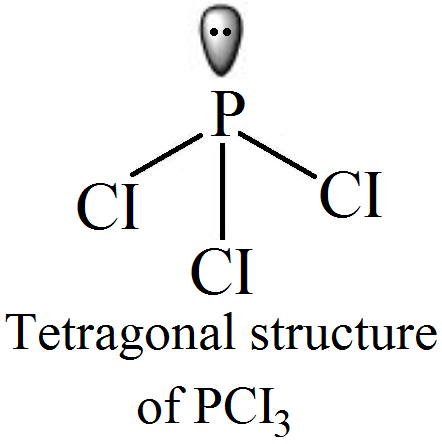
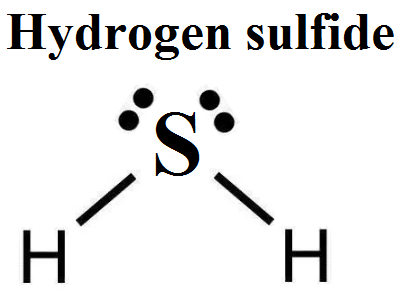
Explain the non linear shape of $H_2S$ and non planar shape of $PCl_3$ using valence shell electron pair repulsion theory.
Answer

In the molecule $PCl_3$, The electronic configuration of P atom is $1s^2, 2s^2, 2p^6, 3s^2, 3p^3$. The valency of $P$ is $5$. In $PCl3$,
$P$ has $3$ single bonds and $1$ lone pair (pair of unshared electrons). This suggests us to use $sp^3$ hybrid orbitals on phosphorus. Each chlorine atom (valence shell configuration $3s^23p^5$) has one singly occupied $3p$ orbital. The P–Cl bonds are formed by the overlap of a phosphorus $sp3$ hybrid orbital with singly occupied chlorine $3p$ orbital. Each Cl atom holds three lone pairs.

In $H_2S$ , S is the central atom, which has 6 valence electrons, out of which 2 electron are used by two hydrogen forming two bonds and two remaining pairs remain as lone pairs around the atom, Thus due to lone pair lone pair repulsion offered by the two pairs of electrons, it has a bent shape.

Need a full question paper?

Generate a complete, print-ready paper with questions like this in minutes — across 16+ boards, with answer keys.
Start Generating Free

Similar questions

Give general characters of elements of s, p, d and f-block.
1. Explain hyperconjugation effect. How does hyperconjugation effect explain the stability of alkenes?
2. Draw the resonance structures of the following compounds:
Image
i. A beam of helium atoms move with a velocity of $2.0 \times 10^3 \mathrm{~ms}^{-1}$. Find the wavelength of the particle constituting the beam, ( $\mathrm{h}=6.626 \times 10^{-34} \mathrm{~J} \mathrm{~s}$ ).
ii. An electron is moving with a kinetic energy of $2.275 \times 10^{-25}$ J. Calculate its de-Broglie wavelength. (Mass of electron $\left.=9.1 \times 10^{-31} \mathrm{~kg}, \mathrm{~h}=6.6 \times 10^{-34} \mathrm{~J} \mathrm{~s}\right)$
What is the concentration of sugar $\left(\mathrm{C}_{12} \mathrm{H}_{22} \mathrm{O}_{11}\right)$ in $\mathrm{mol} \mathrm{~L}^{-1}$ if its 20 g are dissolved in enough water to make a final volume up to 2L?
Match the species in Column I with the type of hybrid orbitals in Column II.
 
Column I
 
Column II
i.
Hydrogen bond
a.
C
ii.
Resonance
b.
LiF
iii.
Ionic solid
c.
$\mathrm{H}_2$
iv.
Covalent solid
d.
HF
    e. $\mathrm{O}_3$
Draw the cis and trans structures of hex-2-ene. Which isomer will have higher b.p. and why?
  1. Define solubility product. Write solubility product expression for $Zr_3(PO_4)_4$.
  2. Calculate the pH of $0.01 M CH_3COOH$ solution. $[K_a(CH_2COOH) = 1.74 \times 10^{-51}$
  3. Explain why NaCl is precipitated when HCl(g) is passed through the saturated solution of NaCl.
What is hyperconjugation? Explain with example and with help of this explain the stability of carbocations and alkenes.
How is heat change $(\Delta H )$ measured at constant pressure? Explain.
The equilibrium constant for the following reaction is $1.6 \times 10^5$ at 1024K $\text{H}_2\text{ (g) + Br (g)}\rightleftharpoons2\text{HBr (g)}$ Find the equilibrium pressure of all gases if 10.0 bar of HBr is introduced into a
sealed container at 1024K.