Question
Explain the photoelectric effect when the radiation is incident on different metals?

Answer

Metals like Zinc $( Zn )$, Cadmium (Cd) Magnesium ( Mg ) get a photoelectric effect by incidenting ultraviolet light of sufficient frequency on them.
Some alkali metals such as Lithium (Li), Sodium (Na), Potassium (K), Cesium (Cs) and Rubidium (Rb) exhibit a photoelectric effect when exposed to visible light. These metals are called light sensitive (photosensitive) metals.

Need a full question paper?

Generate a complete, print-ready paper with questions like this in minutes — across 16+ boards, with answer keys.
Start Generating Free

Similar questions

A pivoted aluminium bar falls much more slowly through a small region containing a magnetic field than a similar bar of an insulating material. Explain.
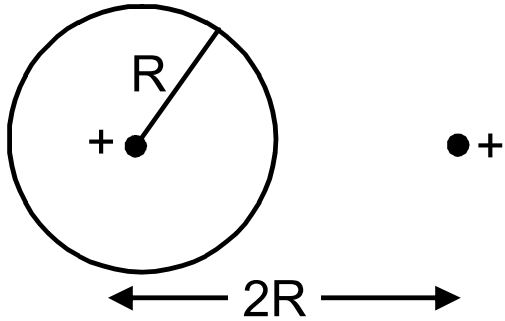
Find the flux of the electric field through a spherical surface of radius R due to a charge of 10-7C at the centre and another equal charge at a point 2R away from the centre.

In a cylindrical conductor, a direct current is flowing. Is there any electric field inside the conductor?
Why are elemental dopants for Silicon or Germanium usually chosen from group XIII or group XV?
Net capacitance of three identical capacitors in series is $1\mu\text{F}.$ What will be their net capacitance if connected in parallel?
Find the ratio of energy stored in the two configurations if they are both connected to the same source.
Explain the concept of hole in intrinsic semiconductors.
In the Rutherford's nuclear model of the atom, the nucleus (radius about $10^{-15} m$ ) is analogous to the sun about which the electron move in orbit (radius $\approx 10^{-10} m$ ) like the earth orbits around the sun. If the dimensions of the solar system had the same proportions as those of the atom, would the earth be closer to or farther away from the sun than actually it is? The radius of earth's orbit is about $1.5 \times 10^{11} m$. The radius of sun is taken as $7 \times 10^8 m$.
Two point charges $4\mu\text{C}$ and $-2 \mu\text{C}$  are separated by a distance of 1 m in air. Calculate at what point on the line joining the two charges is the electric potential zero.
Write down the expression (equation) to find the distance of $n^{\text {th }}$ bright fringe and $n^{\text {th }}$ dark fringe from the central maximum.
At what separation should two equal charges, 1.0C each, be placed so that the force between them equals the weight of a 50kg person?