Question
Explain the process of obtaining silk from the silk moth.

Answer

The processing of fibres into wool involves the following steps:
Step I: Shearing: At first hair are removed using shearing machine.
Step II: scouring: Hair is washed in tanks to remove grease, dust and dirt. This process is called scouring.
Step III: After scouring, sorting of hair is done on the basic of different textures.
Step IV: The small fluffy fibres, called burrs, are picked out from the hair.
Step V: The fibres then dyed in various colours, according to choice.
Step VI: The coloured fibres are straightened, combed and rolled into yarn.

Need a full question paper?

Generate a complete, print-ready paper with questions like this in minutes — across 16+ boards, with answer keys.

Start Generating Free

Similar questions

How would you test the presence of starch in leaves?
Wild animals like tiger, wolf, lion and leopard do not eat plants. Does this mean that they can survive without plants? Can you provide a suitable explanation?
Match the Column $I$ with Column $II.$
 
Column I
 
Column II
$(a)$
Groundwater
$(i)$
Solid form of water
$(b)$
Bawri
$(ii)$
Wastage of water
$(c)$
Snow
$(iii)$
Water management
$(d)$
Drip irrigation
$(iv)$
Small waterbody
$(e)$
Leaking taps
$(v)$
Water tabel
What makes science an interconnected field?
Describe the transport system in plants in detail.


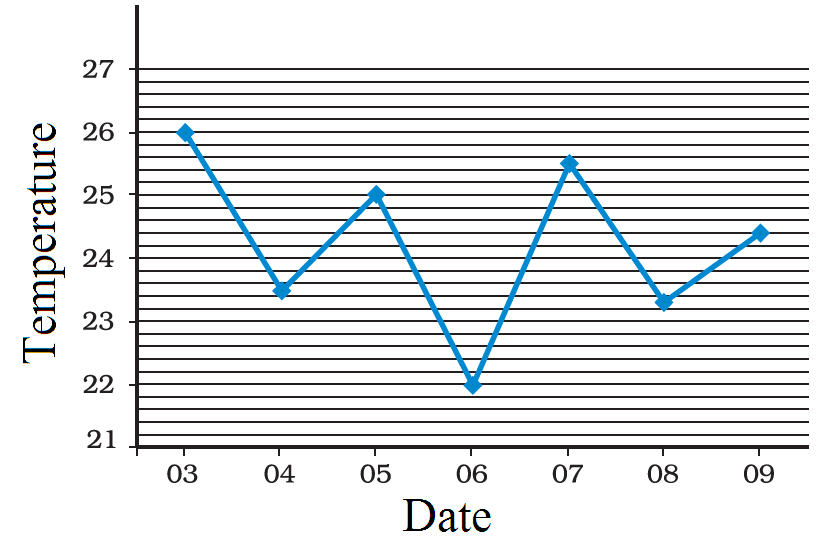
The following graph shows the change in temperature. Answer according to the reading of graph.
  1. Draw a table and fill the temperature change of each day.
  2. Which day show the highest temperature?
  3. Which day shows the minimum temperature?
Draw a neat diagram of a pinhole camera. Explain the image formation process using it.
Match the items of Column I with the items of Column II.
 
Column I
 
Column I
$(a)$
Large crystals
$(i)$
Turns lime water milky
$(b)$
Depositing a layer of zinc on iron
$(ii)$
Physical change
$(c)$
Souring of milk
$(iii)$
Rust
$(d)$
Carbon dioxide
$(iv)$
Sugar candy $(Mishri)$
$(e)$
Iron oxide
$(v)$
Chemical change
$(f)$
Dissolving common salt in water
$(vi)$
Galvanisation
Draw a labelled diagram of the human excretory system.
Classify the following as motion along a straight line, circular or oscillatory motion.
  • Motion of our hands while running.
  • Motion of a horse pulling a cart on a straight road.
  • Motion of a kid in a merry-go-round.
  • Motion of a child on a see-saw.
  • Motion of the hammer of an electric bell.
  • Motion of a train on a straight bridge.