Question
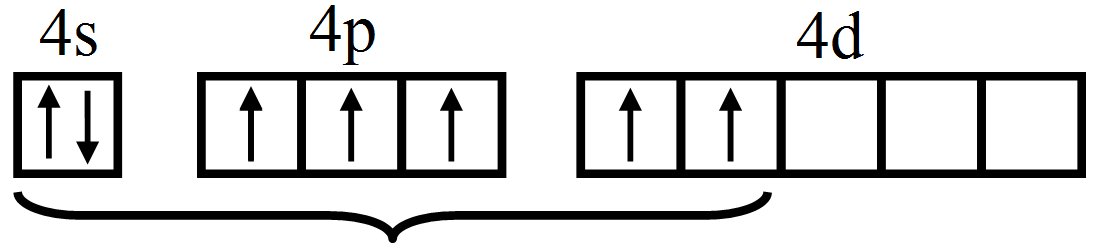
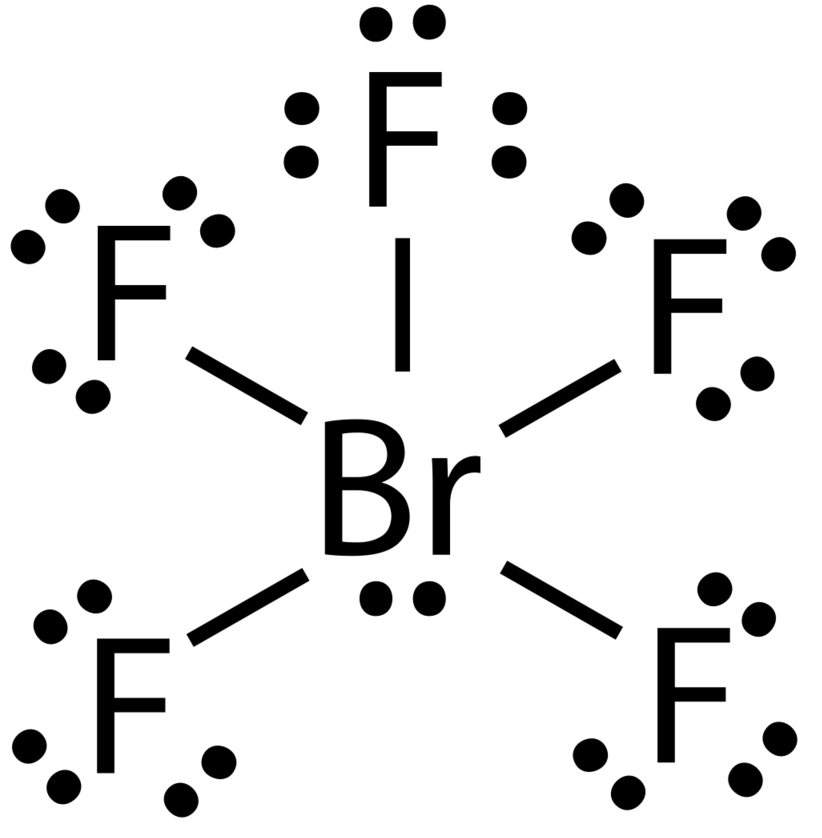
Explain the shape of BrF5.
Generate a complete, print-ready paper with questions like this in minutes — across 16+ boards, with answer keys.
$\text{CH}_3-\text{CH}_2-\text{CH}-\text{CH}_3\\\ \ \ \ \ \ \ \ \ \ \ \ \ \ \ \ \ \ \ \ \ \ \ \ \ \ |\\\ \ \ \ \ \ \ \ \ \ \ \ \ \ \ \ \ \ \ \ \ \ \ \ \ \text{OH}$
$\ \ \ \ \ \ \ \ \ \ \ \ \text{CH}_3\\\ \ \ \ \ \ \ \ \ \ \ \ \ |\\\text{CH}_3-\text{C}-\text{CH}_3\\\ \ \ \ \ \ \ \ \ \ \ \ \ |\\\ \ \ \ \ \ \ \ \ \ \ \ \text{OH}$
$\text{CH}_3-\text{CH}-\text{CH}_2-\text{OH}\\\ \ \ \ \ \ \ \ \ \ \ \ \ \ \ \ \ \ \ \ \ \ \ \ |\\\ \ \ \ \ \ \ \ \ \ \ \ \ \ \ \ \ \ \ \ \ \ \ \text{CH}_3$
$\text{CH}_3-\text{CH}_2-\text{O}-\text{CH}_2-\text{CH}_3$
$\text{CH}_3-\text{O}-\text{CH}_2-\text{CH}_2-\text{CH}_3$
$\text{CH}_3-\text{O}-\text{CH}-\text{CH}_3\\\ \ \ \ \ \ \ \ \ \ \ \ \ \ \ \ \ \ \ \ \ \ |\\\ \ \ \ \ \ \ \ \ \ \ \ \ \ \ \ \ \ \ \ \ \text{CH}_3$
$\Delta_\text{sub}\text{H}^\ominus$ for sodium metal = 108.4kJ mol–1
Ionization enthalpy of sodium = 496kJ mol–1 Electron gain enthalpy of bromine = –325kJ mol–1 Bond dissociation enthalpy of bromine = 192kJ mol–1$\Delta_\text{f}\text{H}^\ominus$ for NaBr (s) = – 360.1kJ mol–1
$\text{H}_3\text{PO}\text{(aq)}+2\text{HgCl}_2+2\text{H}_2\text{O}\text{(aq)}\\ \xrightarrow{ \ \ \ \ }\text{H}_3\text{PO}_4\text{(aq)}+2\text{Hg(l)}+4\text{HCl(aq)}$
$\text{O}_2\text{(g)}+\text{PtF}_6\text{g}\xrightarrow{ \ \ \ \ }\text{O}_2^+[\text{PtF}_6]^\ominus\text{(s)}$
Why does H2S acts as reducing agent only whereas SO2 acts as bot oxidant as wells as rductant?