Question
Explain the term density, giving its units and dependence on temperature and pressure.

Answer

Density is defined as the mass present in a unit volume of a substance.
Density $=\frac{\text { Mass }}{\text { Volume }}$
The units in which density is expressed will depend upon the units of mass and volume.
If the units of mass and volume are kilogram (kg) and cubic metre (m3) respectively.
The SI unit of density is kilogram per cubic metre (kg/m3).
For liquid units of density is used in grams per milliliter (g/mL).
The density of a substance is independent of its shape and size but depends on temperature and pressure. The effect of pressure on the density of solids and liquids is negligible, but the density of gases decreases. If we compare the density of two substances, it is called relative density. It is a number without units. For example, the mass of an aluminium block is 27 g and its volume is 10 cm3,so its density is 2.7 g/cm3. But its relative density with respect to water is 2.7, i.e., it is 2.7 times heavier than water.

Need a full question paper?

Generate a complete, print-ready paper with questions like this in minutes — across 16+ boards, with answer keys.

Start Generating Free

Similar questions

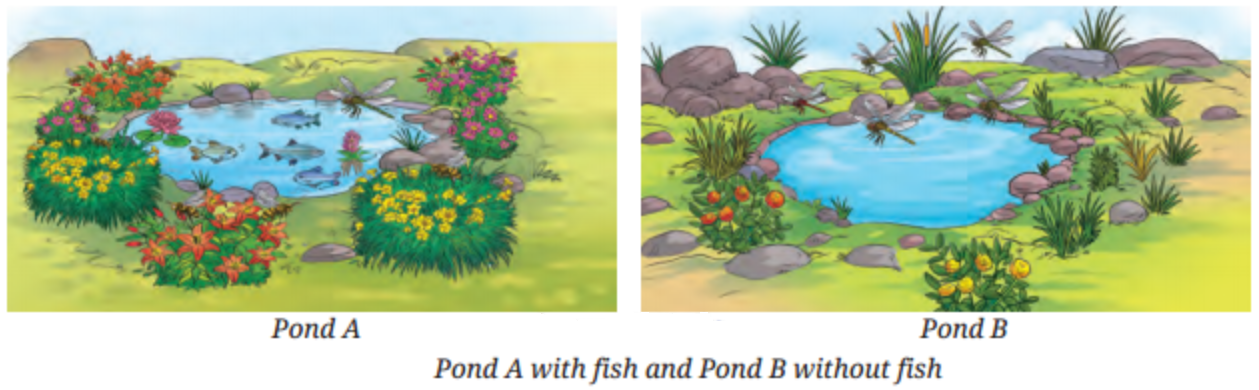
Researchers conducted a study to see how fish in ponds affect seed production in the plants nearby. They observed two ponds with fish and a large number of flowering plants around them; B without fish and fewer flowering plants around it (Fig.). Think of a reason for these observations.
Image
Q.1. Compare the number of dragonflies, bees, and butterflies in both ponds.
Q.2. Think of a reason for these observations.
Q.3. What does this study show? How does the population of fish in a pond affect seed production in nearby plants?
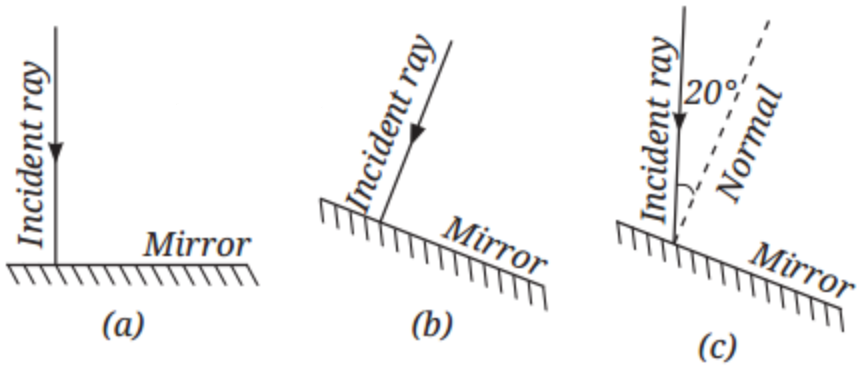
The figure shows three different situations where a light ray falls on a mirror:
Image
1. The light ray falls along the normal.
2. The mirror is tilted, but the light ray still falls along the normal to the tilted surface.
3. The mirror is tilted, and the light ray falls at an angle of 20° from the normal.
Draw the reflected ray in each case (Use a ruler and protractor for accurate drawing). What is the angle of reflection in each case?
Why does a piece of paper burn with yellow flame? Give a reason.
Why is the conservation of biodiversity important?
How would our daily lives be changed if water were not a compound but a mixture of hydrogen and oxygen?
Explain various types of bacteria.
Differentiate between elements, compounds, and mixtures, highlighting their key characteristics and providing examples for each.
Discuss the role of micro-organisms in sustainable development, including food, fuel, and waste manage¬ment.
Describe the male reproductive organs with the help of a labelled diagram.
What are the major groups of microorganisms?