Question
Explain the Term :
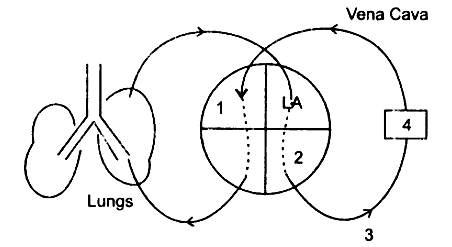
Double circulation

Answer

Double circulation: Double circulation in the heart refers to the way blood flows through the heart and the rest of the body in two separate loops or circuits. This system is composed of:
Pulmonary Circulation: Deoxygenated blood is sent from the heart to the lungs to get oxygenated, then returns to the heart. Systemic Circulation: Oxygenated blood from the heart is circulated throughout the body to deliver oxygen, then deoxygenated blood returns to the heart.
This efficient system enables high blood pressure in organs and quick oxygen delivery, vital for high metabolism in mammals and birds.

Need a full question paper?

Generate a complete, print-ready paper with questions like this in minutes — across 16+ boards, with answer keys.

Start Generating Free

Similar questions

What are the health effects of Carbon Monoxide?
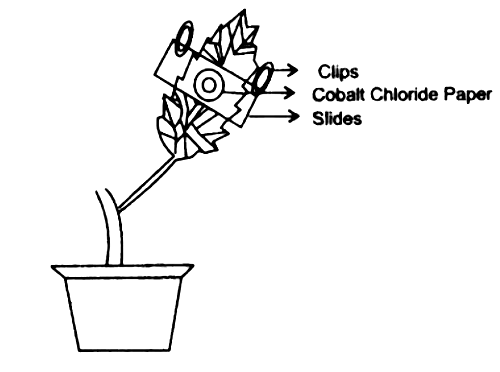
Given below is the diagram of an experimental set up to study the process of transpiration in plants. Study the same and then answer the questions that follow:

(i) What is the colour of dry cobalt chloride paper?
(ii) Is the experimental leaf a monocot or a dicot? Give a reason to support your answer.
(iii) Why axe glass slides placed over the dry cobalt chloride papers?
(iv) After about half an hour what change, if any, would you expect to find in the cobalt chloride paper placed on the dorsal and ventral sides of the leaf? Give a reason to support your answer.
(v) Define the term ‘transpiration’.
Draw a well-labelled diagram to show the anaphase stage of mitosis in plant cells having four chromosomes.
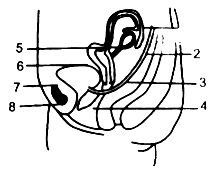
The below diagram represents the vertical view of the human female reproductive system.

(i) Label the parts indicated by the guidelines 1 to 8.
(ii) How does the uterus prepare for the reception of a zygote?
(iii) What happens to the uterus if fertilization takes place?
(iv) What happens to the uterus if fertilization has failed to take place?
Why is it necessary to place a plant in the dark before starting an experiment on photosynthesis? Explain.
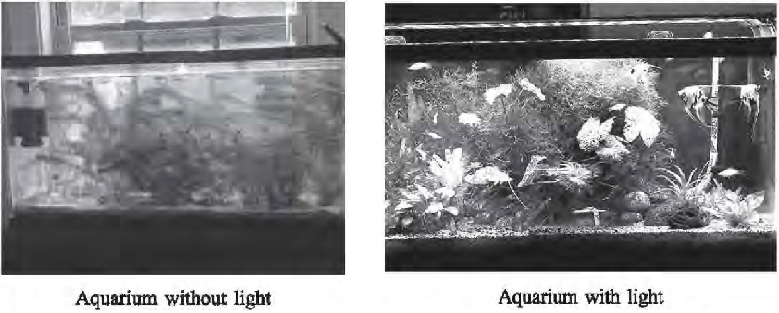
Given below is the diagram showing aquariums with light and without light. Read the information and fill in the blanks:
Image
A group of students conducted an experiment to understand the significance of photosynthesis in the ecosystem. They observed two aquariums, one with aquatic plants and the other without any plants, both exposed to light. Over time, they noticed that the aquarium with plants had clearer water, while the other became turbid. This experiment highlighted the role of photosynthesis in oxygen production and nutrient cycling, essential for maintaining aquatic ecosystems.
The presence of plants in the aquarium helped in (i) __________ the water by absorbing carbon dioxide. The unclear water in the aquarium without plants was due to the (ii) __________ of oxygen and the accumulation of waste. Photosynthesis is crucial for (iii) __________ as it produces oxygen and removes carbon dioxide. In the absence of photosynthesis, aquatic ecosystems would suffer from
(iv) __________ imbalance and poor water quality. The experiment demonstrated the importance of (v) __________ maintaining aquatic environments.
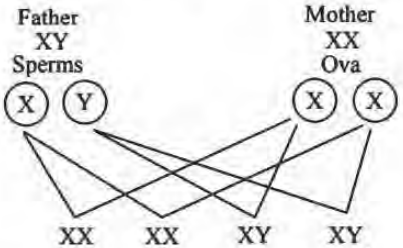
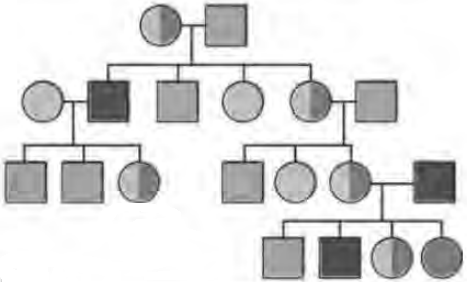
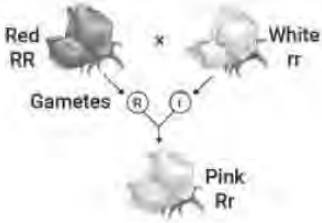
Given below are some pictures. Match them with the correct options.

PicturesCross
1.Imagea.Incomplete 
2.Imageb.Sex determination
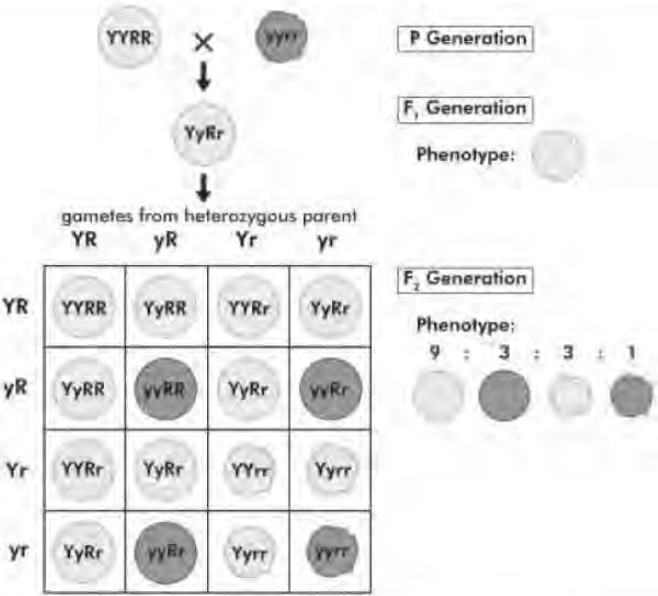
3.Imagec.Dihybrid cross
4.Imaged.Pedigree analysis
 
Photosynthesis in green plants is directly and indirectly dependent on so many plant structures.
Explain briefly the role of the following structures in this process is Xylem tissue in the leaf veins
Given below is a schematic representation of the circulatory system in man. Study the same and answer the questions that follow:

(i) Label the parts 1 to 4 indicated in the diagram.
(ii) Give one difference between parts 1 and 2 based on:
(a) their structure
(b) the nature of blood flowing through them.
(iii) What is the specific name of the type of blood circulation that takes place between the heart and the lungs?
(iv) Name the valve found at the beginning of the part labeled 3.
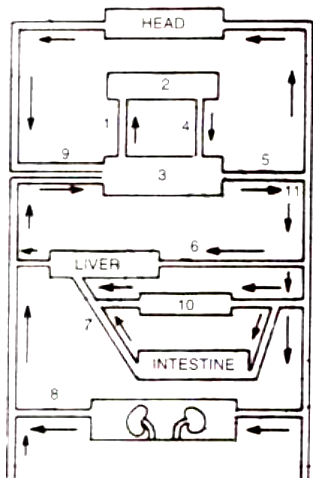
Given below is a highly schematic diagram of the human blood circulatory system.
Which numbers represent the following respectively?
Aorta
Hepatic portal vein
Pulmonary artery
Superior vena cava
Renal vein
Stomach