Question
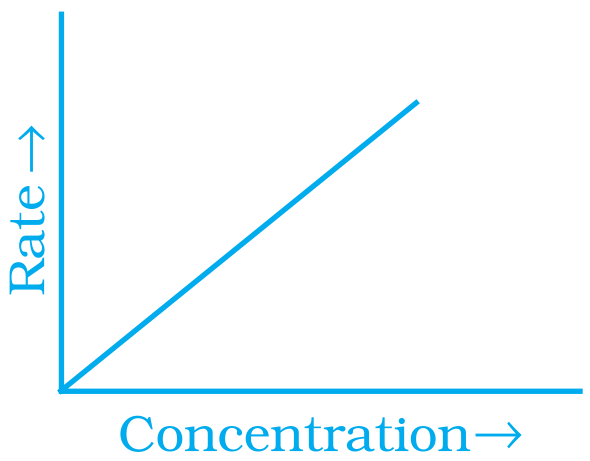
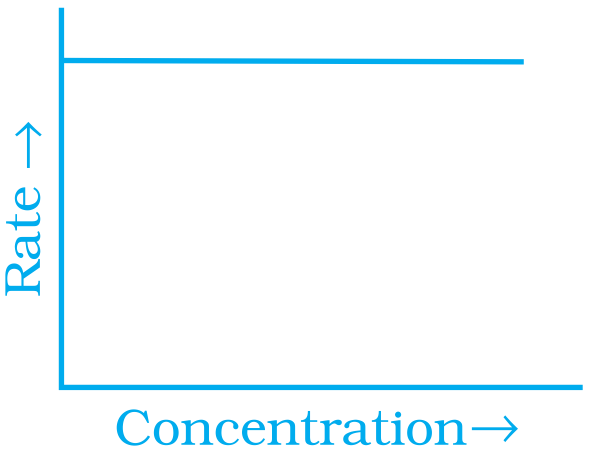
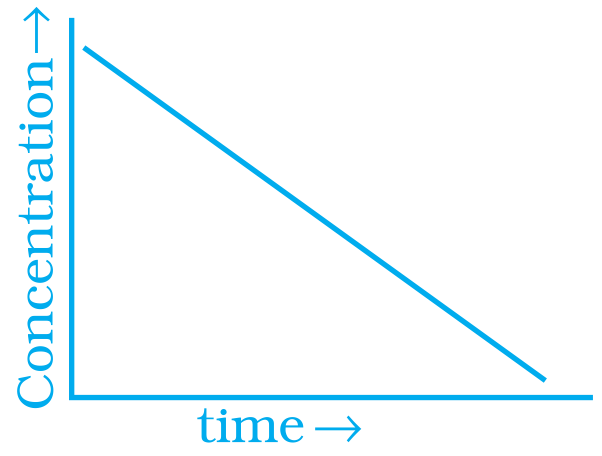
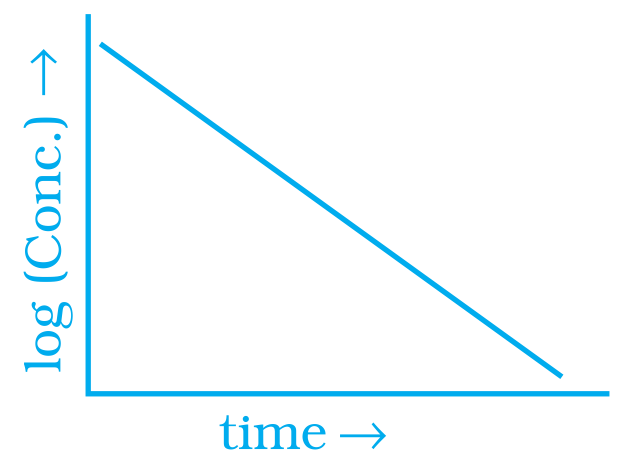
Explain the various methods of determining the order of a reaction.

Answer

self

Need a full question paper?

Generate a complete, print-ready paper with questions like this in minutes — across 16+ boards, with answer keys.

Start Generating Free

Similar questions

(a) Why $\alpha$-hydrogen of carbonyl compound are acidic in nature?
(b) Explain aldol condensation reaction of ethanal.
Expian the basic properties of amines.
Discus in detail the following $C - H$ bond cleavage reactions of ether :
(i) Peroxide formation
(ii) Halogenation
  1. Following are the transition metal ions of 3d series:

Ti4+, V2+, Mn3+, Cr3+

(Atomic numbers : Ti = 22, V = 23, Mn = 25, Cr = 24)

Answer the following:

  1. Which ion is most stable in an aqueous solution and why?
  2. Which ion is a strong oxidising agent and why?
  3. Which ion is colourless and why?
  1. Complete the following equations:
  1. $2\text{ }\text{MnO}_4^-+16\text{ }\text{H}^++5\text{ }\text{S}^{2-}\xrightarrow{\text{ }\text{ }\text{ }\text{ }\text{ }\text{ }\text{ }\text{ }\text{ }\text{ }\text{ }}$
  1. $\text{KMnO}_4\xrightarrow{\text{ }\text{ }\text{ }\text{ }\text{ }\text{heat}\text{ }\text{ }\text{ }\text{ }\text{ }}$
Answer the following questions.
Comment on the specificity of enzyme action. What is the most important reason for their specificity?
  1. Account for the following:
  1. Transition metals show variable oxidation states.
  2. Zn, Cd and Hg are soft metals.
  3. Evalue for the Mn3+/Mn2+ couple is highly

positive (+ 1·57 V) as compared to Cr3+/Cr2+.

  1. Write one similarity and one difference between the chemistry of lanthanoid and actinoid elements.
  1. Give three points of difference between lanthanoids and actinoids.
  2. Give reason and select one atom/ion which will exhibit asked property:
  1. Sc3+ or Cr3+ (Exhibit diamagnetic behaviour).
  2. Cr or Cu (High melting and boiling point).
A mixed oxide of iron and chromium, FeOCr2O3 is fused with sodium carbonate in the presence of air to form a yellow coloured compound (A). On acidification the compound (A) forms an orange coloured compound (B), which is a strong oxidising agent.
  1. Identify the compounds (A) and (B).
  2. Write balanced chemical equation for each step.