Question
Explain the various transport system present in human beings.
Answer

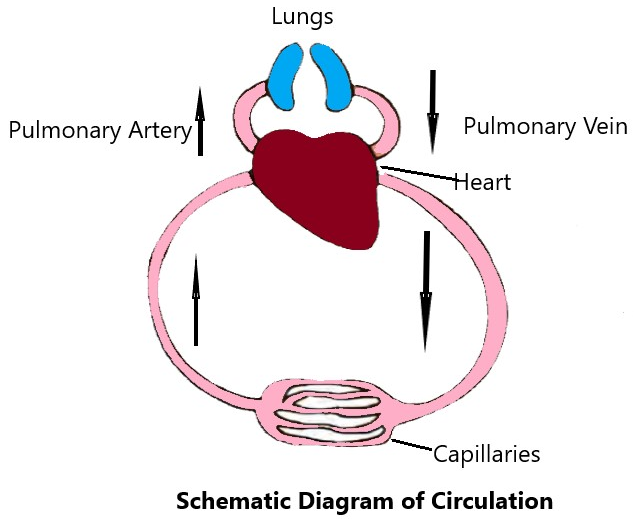
The heart is an organ which beats continuously to act as a pump for the transport of blood, which carries other substances with it. The heart is located in the chest cavity with its lower tip slightly tilted towards the Left. Heart is roughly the size of a fist. To avoid mixing up of blood rich in oxygen with the blood rich in carbon dioxide, the heart has four chambers. The two upper chambers are called the atria (singular: atrium) and the two lower chambers are called the ventricles The partition between the chambers helps to avoid mixing up of blood rich in oxygen with the blood rich in carbon dioxide.To understand the functioning of the circulatory system, start from the right side of the heart as show in the in Fig and follow the arrows. These arrows show the direction of the blood flow from the heart to the lungs and back to the heart from where it is pumped to the rest of the body.
The walls of the chambers of the heart are made up of muscles. These muscles contract and relax rhythmically. This rhythmic contraction followed by its relaxation constitutes a heartbeat. The rhythmic beating the various chambers of the heart maintain circulation of blood and transport of substances to the different parts of the body. The cells in the body perform various activities. Waste products such as urea, uric acid and excess water are formed and have to be removed from the body. The removal of waste products is termed excretion. The organs that help in the process of excretion constitute the excretory system, and include the kidneys, the ureters, the urinary bladder and the urethra. The useful and harmful substances in blood enter the kidneys, where the capillaries filter it. The useful substances are reabsorbed, but the harmful substances are removed along with water in the form of urine. The urine from the kidneys comes down through long tubes called the ureters, which open into the urinary bladder where the urine is stored temporarily. When the bladder fills, the urine is disposed.

Need a full question paper?

Generate a complete, print-ready paper with questions like this in minutes — across 16+ boards, with answer keys.
Start Generating Free

Similar questions

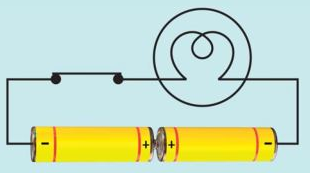
The bulb in the circuit shown in Figure does not glow. Can you identify the problem? Make necessary changes in the circuit to make the bulb glow.
Image
Match the following:
S.No.
Column 1
 
Column 2
$1.$
A plane mirror.
$(a)$
Used as a magnifying glass.
$2.$
A convex mirror.
$(b)$
Can form image of objects spread over a large area.
$3.$
A convex lens.
$(c)$
Used by dentists to see enlarged image of teeth.
$4.$
A concave mirror.
$(d)$
The image is always inverted and magnified.
$5.$
A concave lens.
$(e)$
The image is erect and of the same size as the object.
 
 
$(f)$
The image is erect and smaller in size than the object.
Describe the process by which plants prepare their food using different raw materials.
Discuss the properties of acidic, basic, and neutral substances with 3 examples each.
What precautions should you take while reading a clinical thermometer?
Read the following terms given below.
root hairs
xylem
urethra
arteries
kidneys
veins
atria
capillaries
hear
ureter
phloem
urinary bladder
Group the terms on the basis of the categories given below:
  1. Circulatory system of animals.
  2. Excretory system in human.
  3. Transport of substances in plants.
Describe a simple experiment to show that the bulb lights up when an electric circuit is complete and vice-versa.
Priya’s grandfather was taken to the hospital as he was unable to perform excretory processes. Priya heard a nurse talking to her father that her grandfather’s has kidney failure and needs to undergo dialysis. Priya later asked her father as to what is dialysis process and why does grandpa needs it. Her father smiles and tells her all the facts associated with this process.
  1. What do you mean by dialysis?
  2. Why is there a need for dialysis in some people?
  3. Excretion is an important life process. How?
  4. Which is the major excretory organ in humans?
  5. What values do you observe in Priya?
Design an activity to show the soil erosion on a barren land.
The mountaineers carry oxygen with them because:
  1. At an altitude of more than $5\ km$ there is no air.
  2. The amount of air available to a person is less than that available on the ground.
  3. The temperature of air is higher than that on the ground.
  4. The pressure of air is higher than that on the ground.