Question
Explain with diagram - Hershey and Chase experiment.###On the basis of experimental proof explain the diagram that DNA is genetic material.###How did Hershey and Chase differentiate between DNA and protein in their experiment while proving that DNA is the genetic material?

Answer

→ The unequivocal proof that DNA is the genetic material came from the experiments of Alfred Hershey and Martha Chase (1952). They worked with viruses that infect bacteria called bacteriophages.
→ The bacteriophage attaches to the bacteria and its genetic material then enters the bacterial cell.
→ The bacterial cell treats the viral genetic material as if it was its own and subsequently manufactures more virus particles.
→ Hershey and Chase worked to discover whether it was protein or DNA from the viruses that entered the bacteria.
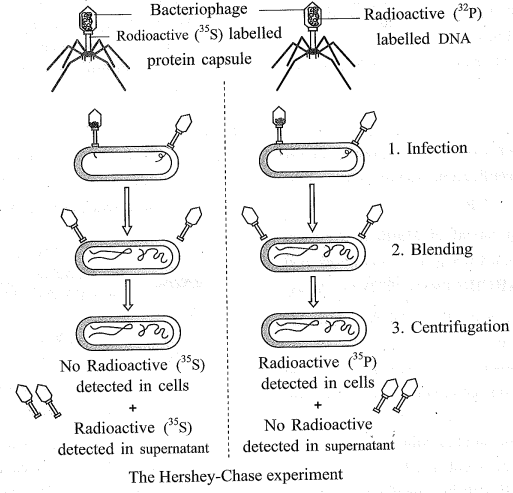
→ They grew some viruses on a medium that contained radioactive phosphorus and some others on medium that contained radioactive sulfur.
→ Viruses grown in the presence of radioactive phosphorus contained radioactive DNA but not radioactive protein because DNA contains phosphorus but protein does not.
→ Similarly, viruses grown on radioactive sulfur contained radioactive protein but not radioactive DNA because DNA does not contain sulfur.
→ Radioactive phages were allowed to attach to E.coli bacteria.
→ Then, as the infection proceeded, the viral coats were removed from the bacteria by agitating them in a blender.
→ The virus particles were separated from the bacteria by spinning them in a centrifuge.
→ Bacteria which was infected with viruses that had radioactive DNA were radioactive, indicating that DNA was the material that passed from the virus to the bacteria.
→ Bacteria that were infected with viruses that had radioactive proteins were not radioactive.
→ This indicates that proteins did not enter the bacteria from the viruses.
→ DNA is therefore the genetic material that is passed from virus to bacteria.
Image

Need a full question paper?

Generate a complete, print-ready paper with questions like this in minutes — across 16+ boards, with answer keys.

Start Generating Free

Similar questions

Read the following and answer any four questions from (i) to (v) given below:

Regular change in temperature that occurs at specific intervals of time is called thennoperiodicity. It is of two types-diurnal and seasonal thermoperiodicity. Diumal periodicity refers to temperatures of day and night. It determines periods ofannual activity. In season periodicity different temperature prevails in different seasons of the year. 'Tiley favour different aspects of plant and animal life termed as phenology. For example in wheat, leaf growth requires a temperature of 10º-25ºC. Apple requires temperature below 7ºC for a period of 800 hrs before flowering and fruiting can occur. Low temperature is required for germination of some seeds as well as flowering in some plants. It also determines growth, reproduction, colour and morphology of animals. Both low and high temperature cause stress in organisms which is overcome by particular adaptations.

  1. Some plants require low temperature treatment for flowering. This phenomenon is known as:
  1. Photoperiodism.
  2. Vemalisation.
  3. Thermoperiodism.
  4. None of these.
  1. Animals found in arctic zones are called.
  1. microtherms
  2. Megatherms
  3. Mesotherms
  4. Hekistotherms
  1. Which of the following parts of wheat plant grows maximum in temperature around 10º-25ºC?
  1. Root
  2. Seeds
  3. Leaf
  4. Stem
  1. "Different temperatures prevail in different seasons of the year." It represents:
  1. Diurnal thermoperiodicity.
  2. Seasonal periodicity.
  3. Homeostasis.
  4. Thermoregulation.
  1. Assertion: Low and high temperature causes stress in organisms.

Reasons: Organisms show specific adaptations to overcome stressful condition.

  1. Both assertion and reason are true and reason is the correct explanation of assertion
  2. Both assertion and reason are true but reason is not the correct explanation of assertion.
  3. Assertion is true but reason is false.
  4. Both assertion and reason are false.
Give a brief account of evolution of vertebrates.
Read the following text carefully and answer the questions that follow:
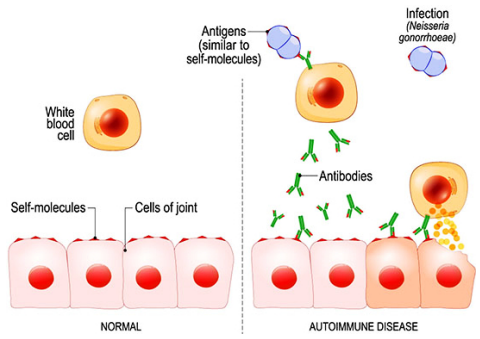
A healthy immune system defends the body against disease and infection. But if the immune system malfunctions, it mistakenly attacks healthy cells, tissues, and organs. Called autoimmune disease, these attacks can affect any part of the body, weakening bodily function and even turning life-threatening.
Image
i. Why are autoimmune diseases called degenerative diseases? (1)
ii. Name the autoimmune disease of body muscles. (1)
iii. Which types of immunity is provided by T-lymphocytes? (2)
OR
Which immune cells form humoral immune system? (2)
Read the following and answer any four questions from (i) to (v) given below:
Green manuring is the fanning practice where a leguminous plant which has derived enough benefits from its association with appropriate species of Rhizobium, is ploughed into the field soil and then a non-legume is sown and allowed to get benefitted from the already present nitrogen fixer. Some legumes, such as, Crotolaria juncea, Sesbania rostrata, Lencaena leucocephala, etc. are used as green manure. Rhizobia, that fix atmospheric nitrogen in the form of nitrate, live in the roots ofleguminous plants. These nutrients are used by non-leguminous plants through the practice of green manuring.
  1. Green manures mainly provide nutrient enriched in:
  1. Magnesium.
  2. Sulphur.
  3. Nitrogen.
  4. Both (a) and (b).
  1. Which of the following plants is used as green manure in crop fields?
  1. Saccharum.
  2. Dichanthium.
  3. Phyllonthus.
  4. Crotolaria.
  1. Green manure plants belong to the Family:
  1. Lamiaceae.
  2. Papilionaceae.
  3. Liliaceae.
  4. Poaceae.
  1. Due to excess use of chemical fertilisers rich in nitrate, ________ disease occurred in children.
  1. Jaundice.
  2. Septicemia.
  3. Methemoglobinemia.
  4. Botulism.
  1.  A green manure is:
  1. Rice.
  2. Maize.
  3. Sorghum.
  4. Sesbania.
Read the following text carefully and answer the questions that follow:
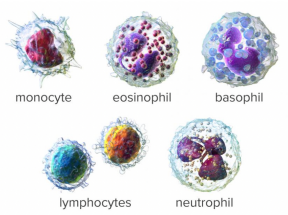
A lymphocyte isa type of white blood cell. Enlarge. Blood cells. Blood contains many types of cells: white blood cells (monocytes, lymphocytes, neutrophils, eosinophils, basophils, and macrophages), red blood cells (erythrocytes), and platelets. Blood circulates through the body in the arteries and veins.
Image
i. Why are the antigens called antibody-generating chemicals? (1)
ii. Which two types of lymphocytes are involved in immunity? (1)
iii. Give the common site of formation of two types of lymphocytes. (2)
OR
What is the site of differentiation of two types of lymphocytes? (2)
Explain- Restriction enzymes.
Read the following and answer any four questions from (i) to (v) given below:

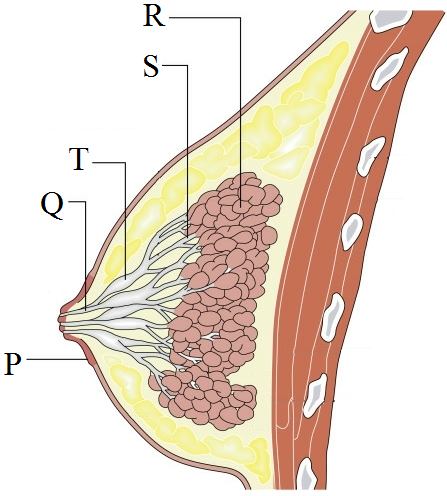
A functional mammary gland is characteristic of all female mammals. Mammary glands are paired structures that contain glandular tissue and variable amount of fat. Refer to the given figure of a mammary gland and answer the following questions.

  1. Mammary glands are modified:
  1. Sweat glands.
  2. Sebaceous glands.
  3. Sudoriferous glands.
  4. Lacrimal glands.
  1. Identify the incorrectly matched pair.
  1. P - Areola.
  2. Q - Lactiferous duct.
  3. S - Mammary duct.
  4. T - Mammary alveoli.
  1. Mammary ducts expand to form:
  1. Mammary alveoli.
  2. Mammary ampullae.
  3. Lactiferous ducts.
  4. Mammary tubules.
  1. What is areola?
  1. Grape-like clusters of milk secreting structures.
  2. Fatty tissue between the mammary lobes.
  3. Circular pigmented area of skin around nipple.
  4. Connective tissue that supports the alveoli and ducts.
  1. Assertion: The size of breast depends on the amount of adipose tissue.

Reason: The adipose tissue supports the alveoli and the ducts.

  1. Both assertion and reason are true, and reason is the correct explanation of assertion.
  2. Both assertion and reason are true, but reason is not the correct explanation of assertion.
  3. Assertion is true, but reason is false.
  4. Both assertion and reason are false.
Read the following and answer any four questions from (i) to (v) given below:
The foundations of recombinant DNA (rDNA) were laid by the discovery of restriction enzymes. These enzymes are present in many bacterias where they function as a part of their defense mechanism called the Restriction Modification system (RM system). Molecular basis of this system was explained first by Werner Arber in 1962. The Restriction Modification system consists of two components:
  • A restriction enzyme (called restriction endonuclease) identifies the introduced foreign DNA and cuts it into pieces.
  • The second component is a modification enzyme (methylase) that adds a methyl group to DNA at specific site to protect it from the restriction enzyme cleavage.
  1. Restriction endonucleases are enzymes present in ________ where they function as a part of _______ mechanism.
  1. (i) bacteria (ii) digestive
  2. (i) protists (ii) transcription
  3. (i) plant cells (ii) replication
  4. (i) prokaryotes (ii) defence
  1. Which of the following statements regarding modification enzyme is correct?
  1. It adds methyl group to one or two bases usually within the host DNA sequence to protect it from the restriction enzyme.
  2. It adds ethyl group to one or two bases usually within the sequence recognised by the restriction enzymes.
  3. It adds methyl group to only one of bases within the foreign DNA sequence that is recognised by the restriction enzymes.
  4. None of these.
  1. Which of the following is a type II restriction enzyme?
  1. Alu I
  2. EcoR I
  3. BamH I
  4. All of these.
  1. Which of the following is the first discovered restriction endonuclease?
  1. Sal I
  2. EcoR I
  3. Hind II
  4. EcoR II
  1. Components of Restriction Modification System include?
  1. Restriction enzyme.
  2. Modification enzyme.
  3. Lysing enzyme.
  4. Both (a) and (b).
Give a detailed description of human male reproductive system. (Diagram required)
Explain Linkage & Recombination.