Question
Explain with the help of suitable example polar covalent bond.

Answer

When two atoms with different electronegativity are linked to each other by covalent bond, the shared electron pair will not in the centre because of the difference in electronegativity. For example, in hydrogen fluoride molecule, fluoride has greater electronegativity than hydrogen. Thus, the shared electron pair is displaced more towards’ fluorine atom, the later will acquire a partial negative charge $(\delta^+)$. At the same time hydrogen atom will have a partial positive charge $(\delta^-)$. Such a covalent bond is known as polar covalent bond or simply polar bond.
It is represented as $\ \ \ \delta^+\ \ \ \ \delta^-\\\ \ \text{H}\ -\ \text{F}\$2.1)\ (4.0)$

Need a full question paper?

Generate a complete, print-ready paper with questions like this in minutes — across 16+ boards, with answer keys.
Start Generating Free

Similar questions

 The ionization constant of $HF , HCOOH$ and HCN at 298 K are $6.8 \times 10^{-4}, 1.8 \times 10-4$ and $4.8 \times 10^{-9}$ respectively. Calculate the ionization constants of the corresponding conjugate base.
The drain cleaner, Drainex contains small bits of aluminum which react with caustic soda to produce dihydrogen. What volume of dihydrogen at $20^\circ C$ and one bar will be released when $0.15g$ of aluminum reacts?
Write short note on carcinogenic and toxicity of aromatic hydrocarbons.
What are the common physical and chemical features of alkali metals?
Explain why the following compounds behave as Lewis acids?
  1. $BCl_3$.
  2. $AlCl_3$.
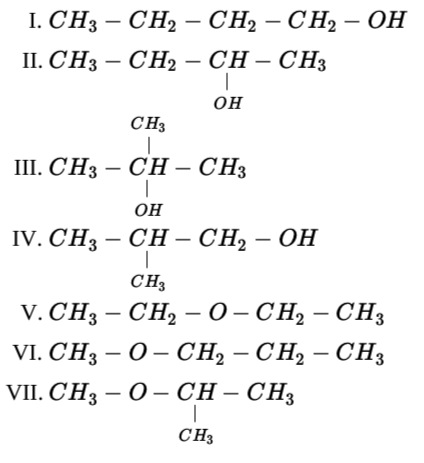
1. Identify the pairs of compounds which are functional group isomers.
Image
2. Explain, how is the electronegativity of carbon atoms related to their state of hybridization in an organic compound.
A welding fuel gas contains carbon and hydrogen only. Burning a small sample of it in oxygen gives 3.38g carbon dioxide, 0.690 g of water and no other products. A volume of 10.0L (measured at STP) of this welding gas is found to weigh 11.6g. Calculate.
  1. Empirical formula.
  2. Molar mass of the gas.
  3. Molecular formula.
Write the favourable factors for the formation of ionic bond.
Arrange the following:
  1. During Clark's method, name the compound in which 'Mg' is precipated out?
  2. Give the formula of Zeolite used in ion exchange method to remove permanent hardness of water.
  3. Complete the following reaction:
$\text{BaO}_2.8\text{H}_2\text{O}(\text{s})+\text{H}_2\text{SO}_4(\text{aq})\xrightarrow{\ \ \ \ \ \ \ \ \ \ \ \ }$
  1. $H_2O_2$ is miscible with water. Assign reason.
  2. Name the compound which can be used as a hair bleach, mild antiseptic in form of perhydrol, as a rocket propellant in concentrated solution.
A compound made up of two elements A and B has A = 70%, B = 30%. Their relative number of moles in the compound are $1.25$ and $1.88$. Calculate.
  1. Atomic masses of the elements A and B.
  2. Molecular formula of the compound, if its molecular mass is found to be 160.