Question
Explanation of ionization isomerism with example.

Answer

Ionization isomerism: When the cation present in a complex is itself a possible ligand and it forms another complex by replacing a ligand, then the complex obtained is called ionization isomerism and this property is called ionization isomerism.
Example : (i) $\left[ Co \left( NH _3\right)_5 SO _4\right] Br$ and
(ii) $\left[ Co \left( NH _3\right)_5 Br \right] SO _4$
$Br ^{-}$is obtained by absorption of (i) whereas by ionization
(ii) $SO _4{ }^{2-}$ is obtained.

Need a full question paper?

Generate a complete, print-ready paper with questions like this in minutes — across 16+ boards, with answer keys.
Start Generating Free

Similar questions

Write the reactions of $D-$ glucose which can’t be explained by its open $-$ chain structure. How can cyclic structure of glucose explain these reactions?
Osmotic pressure of a solution is 0.0821 atm. at a temperature of 400 K. Calculate the concentration of solution in mol/litre. [R=0.0821 L atm $ K^{-1} mol^{-1} $]
Give the structures of A, B and C in the following reactions:$\text{C}_6\text{H}_5\text{N}_2\text{Cl}\xrightarrow{\text{CuCN}\ \ }\text{A}\xrightarrow{\text{H}_2\text{O/H}^+\ \ }\text{B}\xrightarrow{\text{NH}_3;\Delta\ \ \ }\text{C}$
What is glycogen? How is it different from starch?
When 3-methylbutan-2-ol is treated with HBr, the following reaction takes place:$\ \ \ \ \ \ \ \ \ \ \ \ \ \ \ \ \ \ \ \ \ \ \ \ \ \ \ \ \ \ \ \ \ \ \ \ \ \ \ \ \ \ \ \ \ \ \ \ \ \ \ \ \ \ \ \ \ \ \ \ \ \ \ \ \ \ \ \ \text{Br}\\\ \ \ \ \ \ \ \ \ \ \ \ \ \ \ \ \ \ \ \ \ \ \ \ \ \ \ \ \ \ \ \ \ \ \ \ \ \ \ \ \ \ \ \ \ \ \ \ \ \ \ \ \ \ \ \ \ \ \ \ \ \ \ \ \ \ \ \ \ |\\\text{CH}_3-\text{CH}-\text{CH}-\text{CH}_3\xrightarrow{\ \ \ \text{HBr} \ \ }\text{CH}_3-\text{C}-\text{CH}_2-\text{CH}_3\\\ \ \ \ \ \ \ \ \ \ \ \ \ \ |\ \ \ \ \ \ \ \ \ \ |\ \ \ \ \ \ \ \ \ \ \ \ \ \ \ \ \ \ \ \ \ \ \ \ \ \ \ \ \ \ \ \ \ \ \ \ \ \ \ \ \ \ \ |\\\ \ \ \ \ \ \ \ \ \ \ \ \ \text{CH}_3\ \ \ \ \text{OH}\ \ \ \ \ \ \ \ \ \ \ \ \ \ \ \ \ \ \ \ \ \ \ \ \ \ \ \ \ \ \ \ \ \ \ \ \ \ \text{CH}_3$
Give a mechanism for this reaction.
(Hint: The secondary carbocation formed in step II rearranges to a more stable tertiary carbocation by a hydride ion shift from 3rd carbon atom.)
After removing the outer shell of two eggs in dil. HCl, one is placed in distilled water and the other in a saturated solution of NaCl. What will you observe and why?
Why do transition elements form complex compounds?
Ethyl amine is basic while acetamide is ampheteric. Explain the reason.
Explain why $NH _3$ is basic while $BiH _3$ is only feebly basic?

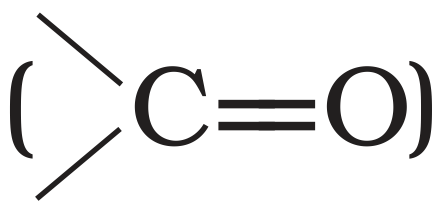
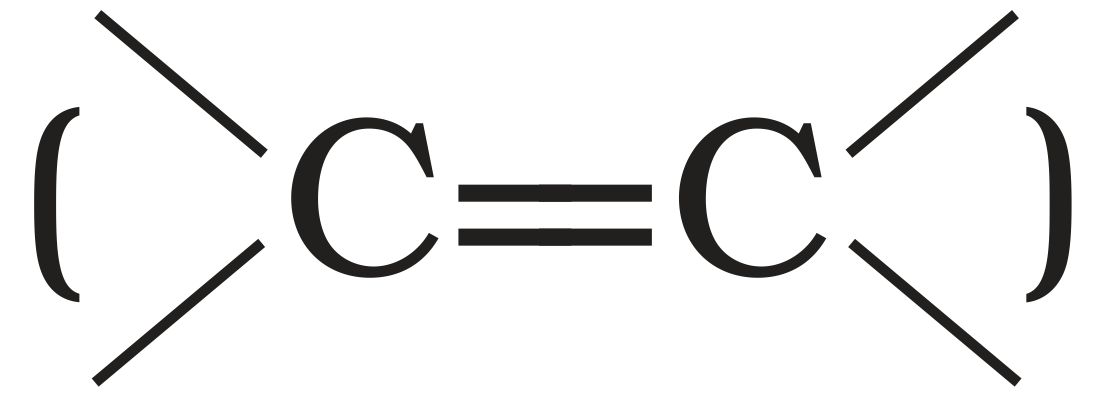
Alkenes  and carbonyl compounds , both contain a π bond but alkenes show electrophilic addition reactions whereas carbonyl compounds show nucleophilic addition reactions. Explain.