Question
Fertilisation is essential for production of seed, but in some angiosperms, seeds develop without fertilisation.
  1. Give an example of an angiosperm that produces seeds without fertilisation Name the process.
  2. Explain the two ways by which seeds develop without fertilisation.
Answer

A. Members of Asteraceae/grasses/citrus/mango, apomixis.

B. Two ways -

  1. In some species, the diploid egg cell is formed without reduction division and develops into embryo without fertilisation.
  2. More often, as in many citrus and mango varieties some of the nucellar cells surrounding the embryo sac start dividing, protrude into the embryo sac and develop into the embryos.

Need a full question paper?

Generate a complete, print-ready paper with questions like this in minutes — across 16+ boards, with answer keys.

Start Generating Free

Similar questions

Name the specific enzyme responsible for nucleotide polymerisation in DNA replication. Write two characteristic features of this enzyme. Name the region on E.coli DNA, where this enzyme can initiate replication.
Rearrange Ramapithecus, Australopithecus and Homo habilis in the order of their evolution on the Earth. Comment on their evolutionary characteristics.
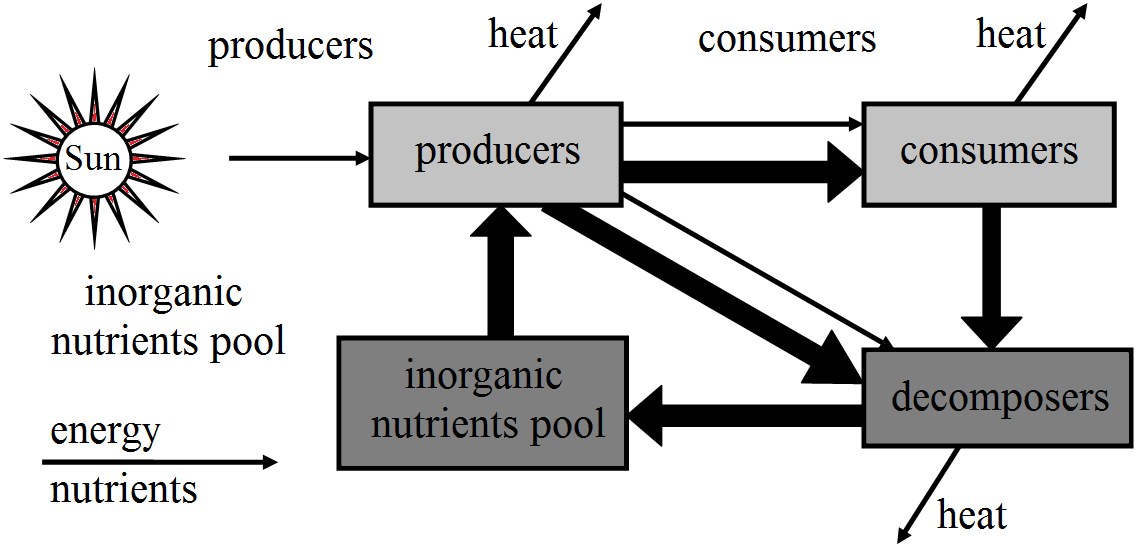
Study the following diagram, and answer these questions:

  1. Why does a wide arrow point from both producers and consumers to decomposers?
  2. Why does a wide arrow point only from inorganic nutrient pool to producers?
  3. Why don't the wavy arrows point from decomposers to producers?
Given below is a list of autotrophs and heterotrophs. With your knowledge about food chain, establish various linkages between the organisms on the principle of ‘eating and being eaten’. What is this inter-linkage established known as?
Algae, hydrilla, grasshopper, rat, squirrel, crow, maize plant, deer, rabbit, lizard, wolf, snake, peacock, phytoplankton, crustaceans, whale, tiger, lion, sparrow, duck, crane, cockroach, spider, toad, fish, leopard, elephant, goat, Nymphaea, Spirogyra.
Many microbial pathogens enter the gut of humans along with food. What are the preventive barriers to protect the body from such pathogens? What type of immunity do you observe in this case?
List any four major categories into which contraception methods could be broadly classified. Explain briefly each category giving one example of each.
The outline structure of a drug is given below,
  1. Which group of drugs does this represent?
  2. What are the modes of consumption of these drugs?
  3. Name the organ of the body which is affected by consumption of these drugs.
​​​​​​​
Differentiate between perisperm and endosperm by giving one example of each.
A spermatogonial cell has 30 chromosomes. How many chromosomes will be found in:
  1. The primary spermatocyte.
  2. The spermatid?
Embryo sacs of some apomictic species appear normal but contain diploid cells. Suggest a suitable explanation for the condition.