Question
Find the integral: $\int \frac{d x}{\sqrt{2 x-x^{2}}}$

Answer

Let I = $\int \frac{d x}{\sqrt{2 x-x^{2}}}$
$= \int \frac{d x}{\sqrt{1-(x-1)^{2}}}$
Put $x - 1 = t.$ Then $dx = dt.$
Therefore, $\int \frac{d x}{\sqrt{2 x-x^{2}}}=\int \frac{d t}{\sqrt{1-t^{2}}}=\sin ^{-1}(t)+C$
$= \sin^{-1} (x-1) + C$

Need a full question paper?

Generate a complete, print-ready paper with questions like this in minutes — across 16+ boards, with answer keys.

Start Generating Free

Similar questions

Write the degree of the differrntial equation $\frac{\text{d}^{2}\text{y}}{\text{dx}^{2}}+\Big(\frac{\text{dy}}{\text{dx}}\Big)^{\frac{1}{4}}+\text{x}^{\frac{1}{5}}=0.$ 
Find the relationship between a and b, so that the function f defined by f(x)= $ \left\{ \begin{array} { l } { a x + 1 , \text { if } x \leq 3 } \\ { b x + 3 , \text { if } x > 3 } \end{array} \right.$is continuous at x = 3.
What do you mean by differential coefficient $\frac{d y}{d x}$ ?
Let R be the relation defined on the set A = {1, 2, 3, 4, 5, 6, 7} by R = {(a, b ): both a and b are either odd or even}. Show that R is an equivalence relation. Further, show that all the elements of the subset {1, 3, 5, 7 } are related to each other and all the elements of the subset {2, 4, 6} are related to each other, but no element of the subset {1, 3, 5, 7} is related to any element of the subset {2, 4, 6}.
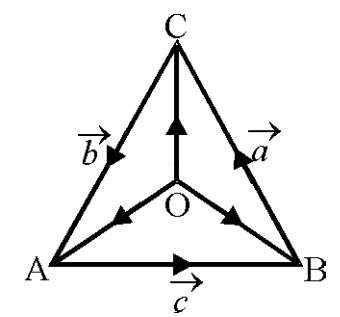
OABC is a tetrahedron. Write the vectors $\overrightarrow{ BC }, \overrightarrow{ CA }, \overrightarrow{ AB }$ in terms of $\overrightarrow{ OA }, \overrightarrow{ OB }$ and $\overrightarrow{ OC }$.
Image
Let $A = {1, 2, 3}$. Then show that the number of relations containing $(1, 2)$ and $(2, 3)$ which are reflexive and transitive but not symmetric is three.
A balloon which always remains spherical, has a variable diameter $\frac{3}{2}\left( {2x + 1} \right)$ Find the rate of change of its volume with respect to x. 
Evaluate the following:
$\tan^{-1}\Big(\tan\frac{\pi}{3}\Big)$
Find the order and degree (if defined) of the differential equation $\frac{d^{4} y}{d x^{4}}-\sin \left(\frac{d^{3} y}{d x^{3}}\right)=0$
$\tan^{-1}\bigg(\frac{x}{y}\bigg)-\tan^{-1}\frac{x-y}{x+y}$ is equal to:
  1. $\frac{\pi}{2}$
  2. $\frac{\pi}{3}$
  3. $\frac{\pi}{4}$
  4. $\frac{-3\pi}{4}$