Question
Find the second order derivatives of the following functions:
$\text{y}=\text{x}^3\log\text{x}$

Answer

We have
$\text{y}=\text{x}^3\log\text{x}$
differentiating w.r.t.x, we get
$\frac{\text{dy}}{\text{dy}}=3\text{x}^2\log\text{x}+\text{x}^3\times\frac{1}{\text{x}}$
$=3\text{x}^2\log\text{x}+\text{x}^2$
differentiating w.r.t.x, we get
$\frac{\text{d}^2\text{y}}{\text{dx}^2}=6\text{x}\log\text{x}+3\text{x}^2\times\frac{1}{\text{x}}+2\text{x}$
$=6\text{x}\log\text{x}+5\text{x}$

Need a full question paper?

Generate a complete, print-ready paper with questions like this in minutes — across 16+ boards, with answer keys.
Start Generating Free

Similar questions

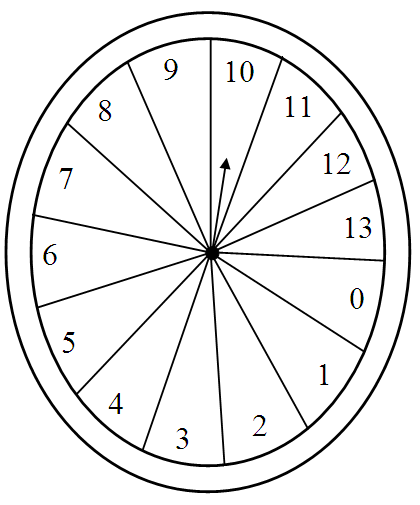
In roulette, Figure, the wheel has 13 numbers 0, 1, 2,...., 12 maked on equally spaced slots. A player sets Rs 10 on a given number. He recieves Rs 100 from the organiser of the game if the ball comes to rest in this slot; otherwise he gets nothing. If X denotes the players net gain/loss, Find E(X).
Using vectors prove that the line segment joining the mid-points of non-parallel sides of a trapezium is parallel to the base and is equal to half the sum of the parallel sides.
Find the inverse of $5$ under multiplication modulo $11$ on $Z_{11}.$
Find the value of $\int \frac{\mathrm{dx}}{\mathrm{e}^{\mathrm{x}}-1}$.
Evaluate the following integrals:
$\int\text{e}^{2\text{x}}\sin\text{x }\text{dx}$
If $\text{y}=\log_\text{a}\text{x},$, find $\frac{\text{dy}}{\text{dx}}.$
Suppose $A=R-\{2\}$ and $B=R-\{1\}$, if a function $f: A \rightarrow B$ is defined such that $f(x)=\frac{x-1}{x-2}$, then prove that $f$ is one-one onto.
Let $L$ be the set of all lines in $xy$ plane and $R$ be the relation in $L$ define as $R = \{(L_1, L_2) : L_1 || L_2\}.$ Show that $R$ is an equivalence relation. Find the set of all lines related to the line $y = 2x + 4.$
A square piece of tin of side 18 cm is to be made into a box without top, by cutting a square from each corner and folding up the flaps to form the box. What should be the side of the square to be cut off so that the volume of the box is the maximum possible?
Determine whether $\text{f}(\text{x})=\frac{-\pi}{2}+\sin\text{x}$ is a increasing or decreasing on $\Big(\frac{-\pi}{3},\frac{\pi}{3}\Big).$