Question
Fine: $\int\frac{3\text{x}+5}{\text{x}^2+3\text{x}-18}\text{dx}.$

Answer

Let $\text{I}=\int\frac{(3\text{x}+5)}{\text{x}^2+3\text{x}-18}$
$\text{I}=\int\frac{(3\text{x}+5)\text{dx}}{(\text{x}+6)(\text{x}-3)}$
Let $\int\frac{(3\text{x}+5)}{(\text{x}+6)(\text{x}-3)}=\frac{\text{A}}{\text{x}+6}+\frac{\text{B}}{\text{x}-3}$
So, $3\text{x}+5=\text{A}(\text{x}-3)+\text{B}(\text{x}+6)$
On comparing,
$\text{A}+\text{B}=3\ \dots(\text{i})$
$-3\text{A}+6\text{B}=5\ \dots(\text{ii})$
$-3\text{A}+6(3-\text{A})=5$
$-3\text{A}+18-6\text{A}=5$
$\text{A}=\frac{-13}{9}=\frac{13}{9}$ and $\text{B}=3-\text{A}=3-\frac{13}{9}=\frac{14}{9}$
So, $\int\frac{(3\text{x}+5)\text{dx}}{(\text{x}+6)(\text{x}-3)}$
$=\int\frac{13\text{dx}}{9(\text{x}+6)}+\int\frac{14\text{dx}}{9(\text{x}-3)}$
$=\frac{13}{9}\text{ln}(\text{x}+6)+\frac{14}{9}\text{ln}(\text{x}-3)+\text{C}$

Need a full question paper?

Generate a complete, print-ready paper with questions like this in minutes — across 16+ boards, with answer keys.
Start Generating Free

Similar questions

Solve the following system of equations by matrix method:
3x + y = 19
3x - y = 23
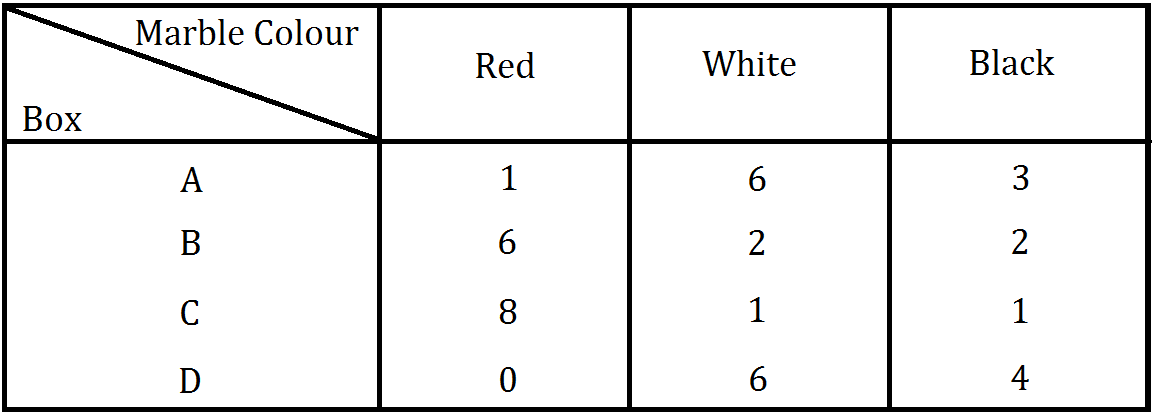
Suppose we have four boxes A, B, C, D containing coloured marbles as given below:

One of the boxes has been selected at random and a single marble is drawn from it. If the marble is red, what is the probability that it was drawn from,

  1. Box A?
  2. Box B?
  3. Box C?
Find the equation of the tangent line to the curve y = x2 + 4x - 16 which is parallel to the line 3x - y + 1 = 0.
The spaces described in time t by a particle moving in a straight line is given by s = t5 = 4t3 + 30t2 + 80t - 250. Find the minimum value of acceleration.
Find the binomial distribution whose mean is 5 and variance $\frac{10}{3}.$
Find the vector equation of the plane passing through points A(a, 0, 0), B(0, b, 0) and C(0, 0, c). Reduce in to normal form. If plane ABC is at a distance p from the origin, prov that $\frac{1}{\text{p}^2}=\frac{1}{\text{a}^2}+\frac{1}{\text{b}^2}+\frac{1}{\text{c}^2}$
If $\text{P}=\begin{bmatrix}\text{x}&0&0\\0&\text{y}&0\\0&0&\text{z}\end{bmatrix}$ and $\text{Q}=\begin{bmatrix}\text{a}&0&0\\0&\text{b}&0\\0&0&\text{c}\end{bmatrix},$ prove that $\text{PQ}=\begin{bmatrix}\text{xa}&0&0\\0&\text{y}\text{b}&0\\0&0&\text{zc}\end{bmatrix}=\text{QP}$
Evaluate the following integrals:
$\int\limits^{\frac{\pi}{2}}_0\frac{\tan^{7}\text{x}}{\tan^{7}\text{x}+\cot^7\text{x}}\text{ dx}$
Find the area under the curve $\text{y}=\sqrt{6\text{x}+4}$ above x-axis from x = 0 to x = 2. Draw a sketch of curve also.
Discuss the continuity of the f(x) at the indicated points f(x) = |x| + |x - 1| at x = 0, 1.