MCQ
Fluorine has low electron affinity than chlorine because of
- ✓Smaller radius of fluorine, high density
- BSmaller radius of chlorine, high density
- CBigger radius of fluorine, less density
- DSmaller radius of chlorine, less density
There are strong interelectronic repulsions in the relatively compact $2 p$ subshell of fluorine. Hence, the incoming electron does not feel much attraction.
Generate a complete, print-ready paper with questions like this in minutes — across 16+ boards, with answer keys.
The ketone. $(A)$ is
Ketone $A\,\xrightarrow[2\,.\,{{H}_{2}}O]{1.\,{{C}_{2}}{{H}_{5}}MgBr}B$ $\xrightarrow[-\,{{H}_{2}}O]{{{H}_{2}}S{{O}_{4}},\,Heat}C$ $\xrightarrow[2.\,Zn\,,\,{{H}_{2}}O]{1.{{O}_{3}}}$ Figure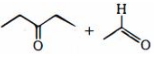
$(a)$ $CO < C{O_2} < CO_3^{2 - }$ $ \Rightarrow $ Bond length
$(b)$ ${O_2} < {O_3} < O_2^{ - 2}$ $ \Rightarrow $ Bond length
$(c)$ ${N_2} < N_2^ + $ $ \Rightarrow $ Bond energy
Reason : Stannous chloride is a powerful oxidising agent which oxidises mercuric chloride to metallic mercury.