Question
Following incomplete information is available from records maintained by Mr. X:
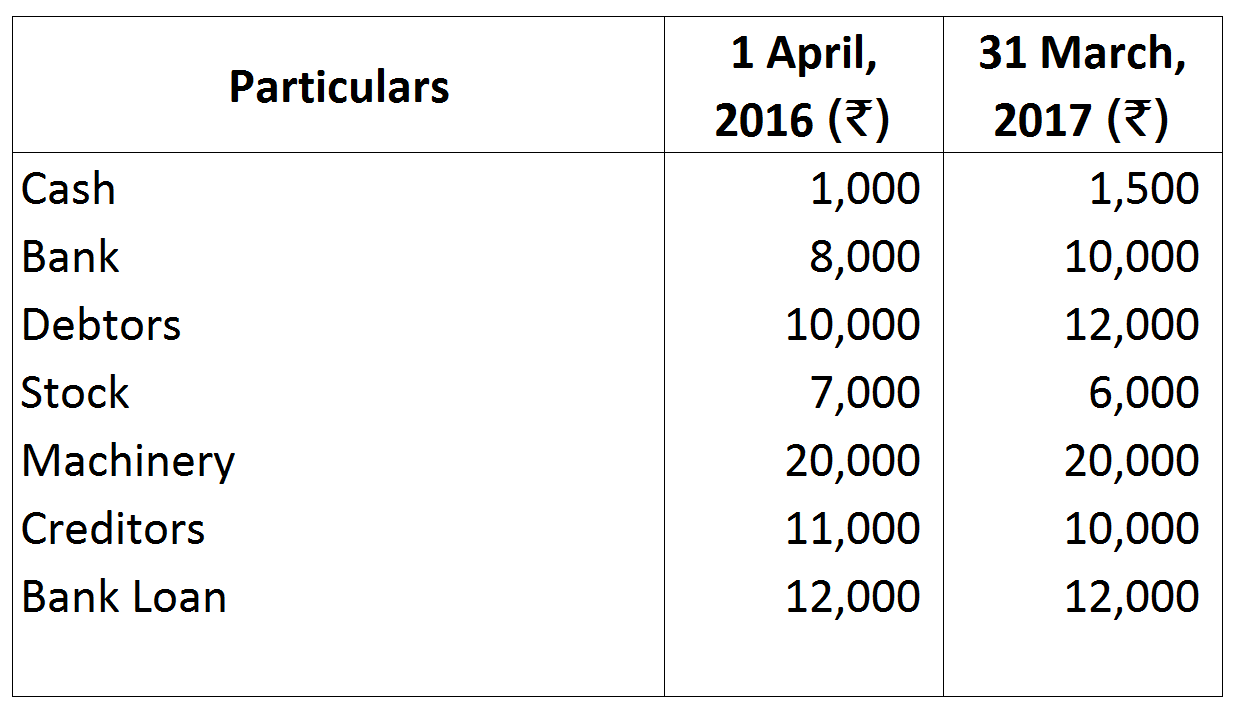
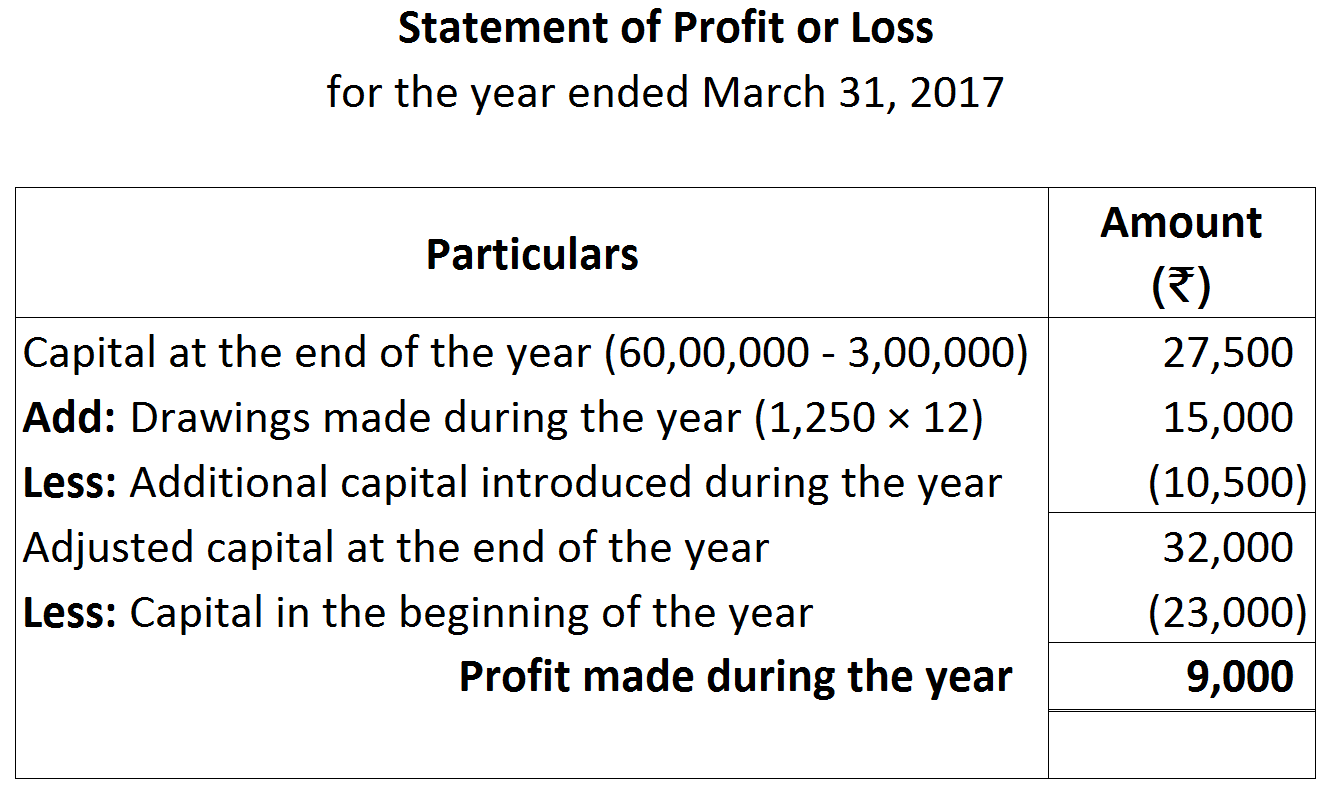
During the year Mr. X introduced in the business the amount realised on sale of ₹ 10,000 investments at the premium of 5%. Personal expenses of Mr. X paid from business account amounted to ₹ 1,250 per month. Prepare a statement to calculate Profit (or Loss) during the year.
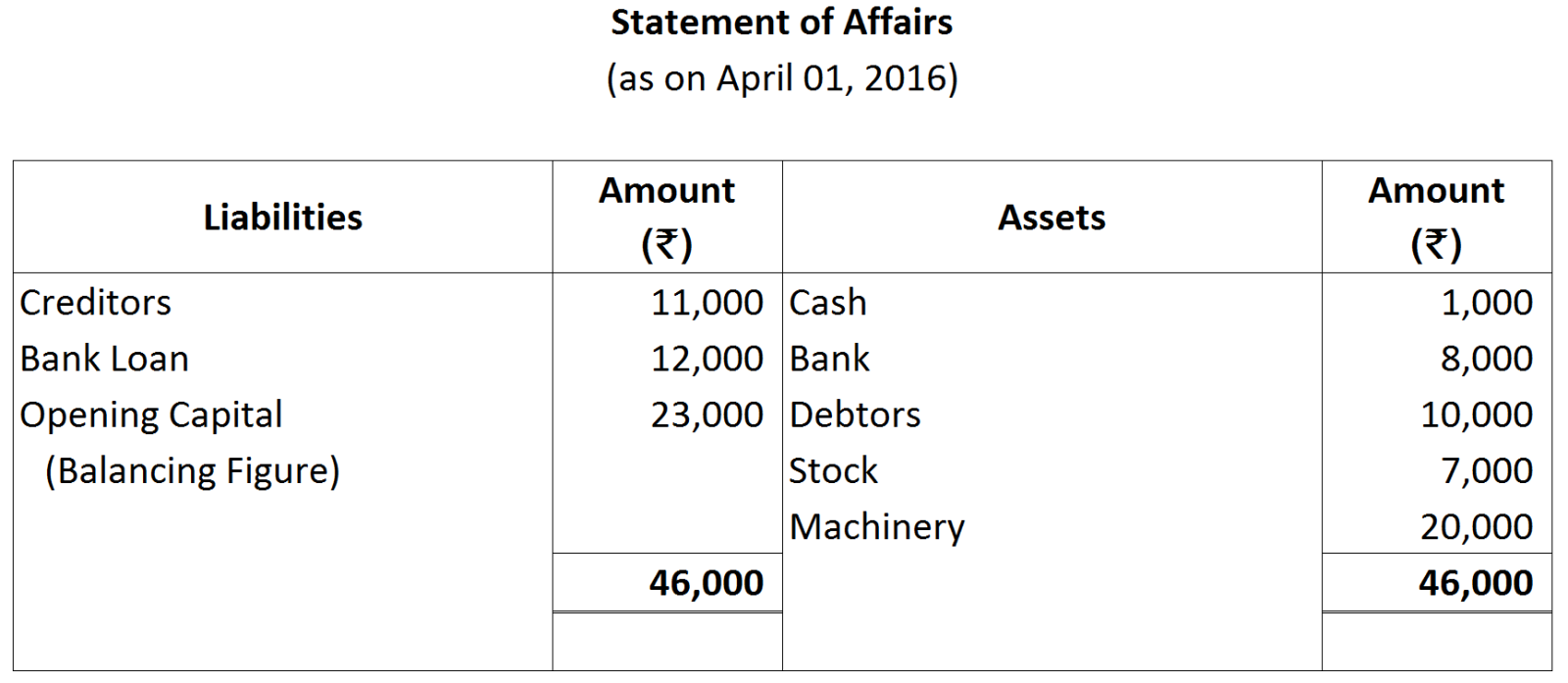
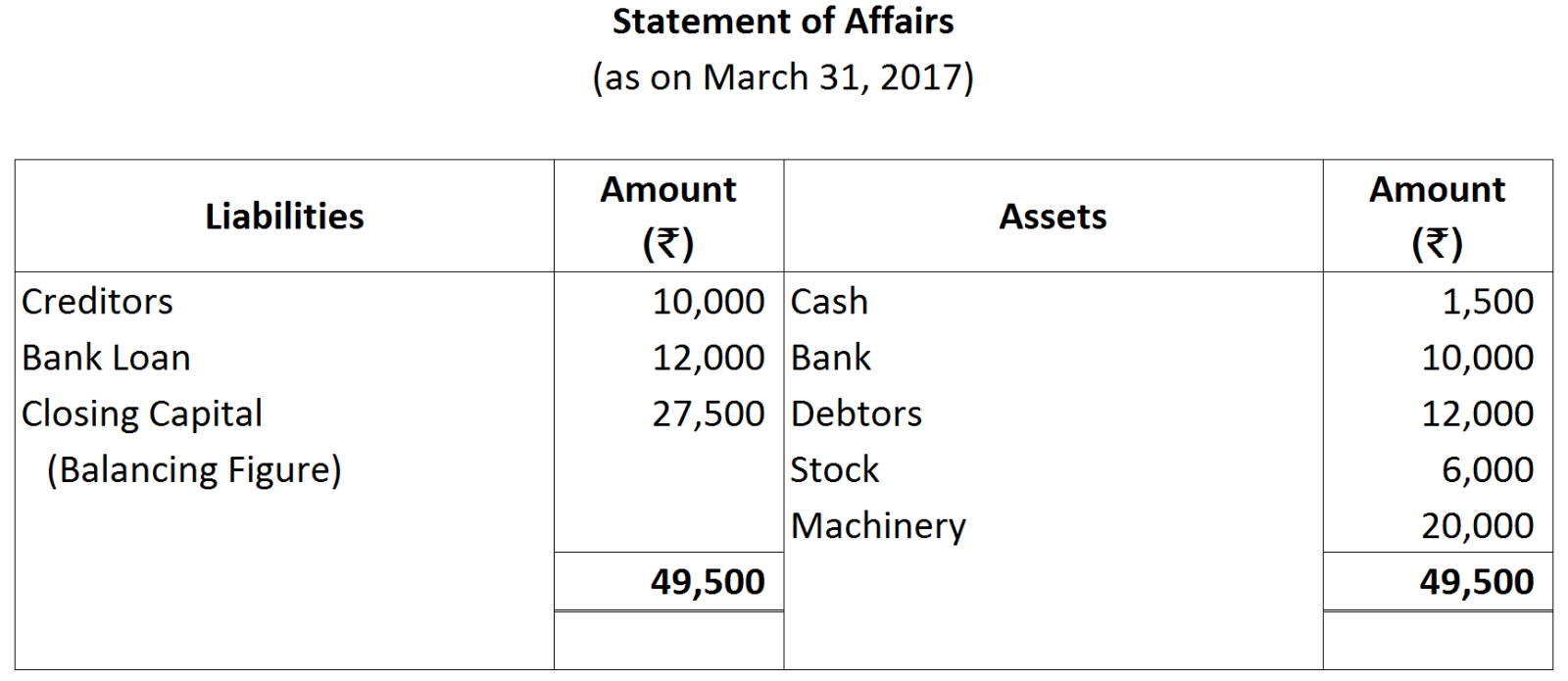
Answer


Working Note:
Calculation of additional capital introduced during the year.
Value of Investments = 10,000
Premium = 500 (10,000 × 5%)
Sale Value of Investments = ₹ 10,500(Aditional Capital)

Need a full question paper?

Generate a complete, print-ready paper with questions like this in minutes — across 16+ boards, with answer keys.

Start Generating Free

Similar questions

Trial Balance of a bookkeeper shows an excess of debits over credits by ₹ 261. This difference is placed in a Suspense Account to facilitate books closure. Later on the following errors were discovered:
  1. A credit item of ₹ 349 has been debited to a Personal Account as ₹ 439.
  2. A sum of ₹ 625 written off from fixtures as depreciation has not been posted to the Depreciation Account.
  3. ₹ 9,000 paid for furniture bought have been charged to the Purchases Account.
  4. A discount allowed to a customer has been credited to him as ₹ 145 in place of ₹ 154.
  5. A sale of ₹ 594 was posted as ₹ 495 in the Sales Account.
  6. The total of Returns Inward Book has been added ₹ 10 short.
Pass the Journal entries to correct these errors and prepare the Suspense Account.
“A Computer system is capable of performing many things." Explain some of the capabilities of a Computer system. Capabilities of a Computer system.
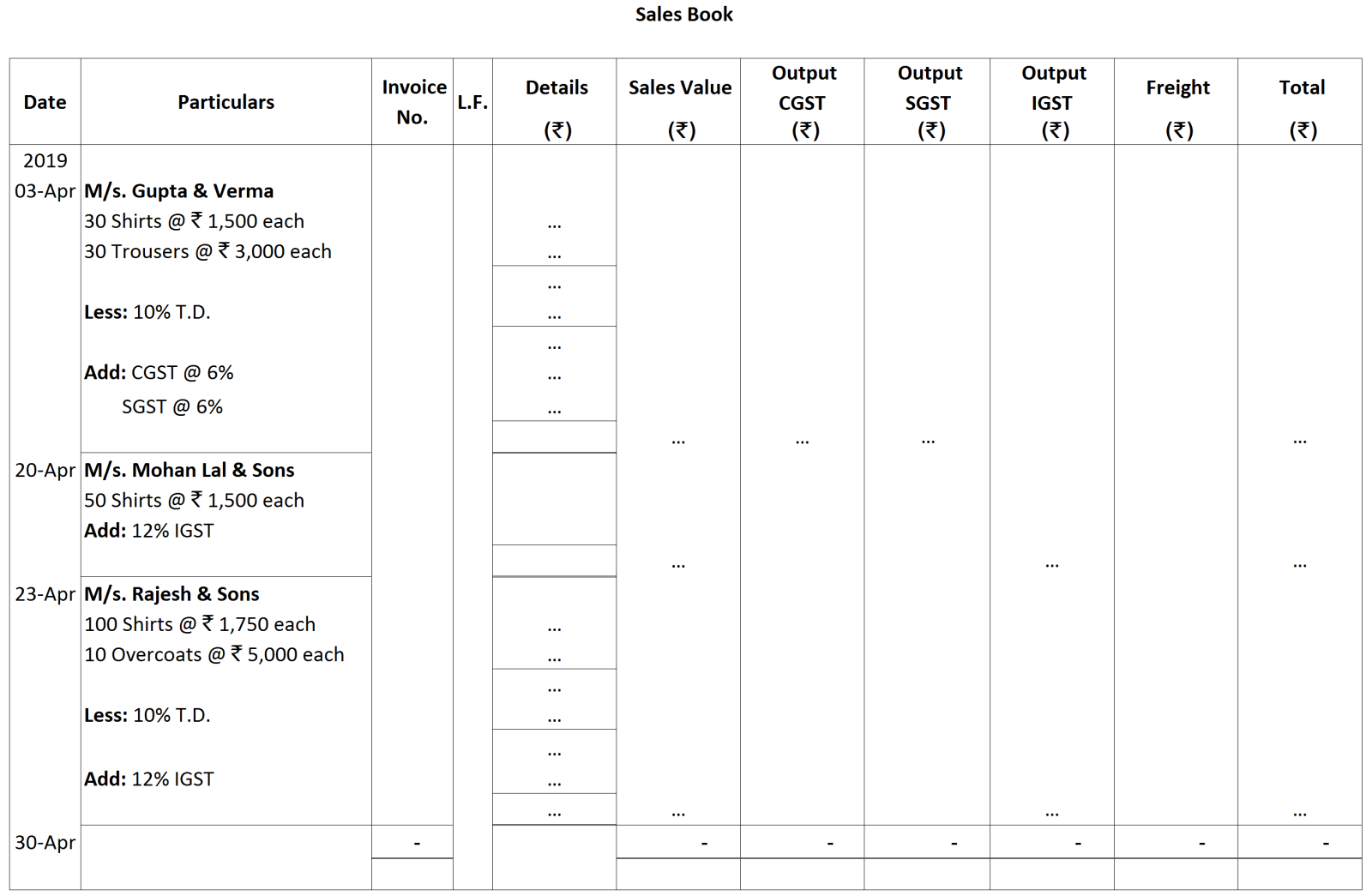
In the following Sales Book, determine the missing information:
From the following trial balance, prepare the trading and profit and loss account for the year ended 31st March, 2013 and the balance sheet as at that date.
Name of AccountsAmt(Rs)Name of AccountsAmt(Rs)
Salaries20,446Sales1,32,840
Bills receivable12,754Capital1,00,000
Investments80,000Provision for doubtful debts5,000
Furniture24,00010% Loan (1st October, 2012)20,000
Opening stock9,000Discount received800
Purchases60,000Sundry creditors18,600
Sundry debtors40,000Bills payable10,000
Interest on loan800Outstanding salaries1,000
Insurance premium1,800Bad debts recovered400
Wages9,200Interest on investments4,000
Rent3,040Trading commission14,000
Bad debts2,400  
Carriage Outwards1,200  
Cash at Bank20,000  
Depreciation of furniture5,000  
Accrued commission2,000  
Advertisement15,000  
 3,06,640 3,06,640

Additional Information
i. Closing stock Rs 12,000 .
ii. Goods costing Rs 2,000 were distributed as free samples while goods costing Rs 1,000 were taken by the proprietor for personal use.
iii. A credit sale of Rs 4,000 was not recorded in the sales book.
iv. Closing stock included goods costing Rs 2,000 which were sold and recorded as sales but not delivered to the customer.
v. Maintain provision for doubtful debts @ 5\%.
Distinguish between the Straight Line Method and Written Down Value Method of providing Depreciation.
From the following particulars, find out corrected bank balance as per Cash Book and thereafter prepare a Bank Reconciliation Statement as on 31st March, 2019 of a sole proprietor:
 
 
(i)
Bank overdraft as per the Cash Book.
80,000
(ii)
Cheques deposited as per the bank statement but not entered in the Cash Book.
3,000
(iii)
Cheques recorded for collection but not sent to the bank.
10,000
(iv)
Credit side of bank column casted short.
1,000
(v)
Bank charges recorded twice in the Cash Book.
100
(vi)
Customer's cheque returned as per the Bank Statement.
4,000
(vii)
Cheques issued but dishonoured on technical grounds.
3,000
(viii)
Bills collected by bank directly.
20,000
(ix)
Cheque received entered twice in the Cash Book.
5,000
Enter the following transactions of Ripinder, Delhi in a Single Column Cash Book and balance it:
2019  
Jan. 1 Ripinder started business with capital 2,00,000
Jan. 2 Purchased furniture for cash 50,000
Jan. 3 Purchased goods for cash 30,000
Jan. 5 Paid freight 500
Jan. 7 Sold goods for cash 28,000
Jan. 10 Paid to Ramesh 20,000
Jan. 15 Sold goods for cash 10,000
Jan. 20 Paid wages 10,000
Jan. 25 Purchased goods from Raj on credit 20,000
Jan. 31 Paid rent by Cheque 5,000
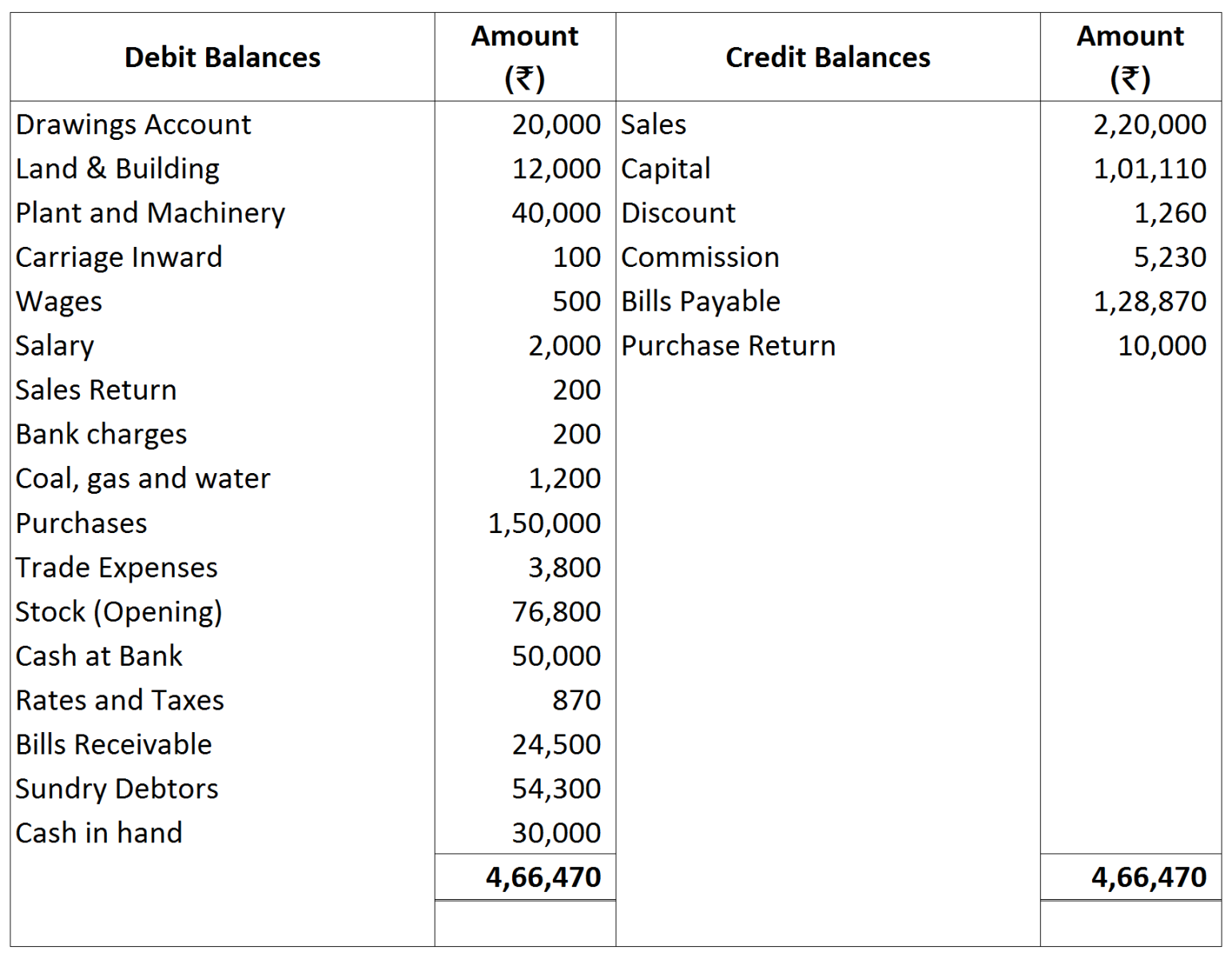
From the following Trial Balance, extracted from the books of Raga Ltd., prepare a Profit and Loss Account for the year ended 31st March, 2019 and a Balance Sheet as at that date:

The additional informations are as under:
  1. Closing stock was valued at the end of the year at ₹ 20,000.
  2. Depreciation on Plant and Machinery charged at 5% and on Land and Building at 10%.
  3. Make a provision for discount on debtors at 3%.
  4. Make a provision at 5% on debtors for Bad-debts.
  5. Salary outstanding was ₹ 100 and Wages prepaid were ₹ 40.
  6. The manager is entitled to a Commission of 5% on Net Profit after charging such Commission.
Write a detailed comparison between Manual Accounting and Computerised Accounting.
Prepare Bank Reconciliation Statement from the following particulars and show balance as per Cash Book:
  1. Balance as per Pass Book on 31st March, 2019 overdrawn ₹ 10,000.
  2. Cheques drawn in the last week of March, 2019 but not cleared till 3rd April, 2019 ₹ 20,000.
  3. Interest on bank overdraft not entered in the Cash Book ₹ 1,500.
  4. Cheques of ₹ 20,000 deposited in the bank in March, 2019 but not collected and credited till 3rd April, 2019.
  5. ₹ 100 Insurance Premium paid by the bank under a standing order has not been entered in the Cash Book.
  6. A draft of ₹ 10,000 favouring Atul & Co. was issued by the bank charging commission of ₹ 200. However, in the Cash Book entry was passed by ₹ 10,000.