MCQ
For a zero order reaction. Which of the following statement is false
  • the rate is independent of the temperature of the reaction
  • B
    the rate is independent of the concentration of the reactants
  • C
    the half life depends upon the concentration of the reactants
  • D
    the rate constant has the unit $mole\, L^{-1}\, sec^{-1}$
Answer

Correct option: A.
the rate is independent of the temperature of the reaction
a
Rate $= k$ (conc.) order

here $k$ depends on temperature

Need a full question paper?

Generate a complete, print-ready paper with questions like this in minutes — across 16+ boards, with answer keys.

Start Generating Free

Similar questions

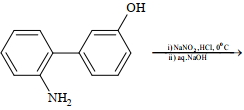
In the given reaction '$A$' is :- 

$(A)\xrightarrow{{\operatorname{Re}duction}}(B)\xrightarrow{{HN{O_2}}}{C_2}{H_5}OH$

The mass of non-volatile, non-elctrolyte solute (molar mass $= 50\,g\,mol^{- 1})$  needed to be dissolved in $114\,g$  octane to reduce its vapour pressure to $75\%,$  is .............. $\mathrm{g}$
In reaction $2SO_3 \to  2SO_2+O_2$ Initially $40\,gm$ $SO_3$ is heated in $100 \,ml$ container. If after $10\,min\,\,3.2\,gm\,O_2$ is found then found rate of reaction ......... $mol\,L^{-1}\,min^{-1}$
Appropriate reducing agent for the following conversion is-

$\begin{array}{*{20}{c}}
  {\,\,\,\,\,\,\,\,\,\,\,\,\,\,\,\,\,\,\,\,\,\,\,\,\,\,\,\,\,\,\,\,\,\,\,\,\,\,\,\,\,\,\,O} \\ 
  {\,\,\,\,\,\,\,\,\,\,\,\,\,\,\,\,\,\,\,\,\,\,\,\,\,\,\,\,\,\,\,\,\,\,\,\,\,\,\,\,\,\,\,||} \\ 
  {C{H_2} = CH - C{H_2} - C - H} 
\end{array} \to C{H_3} - C{H_2} - C{H_2} - C{H_2}OH$

The major product of the following reaction is
Which of the following foodstuffs contains nitrogen
In a reaction involving hydrolysis of an organic chloride in presence of large excess of water$RCl + {H_2}O \to ROH + HCl$
Identify the basic amino acid
The basic character of the transition metal monoxides follows the order

(Atomic no. $Ti = 22, V = 23, Cr = 24, Fe = 26$)

For the reduction of $\mathrm{NO}_3^{-}$ion in an aqueous solution, $\mathrm{E}^0$ is $+0.96 \mathrm{~V}$. Values of $\mathrm{E}^0$ for some metal ions are given below

$\mathrm{V}^{2+}(\mathrm{aq})+2 \mathrm{e}^{-} \rightarrow \mathrm{V} \ \ \ \ \mathrm{E}^0=-1.19 \mathrm{~V} $

$\mathrm{Fe}^{3+}(\mathrm{aq})+3 \mathrm{e}^{-} \rightarrow \mathrm{Fe} \ \ \ \ \mathrm{E}^0=-0.04 \mathrm{~V} $

$\mathrm{Au}^{3+}(\mathrm{aq})+3 \mathrm{e}^{-} \rightarrow \mathrm{Au} \ \ \ \ \mathrm{E}^0=+1.40 \mathrm{~V} $

$\mathrm{Hg}^{2+}(\mathrm{aq})+2 \mathrm{e}^{-} \rightarrow \mathrm{Hg} \ \ \ \ \mathrm{E}^0=+0.86 \mathrm{~V}$

The pair$(s)$ of metals that is$(are)$ oxidized by $\mathrm{NO}_3^{-}$in aqueous solution is$(are)$

$(A)$ $\mathrm{V}$ and $\mathrm{Hg}$ $(B)$ $\mathrm{Hg}$ and $\mathrm{Fe}$

$(C)$ $\mathrm{Fe}$ and $\mathrm{Au}$ $(D)$ $Fe$ and $V$