MCQ
For harder X-rays:
- AThe wavelength is higher.
- BThe intensity is higher.
- CThe frequency is higher.
- DThe photon energy is higher.
Explanation:
Harder X-rays are the X-rays having low wavelengths. Since the frequency varies inversely with the wavelength, hard X-rays have high frequency.
Energy of a photon (E) is given by
$\text{E}=\frac{\text{hc}}{\lambda}$
Here,
h = Planck's constant
c = Speed of light
$\lambda$ = Wavelength of light.
Clearly, energy varies inversely with wavelength. Therefore, the energy of the photon will be higher for the hard X-ray.
Generate a complete, print-ready paper with questions like this in minutes — across 16+ boards, with answer keys.
If the energy of the photon is increased by a factor of 4, then its momentum
|
(a) Does not change |
(b) Decreases by a factor of 4 |
|
(c) Increases by a factor of 4 |
(d) Decreases by a factor of 2 |
Assertion : Kinetic energy of photo electrons emitted by a photosensitive surface depends upon the intensity of incident photon.
Reason : The ejection of electrons from metallic surface is possible with frequency of incident photon below the threshold frequency.
|
(a) If both assertion and reason are true and the reason is the correct explanation of the assertion. |
|
(b) If both assertion and reason are true but reason is not the correct explanation of the assertion. |
|
(c) If assertion is true but reason is false. |
|
(d) If the assertion and reason both are false. |
If the atom  follows the Bohr model and the radius of is n times the Bohr radius, then find n
|
(a) 100 |
(b) 200 |
(c) 4 |
(d) |
Two point charges of 20μC and 80 μC are 10 cm apart. Where will the electric field strength be zero on the line joining the charges from 20 μC charge
|
(a) 0.1 m |
(b) 0.04 m |
(c) 0.033 m |
(d) 0.33 m |
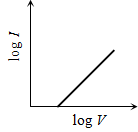
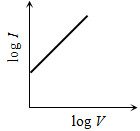
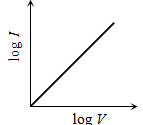
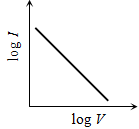
When a current I is passed through a wire of constant resistance, it produces a potential difference V across its ends. The graph drawn between log I and log V will be
|
(a)
|
(b)
|
(c)
|
(d)
|
When current is passed in antimony-bismuth couple, then
|
(a) The junction becomes hot when the current is from bismuth to antimony |
|
(b) The junction becomes hot when current flows from antimony to bismuth |
|
(c) Both junctions become hot |
|
(d) Both junctions become cold |
In a photoelectric experiment for 4000 Å incident radiation, the potential difference to stop the ejection is 2 V. If the incident light is changed to 3000 Å, then the potential required to stop the ejection of electrons will be
|
(a) 2 V |
(b) Less than 2 V |
(c) Zero |
(d) Greater than 2 V |