Question
For two statements are given-one labelled Assertion (A) and the other labelled Reason (R). Select the correct answer to these questions from the codes (a), (b), (c) and (d) as given below:
  1. Both A and R are true, and R is correct explanation of the assertion.
  2. Both A and R are true, but R is not the correct explanation of the assertion.
  3. A is true, but R is false.
  4. A is false, but R is true.
Assertion: Magnetic field lines show the direction (at every point) along which a small magnetised needle aligns (at the point).
Reason: Magnetic field lines certainly represent the direction of magnetic field, but not the direction of force, this is because force is always perpendicular to magnetic field B.
Answer

  1. Both A and R are true, but R is not the correct explanation of the assertion.

Need a full question paper?

Generate a complete, print-ready paper with questions like this in minutes — across 16+ boards, with answer keys.

Start Generating Free

Similar questions

In the following questions, a statement of Assertion is given by the corresponding statement of Reason. Of the statements, mark the correct answer as:
  1. If both Assertion and Reason are true and Reason is the correct explanation of Assertion.
  2. If both Assertion and Reason are true, but Reason is not the correct explanation of Assertion.
  3. If Assertion is true, but Reason is false.
  4. If Assertion is false, but Reason is true.
  5. If Assertion and Reason both are false.
Assertion: Rainbow is an example of the dispersion of sunlight by the water droplets.
Reason: Light of shorter wavelength is scattered much more than light of larger wavelength.
For two statements are given-one labelled Assertion (A) and the other labelled Reason (R). Select the correct answer to these questions from the codes (a), (b), (c) and (d) as given below:
  1. Both A and R are true, and R is correct explanation of the assertion.
  2. Both A and R are true, but R is not the correct explanation of the assertion.
  3. A is true, but R is false.
  4. A is false, but R is true.
Assertion: The coil of a heater is cut into two equal halves and only one of them is used into heater. The heater will now require half the time to produce the same amount of heat.
Reason: The heat produced is directly proportional to square of current.
For two statements are given-one labelled Assertion (A) and the other labelled Reason (R). Select the correct answer to these questions from the codes (a), (b), (c) and (d) as given below:

  1. Both A and R are true, and R is correct explanation of the assertion.
  2. Both A and R are true, but R is not the correct explanation of the assertion.
  3. A is true, but R is false.
  4. A is false, but R is true.
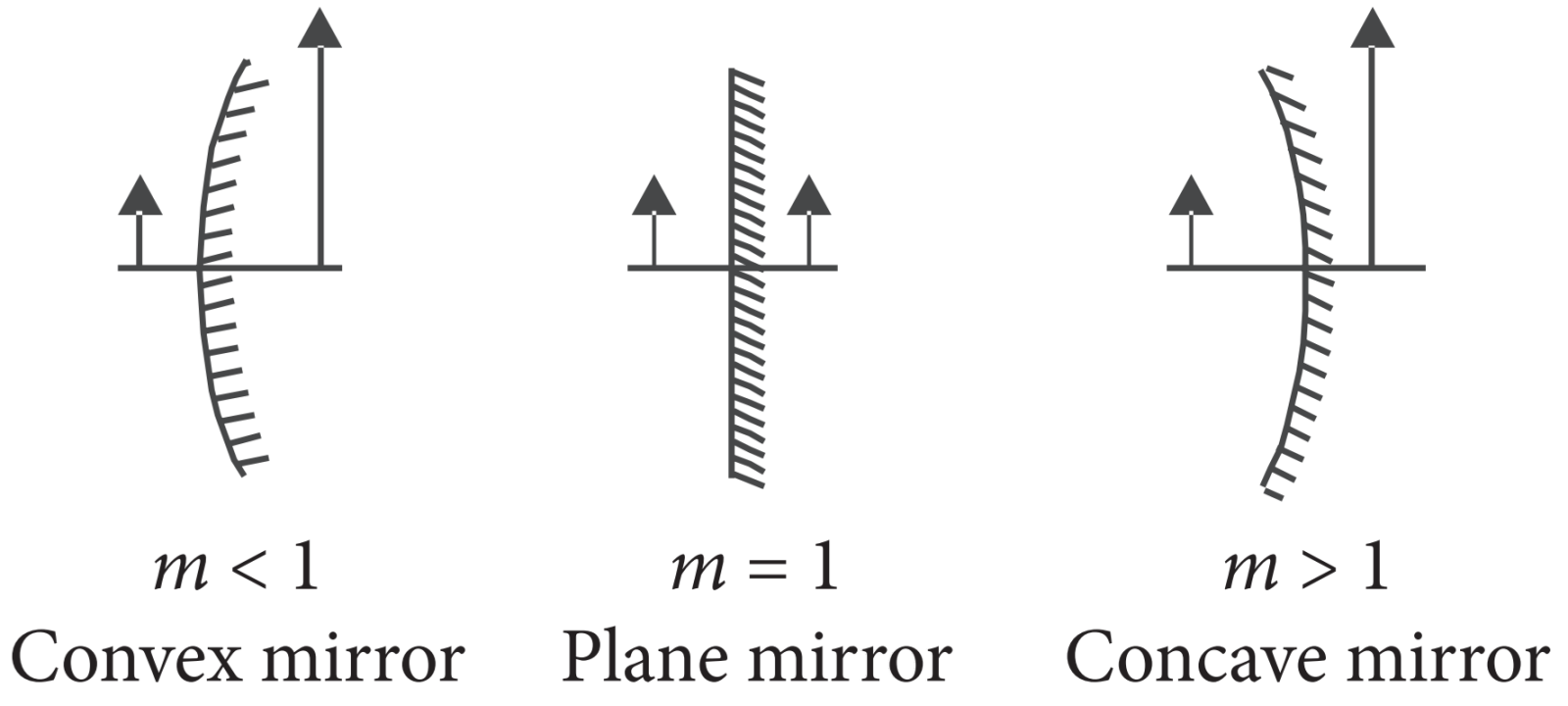
Assertion: We can decide the nature of a mirror by observing the size of erect image in the mirror.

Reason: The minimum distance between a real object and its real image in a concave mirror is non zero.

For two statements are given-one labelled Assertion (A) and the other labelled Reason (R). Select the correct answer to these questions from the codes (a), (b), (c) and (d) as given below:

  1. Both A and R are true, and R is correct explanation of the assertion.
  2. Both A and R are true, but R is not the correct explanation of the assertion.
  3. A is true, but R is false.
  4. A is false, but R is true.

Assertion: Property of converging of a convergent lens does not remain same in all media.

Reason : Property of lens whether the ray is diverging or converging is independent of the surrounding medium.

For two statements are given-one labelled Assertion (A) and the other labelled Reason (R). Select the correct answer to these questions from the codes (a), (b), (c) and (d) as given below:
  1. Both A and R are true, and R is correct explanation of the assertion.
  2. Both A and R are true, but R is not the correct explanation of the assertion.
  3. A is true, but R is false.
  4. A is false, but R is true.
Assertion: Bending a wire does not affect electrical resistance.
Reason: Resistance of a wire is proportional to resistivity of material.
For two statements are given-one labelled Assertion (A) and the other labelled Reason (R). Select the correct answer to these questions from the codes (a), (b), (c) and (d) as given below:
  1. Both A and R are true, and R is correct explanation of the assertion.
  2. Both A and R are true, but R is not the correct explanation of the assertion.
  3. A is true, but R is false.
  4. A is false, but R is true.
Assertion: Electron has a negative charge.
Reason: Electrons move always from a region of higher potential to a region of lower potential.
In the following questions, a statement of Assertion is given by the corresponding statement of Reason. Of the statements, mark the correct answer as:

  1. If both Assertion and Reason are true and Reason is the correct explanation of Assertion.
  2. If both Assertion and Reason are true, but Reason is not the correct explanation of Assertion.
  3. If Assertion is true, but Reason is false.
  4. Assertion is false, but Reason is true.
  5. If Assertion and Reason both are false.
Assertion: Fuse wire must have high resistance and low melting point.

Reason: Fuse is used to protect the circuit.


For two statements are given-one labelled Assertion (A) and the other labelled Reason (R). Select the correct answer to these questions from the codes (a), (b), (c) and (d) as given below:
  1. Both A and R are true, and R is correct explanation of the assertion.
  2. Both A and R are true, but R is not the correct explanation of the assertion.
  3. A is true, but R is false.
  4. A is false, but R is true.
Assertion: A moving coil galvanometer is based on magnetic effect of current.
Reason: On heating, the coil starts to rotate in direction of moving coil galvanometer.
For two statements are given-one labelled Assertion (A) and the other labelled Reason (R). Select the correct answer to these questions from the codes (a), (b), (c) and (d) as given below:
  1. Both A and R are true, and R is correct explanation of the assertion.
  2. Both A and R are true, but R is not the correct explanation of the assertion.
  3. A is true, but R is false.
  4. A is false, but R is true.
Assertion: A bird perches on a high-power line and nothing happens to the bird.
Reason: The circuit is incomplete for the bird sitting on high-power line.
Assertion (A): A neutral body may experience a net nonzero magnetic force.
Reason(R): The net charge on a current-carrying wire is zero, but it can experience a force in a magnetic field.