Question
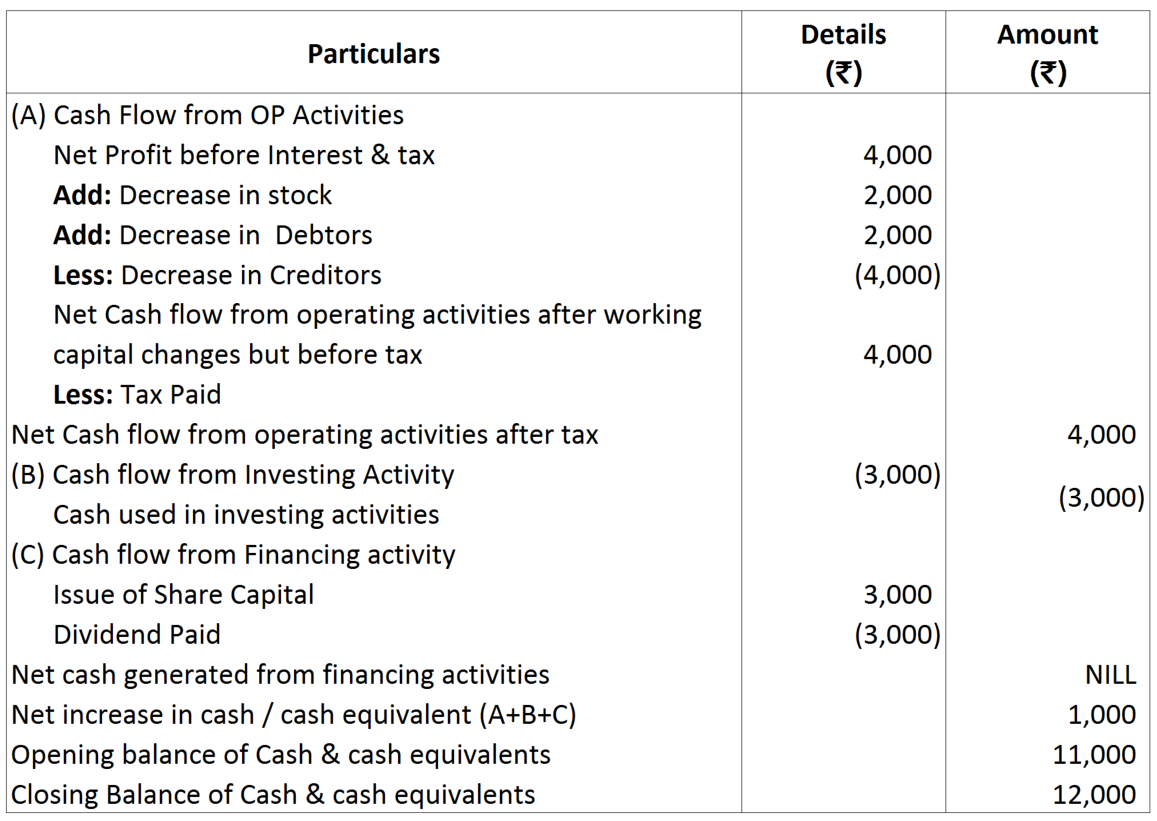
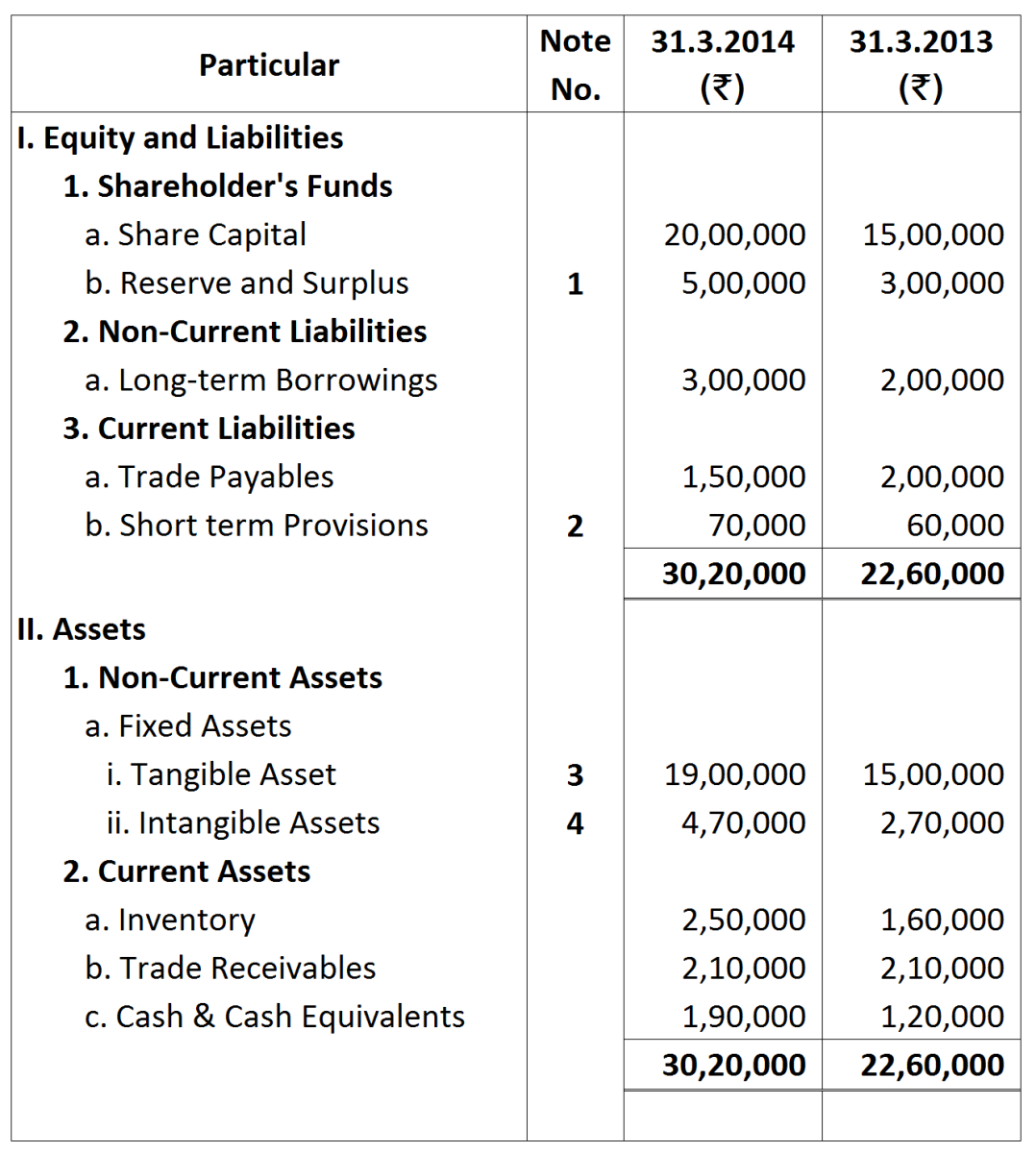
From the following Balance Sheets, prepare a Cash Flow Statement as per AS-3 (revised)
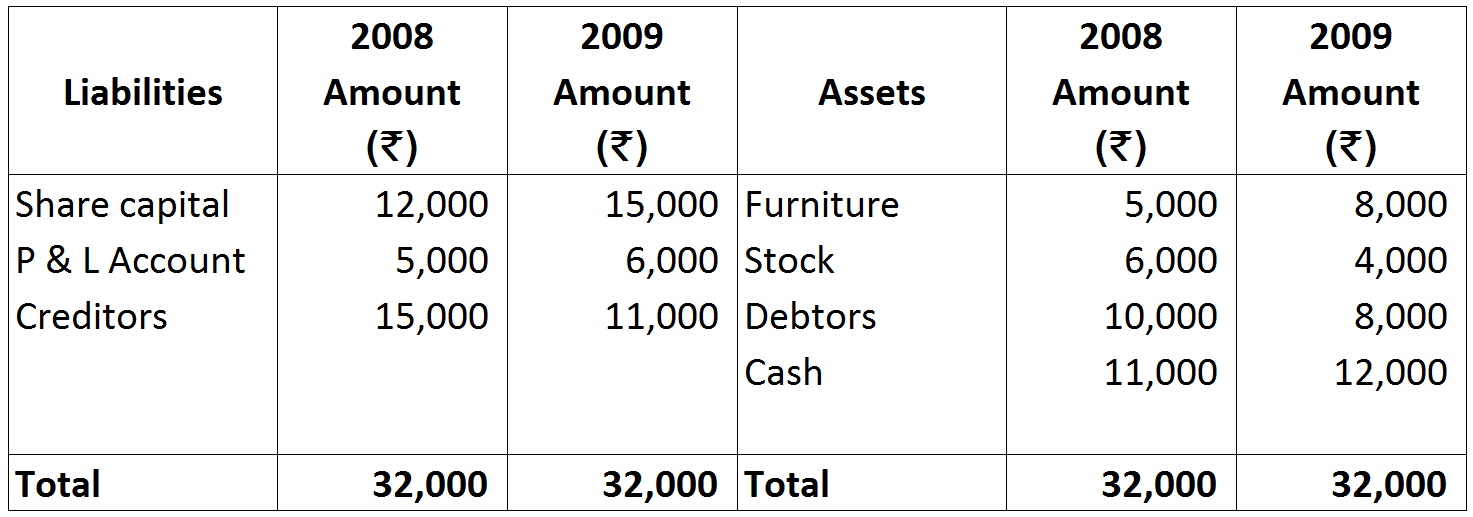
A dividend of ₹ 3,000 was paid during the year 2008-09.

Answer

Calculation of Profit before Interest & Tax
Profit earned : ₹ 1,000
Add : Dividend: ₹ 3,000
  ₹ 4,000

Need a full question paper?

Generate a complete, print-ready paper with questions like this in minutes — across 16+ boards, with answer keys.
Start Generating Free

Similar questions

From the following information, calculate any two of the following ratios:
  1. Debt-Equity Ratio.
  2. Working Capital Turnover Ratio.
  3. Return on Investment.
Information: Equity Share Capital ₹ 9,00,000, General Reserve ₹ 1,00,000; Statement of Profit and Loss Balance after Tax and Interest ₹ 3,00,000; 12% ₹ 4,00,000; Trade Payables ₹ 3,00,000; Land and ₹ 13,00,000; Furniture ₹ 3,00,000; Trade Receivables ₹ 2,90,000; Cash ₹ 1,10,000.
Revenue from Operations for the year ended 31.3.2011 was ₹ 30,00,000 and Tax paid 50%.
Prepare a Comparative Statement of Profit & Loss from the following:

Interest on investments @ ₹ 2,00,000 and taxes payable @ 50%.
‘Software Ltd.’ invited applications for issuing 70,000 equity shares of ₹ 10 each on which ₹ 7 per share were called up, which were payable as follows:
On application – ₹ 2 per share
On allotment – ₹ 3 per share
On first call – The balance
The amount was received as follows:
On 40,000 shares – ₹ 7 per share
On 20,000 shares – ₹ 5 per share
On 10,000 shares – ₹ 2 per share
The directors forfeited 30,000 shares on which less than ₹ 7 per share were received. Later on the forfeited shares were re-issued at ₹ 5 per share, as ₹ 7 per share paid up.
Pass necessary journal entries for the above transactions in the books of the company.
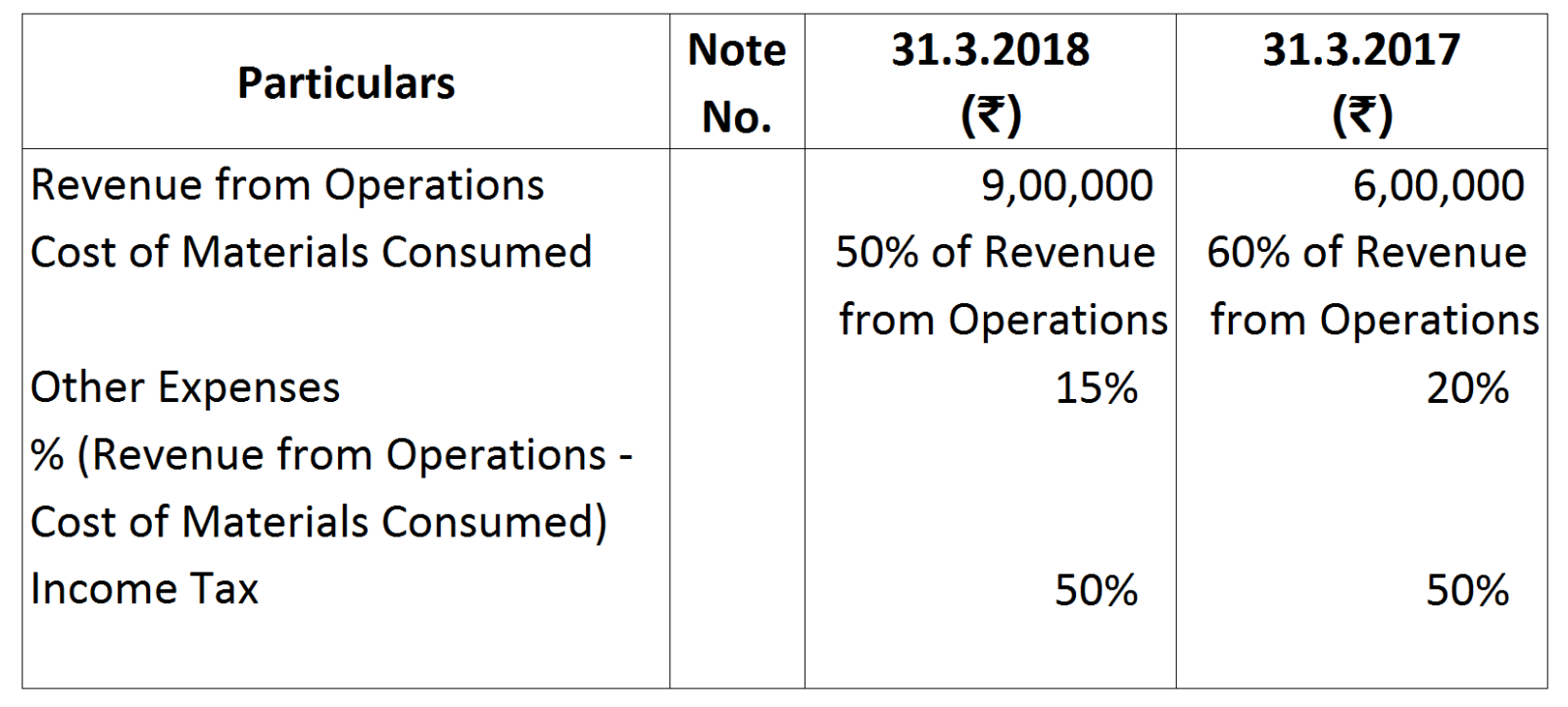
Form the following information provided, prepare Comparative Statement of Profit and loss for the years ended 31st March 2018 and 2017:
Take a few imaginary figures and prepare a Comparative Statement of Profit & Loss for two years.
Following was the Balance Sheet of Sreshtha Ltd. as at 31st March, 2014:

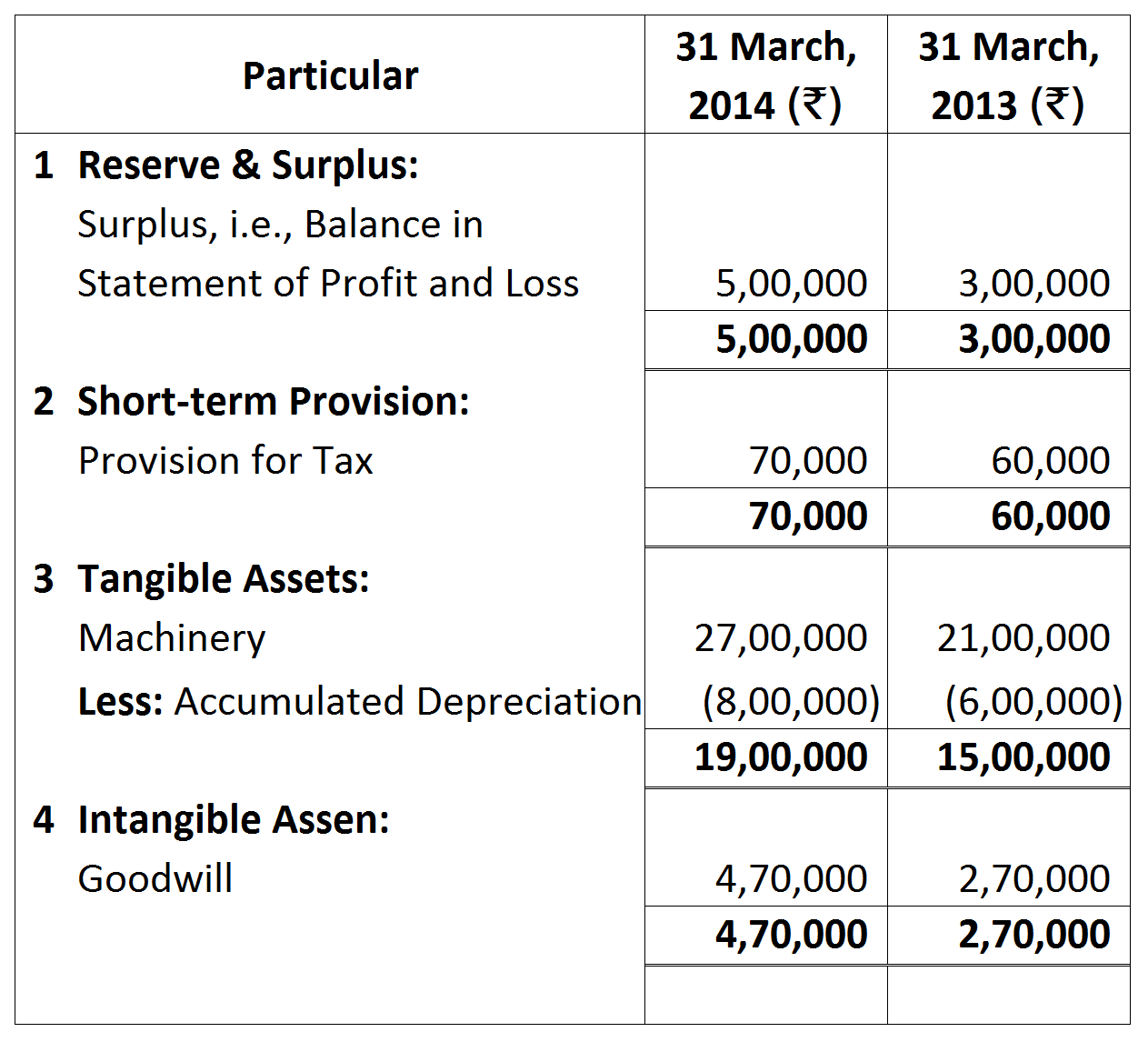
Notes to Accounts:

Prepare a Cash Flow Statement after taking into account the following adjustment:
During the year, a piece of machinery costing ₹ 30,000 on which accumulated depreciation was ₹ 6,000, was sold for ₹ 20,000.
DF Ltd. invited applications for issuing 50,000 shares of ₹ 10 each at a premium of ₹ 2 per share. The amount was payable as follows:
On Application: ₹ 3 per share (including premium ₹ 1)
On Allotment: ₹ 3 per share (including premium ₹ 1)
On First call: ₹ 3 per share
On Second and Final Call: Balance amount
Application for 70,000 shares were received. Allotment was made on the following basis.
Applications for 5,000 shares – Full
Applications for 50,000 shares – 90%
Balance of the applications were rejected. ₹ 1,11,000 were received on account of allotment. The amount of allotment due from the shareholders to whom shares were allotted on prorata basis was fully received. A few shareholders to whom shares were allotted in full, failed to pay the allotment money. ₹ 1,20,000 were received on first call. Directors decided to forfeit those shares on which allotment and call money was due. Half of the forfeited shares were re-issued @ ₹ 8 per share fully paid up. Final call was not made.
Pass the necessary journal entries for the above transactions in the book of DF Ltd.
Best Barcode Ltd. took a loan of ₹ 5,00,000 from a bank giving ₹ 6,00,000; 9% Debentures as collateral security. Pass journal entries regarding issue of debentures, if any, and show this loan in the Balance Sheet of the company.
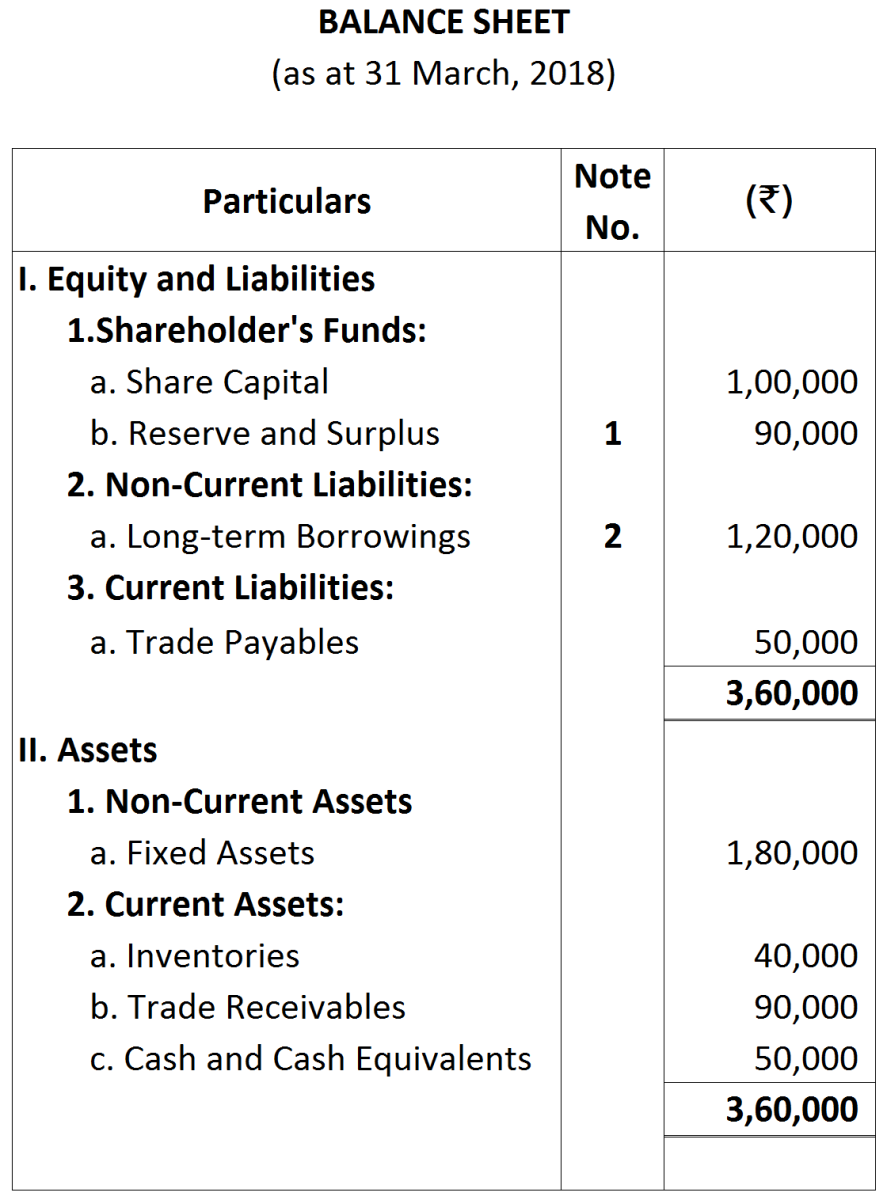
From the following Balance Sheet and other information, calculate any three of the following ratios:
  1. Debt-Equity Ratio.
  2. Proprietary Ratio.
  3. Total Assets to Debt Ratio.
  4. Working Capital Turnover Ratio.
  5. Trade Receivables Turnover Ratio.
Other Information:
Revenue from Operations during the year amounted to ₹ 1,80,000.
Under which line item (major head) of the Statement of Profit and Loss of non-financial company will the following be shown:
  1. Sale of Goods.
  2. Revenue from Services Rendered.
  3. Interest Earned.
  4. Gain (Profit) on Sale of Assets.
  5. Purchases of Stock-in-Trade.
  6. Salaries and Wages.
  7. Interest paid to Bank.
  8. Carriage Outward?