MCQ
Genetically modified plants have been useful in increasing
- ACrop yield
- BNutritional value of food
- CTolerance against abiotic stresses
- ✓All of the above
Genetic modification of crops have resulted in
$(i)$ Increased tolerance against abiotic stresses (cold, drought, salt and heat)
$(ii)$ Reduced reliance on chemical pesticides (pest-resistant crops)
$(iii)$ Reduced post-harvest losses
$(iv)$ Enhanced nutritional value of food, $e . g .$, vitamin- $A$ enriched (golden rice)
$(v)$ Increased efficiency of minerals used by the plants (this prevents early exhaustion of fertility of soil)
Generate a complete, print-ready paper with questions like this in minutes — across 16+ boards, with answer keys.
$(a)$ Pollen grains inside the anther
$(b)$ Gemninated pollen grain with two male gametes
$(c)$ Seed inside the fruit
$(d)$ Embryo sac inside the ovule
$I.$ Basmati rice $II.$ Neem
$III.$ Turmic $IV.$ Tulsi
$I.$ A Dominant allele determines the phenotype when paired with a recessive allele
$II.$ A recessive allele is weaker than a dominant allele
$III.$ A recessive allele do not shows its effects when paired with a dominant allele
$IV.$ A dominant allele is always better for an organism
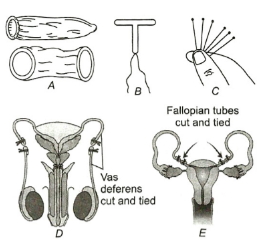
$I$. Tubectomy $II$. Vasectomy
$III$. Implants $IV$. Condoms
$V$. Copper$-T$